

Unpacking the Myth of Mutual Support Among Black Women
The idea that Black women automatically support one another is comforting but incomplete, and real community requires accountability, boundaries, and intentional relationships rather than assumptions rooted in shared identity alone. We discuss it here!

The Myth of Mutual Support Among Black Women
Photo Credit: Prostock-Studio via iStockPhoto.com
By: Jamila Gomez
There’s a story we like to tell about ourselves: that Black women always show up for each other. That we’re uniquely bonded by shared struggle. That support is automatic, instinctual, guaranteed.
It sounds good. It photographs well. It’s comforting.
And it’s not consistently true.
Many Black women grow up believing that other Black women will be their safest place. That shared identity equals shared care. So when support doesn’t show up—or worse, when harm comes from within—it hits deeper. The disappointment isn’t just personal. It feels like a betrayal of something sacred.
The problem isn’t that Black women don’t support each other at all. We do. Constantly. Loudly. Quietly. Behind the scenes. But the assumption of mutual support is where the myth lives. Because assumptions erase accountability.
Support among Black women is often conditional. It flows easily when everyone stays within familiar lanes—same values, same pace, same life scripts. But step outside of what’s expected, and the tone changes. Curiosity turns into critique. Concern slides into comparison. Silence replaces solidarity.
Competition plays a bigger role than we like to admit. Not always overt, not always intentional—but present. Scarcity has taught us to measure ourselves against each other, even when we don’t want to. Praise can feel threatening. Visibility can feel like loss. Another woman’s growth can trigger the quiet question: What does this mean about me?
Then there’s emotional labor. Many Black women give generously, but not equally. Support becomes lopsided—one woman always listening, advocating, holding space, while her own needs go unanswered. When she finally stops pouring, she’s labeled distant, bitter, or changed.
We rarely interrogate that.
We also avoid talking about how often “support” is performative. Public affirmations without private follow-through. Hashtags without hard conversations. Celebration when things are easy, absence when things get complicated. Being seen together matters more than standing together.
And let’s be honest: proximity politics are real. Who you know. Where you work. Who you’re aligned with. Support gets filtered through access and advantage. Not everyone is protected the same way. Not everyone is extended grace.
Naming this isn’t about tearing Black women down. It’s about refusing to romanticize dynamics that leave too many of us confused, hurt, and blaming ourselves for gaps that were never ours to close.
Mutual support requires skill. Emotional maturity. Self-awareness. Boundaries. The ability to celebrate without comparison and to disagree without punishment. Shared identity alone doesn’t build those things.
For Black women in their 30s and beyond, this myth becomes harder to carry. By this stage, many of us have receipts. We’ve been the reliable one. The encourager. The connector. And we’ve also been the one left out, talked about, or quietly dropped when we no longer fit someone else’s narrative.
That reality forces a reckoning.
Real support is specific. It’s consistent. It doesn’t disappear when your life stops being palatable. It doesn’t require you to stay small, agreeable, or grateful for crumbs. It doesn’t demand silence in exchange for proximity.
The truth is, some Black women will be your sisters. Some will be your mirrors. Some will be your lessons. Expecting all of them to be your support system sets you up for disappointment and resentment.
Letting go of the myth doesn’t mean giving up on community. It means building it intentionally. Choosing relationships based on behavior, not just shared identity. Allowing support to be earned and reciprocated, not assumed.
We deserve better than slogans. We deserve relationships that can hold complexity without collapsing into competition or silence. And we can’t get there if we keep pretending the myth is the reality.

YOU MAY ALSO BE INTERESTED IN:

SHARE TO SOCIAL MEDIA
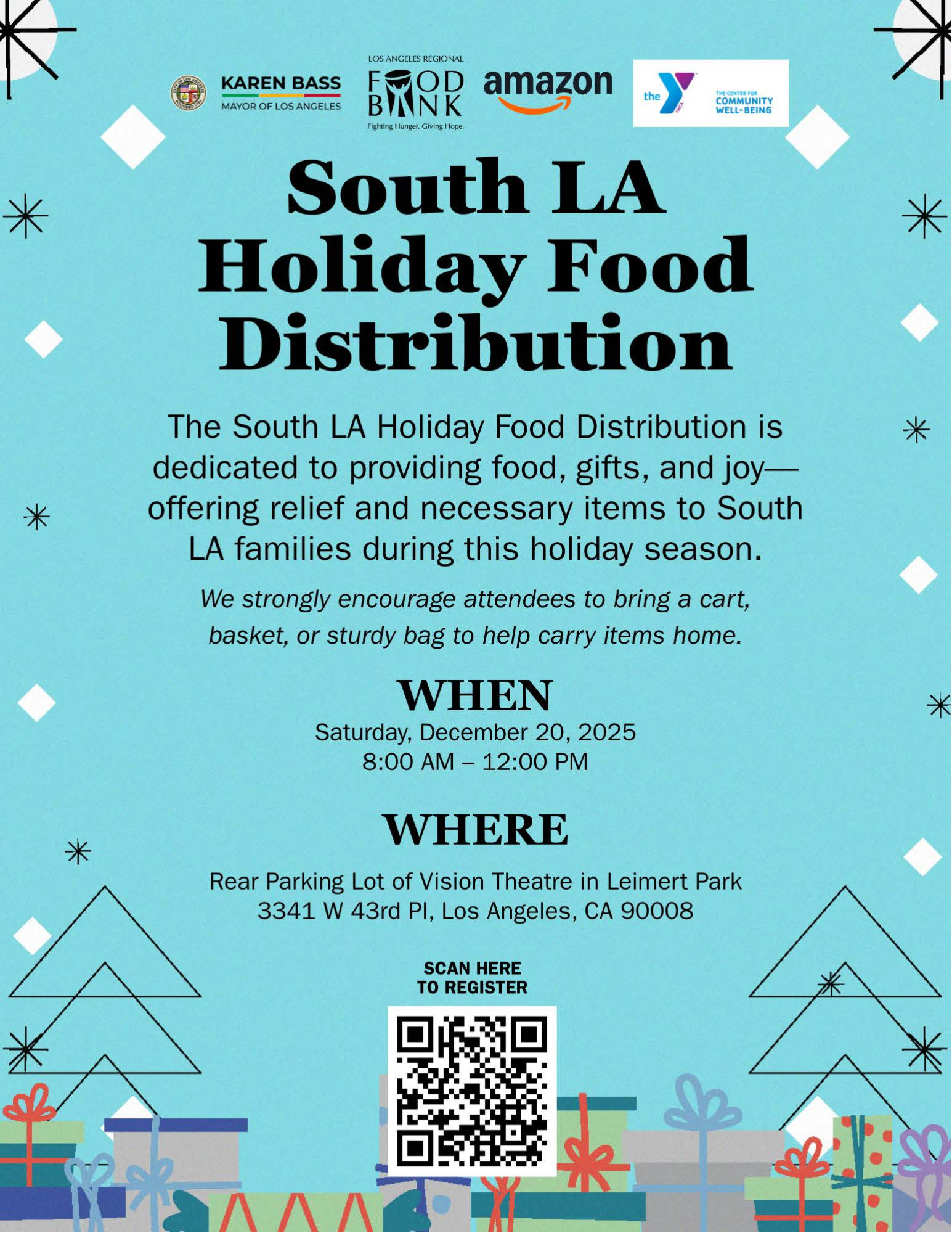
South Los Angeles Families Invited to Holiday Food Distribution With Free Meal Boxes
South Los Angeles families are invited to register for a holiday food distribution hosted by the Office of Mayor Karen Bass, offering free meal boxes and gifts to support community members in need! We discuss it here!
South Los Angeles Families Invited to Holiday Food Distribution With Free Meal Boxes
By: Omar Cook
Los Angeles, CA — Families across South Los Angeles are invited to take part in a Holiday Food Distribution hosted by the Office of Mayor Karen Bass this Saturday, December 20, in Leimert Park. The event is designed to support households experiencing financial hardship by providing holiday meal boxes, including a turkey, along with gifts for children.
This community-focused effort is made possible with support from Amazon and the Los Angeles Regional Food Bank, ensuring families can access nutritious food during the holiday season.
Who Is Eligible?
The holiday food distribution is open to families who reside in South Los Angeles, specifically within Service Planning Area 6 (SPA 6). This includes communities such as:
Crenshaw District
Watts
Hyde Park
Surrounding South LA neighborhoods
To ensure fair access, one registration per household is permitted. Duplicate registrations will be voided so that as many families as possible can receive support.
Why Registration Matters
Registration is required to guarantee your household receives a holiday food box. By registering in advance, organizers can:
Prepare the correct food box size for your household
Provide age-appropriate gifts for children
Offer a Priority Check-In Lane for faster service and reduced wait times
While walk-ups may be served if supplies remain, service is not guaranteed without registration. Families are strongly encouraged to sign up before arriving.
What to Bring on Event Day
Registered families should come prepared with:
Registration confirmation (printed or digital screenshot with QR code)
A portable cart or wagon to help transport food boxes, groceries, and gifts
Walk-Up Information
Families who are unable to register may attempt to attend as walk-ups; however, walk-up service will only occur after all registered families have been served, and supplies may be limited. Expect possible wait times. Registration remains the best way to ensure support.
How to Sign Up
Many registration slots are still available. Families in need—or those who know someone who could benefit—are encouraged to sign up as soon as possible.
Register here for a Holiday Meal Box (including a turkey):
https://docs.google.com/forms/d/e/1FAIpQLSdVUcwXRFfULk5sxEzBif-qCP1KYrcRSTX9NZrv3sl3VRQgzA/viewform?pli=1
Spread the Word
This holiday season is about community care and collective support. If you know a family, neighbor, or friend in South Los Angeles who could use assistance, please share this information and encourage them to register.
Events like this remind us of the power of coming together to ensure no family is left behind during the holidays.
YOU MAY ALSO BE INTERESTED IN:
SHARE TO SOCIAL MEDIA

How Childhood “Not Enoughness” Shapes Adult Relationships and Self-Worth
There’s a quiet way unmet emotional needs in childhood follow Black women into adulthood, shaping fears of abandonment, self-silencing, and the belief that needing too much means being left! We discuss it here!
You Are Enough
Photo Credit: Vladimir Vladimirov via iStockPhoto.com
By: Jamila Gomez
There’s a kind of wound that doesn’t come from the big, dramatic moments everyone recognizes. It comes from the quiet spaces — the pauses, the missed cues, the moments you needed something soft and steady and didn’t get it. A lot of Black women grow up believing they had a “normal” childhood because nothing catastrophic happened. But the truth is, you can be deeply shaped by what you didn’t receive, not just by what you survived.
When you grow up without emotional holding — without someone consistently tending to your worries, your tender spots, your questions — you learn to manage yourself. You learn to tuck your reactions in your pocket. You learn to smile so no one worries. You learn to soothe yourself before anyone notices you’re shaken. And over time, that looks like strength. It gets praised. People call you mature for your age, responsible, dependable, “such a good girl.”
But underneath all that “strength” is a young version of you who learned early that her needs were negotiable.
That’s where the fear of abandonment starts. Not always from someone walking out — but from the sense that no one was really walking in with you in the first place. The absence becomes normal. The self-silencing becomes instinct. And without realizing it, you spend your adult life navigating relationships through the lens of “I shouldn’t need too much,” because needing too much feels like asking to be left.
This is how “not enoughness” follows us into adulthood. It shows up when you mute your feelings because you don’t want to be dramatic. It shows up when you stay quiet about your boundaries because you don’t want to make things awkward. It shows up when you feel small next to your own accomplishments because you’re still waiting for someone to tell you you’ve done well enough. And it definitely shows up when someone pulls away — even slightly — and your chest tightens as if you’ve already been abandoned.
You’re not reacting to the moment in front of you. You’re reacting to the childhood version of you who learned to equate closeness with caution.
For many Black women, that conditioning gets reinforced by culture. We’re taught to be resilient before we’re ever taught to be held. We’re taught to handle heartbreak quietly. We’re taught to carry burdens with grace. And without naming it, we internalize the lie that our need for comfort makes us weak, or worse, a burden. So when people show us inconsistency or emotional distance, it hits deeper than it should. It feels familiar. It feels earned. It feels like proof of something we’ve feared all along: that we are too much or not enough.
But here’s the shift — and this is where the healing starts.
There is nothing wrong with needing what you never got. In fact, the moment you stop judging your desire for connection, softness, and reassurance is the moment you start breaking the cycle. You’re not fragile for wanting to be chosen consistently. You’re not needy for wanting emotional safety. You’re not unreasonable for asking to be loved in ways that don’t make you feel disposable.
The truth is, you’ve been carrying the expectation that you should know how to navigate adulthood without ever having been taught how to be emotionally supported. That’s a heavy ask. But once you see it, you can call it what it is: an old story, not a permanent identity.
Healing the “not enoughness” isn’t about pretending the past didn’t shape you. It’s about recognizing that you’re no longer that child who had to shrink herself to stay steady. You’re a grown woman now, with the authority to name what you need and the courage to stop apologizing for needing it.
And once you embrace that truth, you stop moving through relationships afraid of abandonment. You start choosing connections where presence is mutual, where you don’t have to audition for belonging, and where the fullness of you is not only welcome but expected.
That’s when the story finally shifts — not because someone showed up for you, but because you did.
YOU MAY ALSO BE INTERESTED IN:
SHARE TO SOCIAL MEDIA
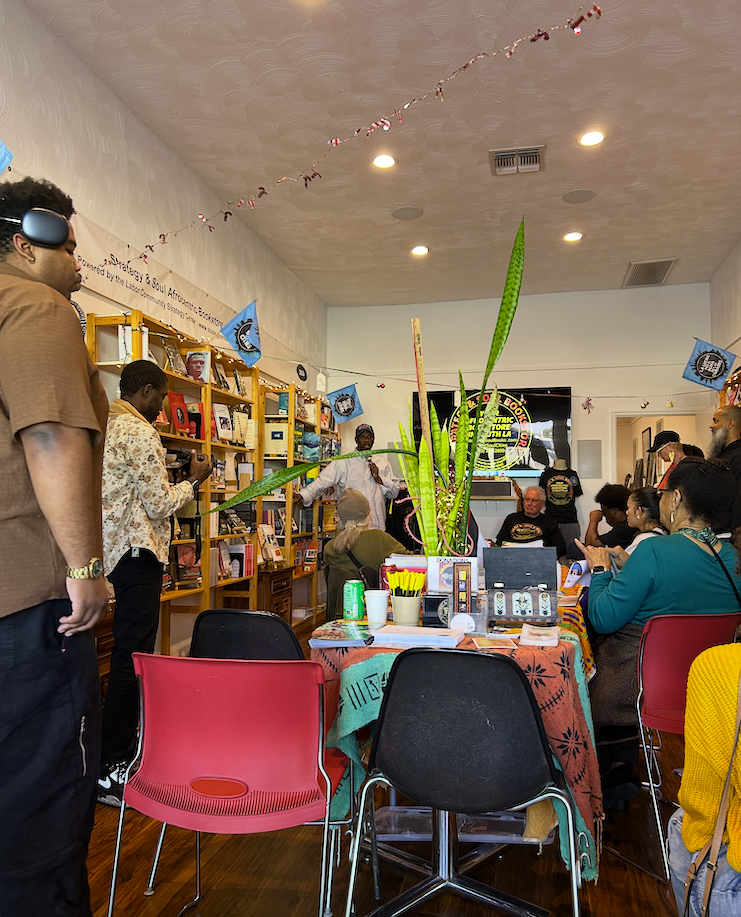
Strategy and Soul Bookstore Brings LA Community Together for an Uplifting Holiday Celebration
Strategy and Soul Bookstore’s annual holiday party brought the community together through music, food, and shared purpose, celebrating unity, culture, and collective joy! We discuss it here!
Los Angeles, CA - Community Gathers at Strategy and Soul Bookstore for an Annual Holiday Celebration
By: Omar Cook
Los Angeles, CA — Strategy and Soul Bookstore opened its doors on Saturday, December 13, and reminded all of us what community really feels like. I attended the annual holiday party firsthand, and from the moment I walked in, the energy was warm, intentional, and rooted in togetherness. It wasn’t just a holiday gathering — it felt like a reunion of people who genuinely care about culture, connection, and collective growth.
The vibes were undeniable. There was great food flowing, conversations happening in every corner of the room, and music that immediately set the tone. One of the highlights of the night was a powerful performance by the doo-wop group Street Corner Renaissance. Their soulful voices filled the space as they delivered beautiful holiday songs alongside classic R&B and soul renditions that had people smiling, swaying, and singing along. It felt like the kind of music that brings generations together, reminding you of family gatherings and shared history.
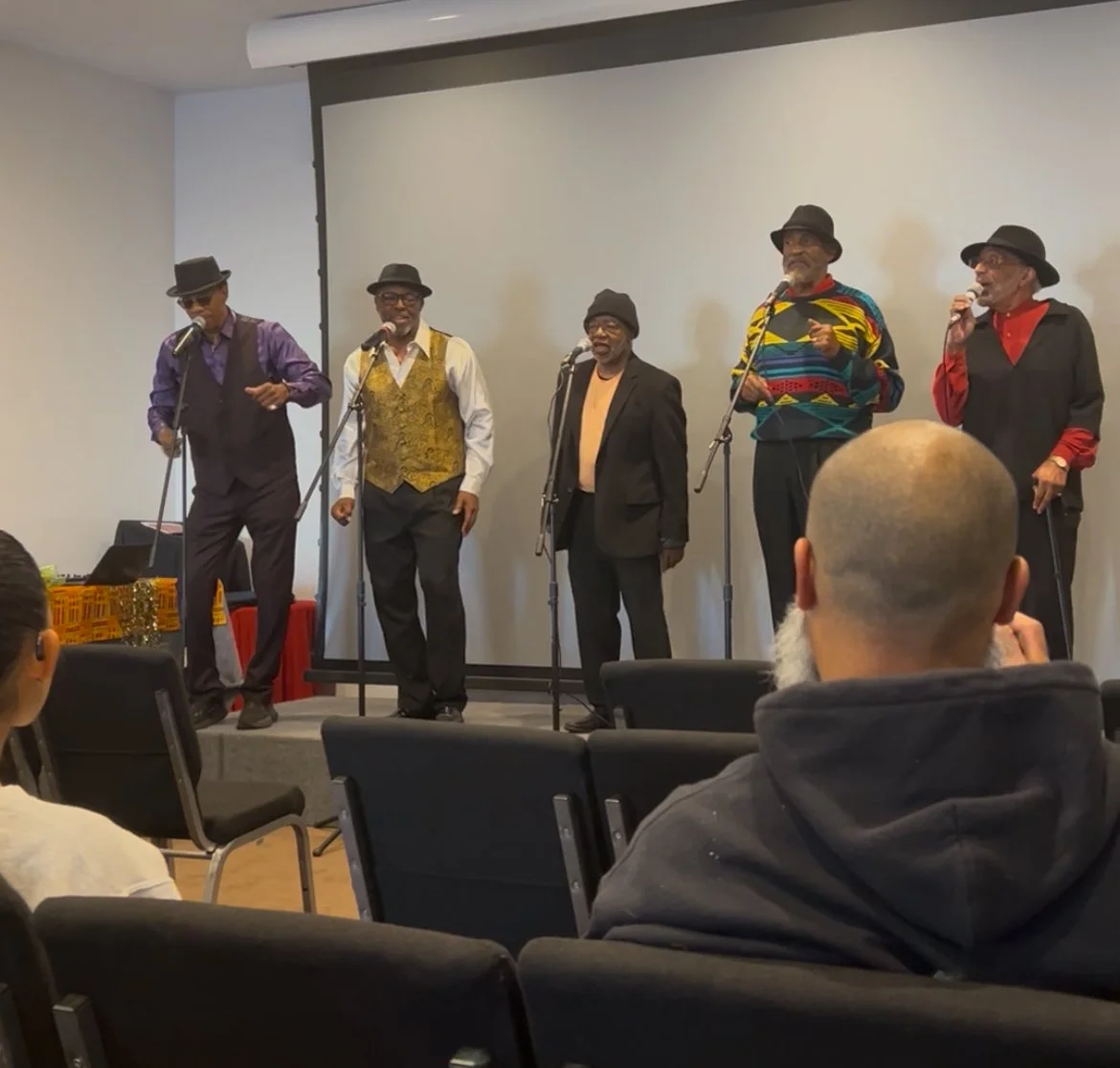
Street Corner Renaissance Performs at Strategy and Soul Bookstore
One of the most moving moments of the event came when we gathered for a drum circle. Community members picked up drums and made music together in real time, creating a rhythm that symbolized unity, collaboration, and shared purpose. There was something deeply grounding about standing in a circle, listening to one another, and contributing to a collective sound. It wasn’t about perfection — it was about presence.
Throughout the day, we also heard from community members who took the time to speak and offer a call for togetherness. Their words reinforced the importance of showing up for one another, staying engaged, and continuing to build spaces where dialogue, culture, and justice can coexist. It was clear that Strategy and Soul is more than a bookstore — it’s a hub for thought, movement, and meaningful connection.
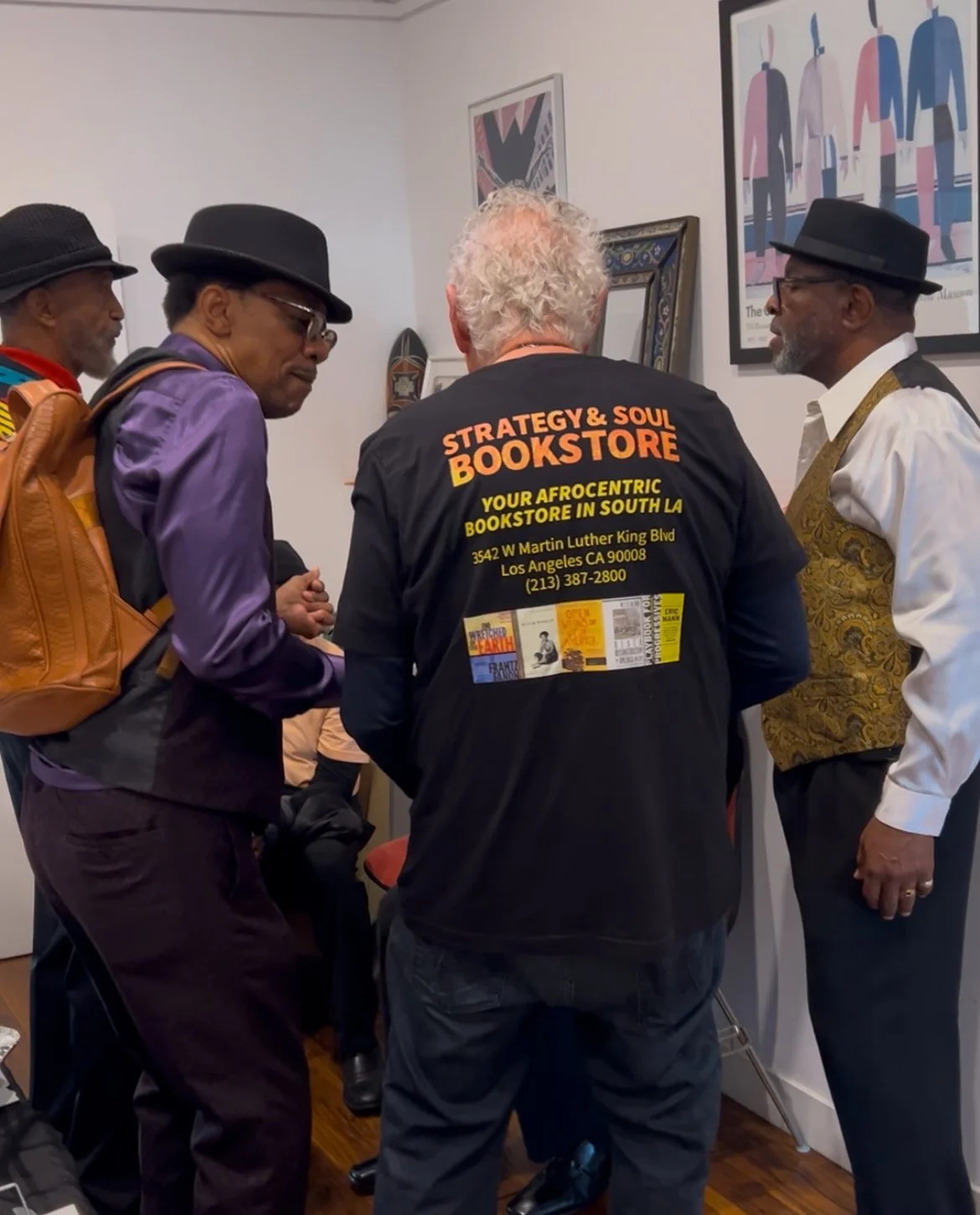
Street Corner Renaissance Performs at Strategy and Soul Bookstore
This holiday party is an annual tradition, and after experiencing it myself, I can confidently say it’s something worth marking on your calendar. I encourage everyone to attend next year if you can. And beyond the events, make it a point to stop by Strategy and Soul regularly. The bookstore offers a powerful selection of books on politics, social justice, culture, and liberation, and it remains a vital space for staying informed and involved.
Saturday night was a reminder that when community comes together with intention, music, and open hearts, something special always happens. Strategy and Soul continues to be a place where knowledge meets spirit — and where community truly lives.
YOU MAY ALSO BE INTERESTED IN:
SHARE TO SOCIAL MEDIA
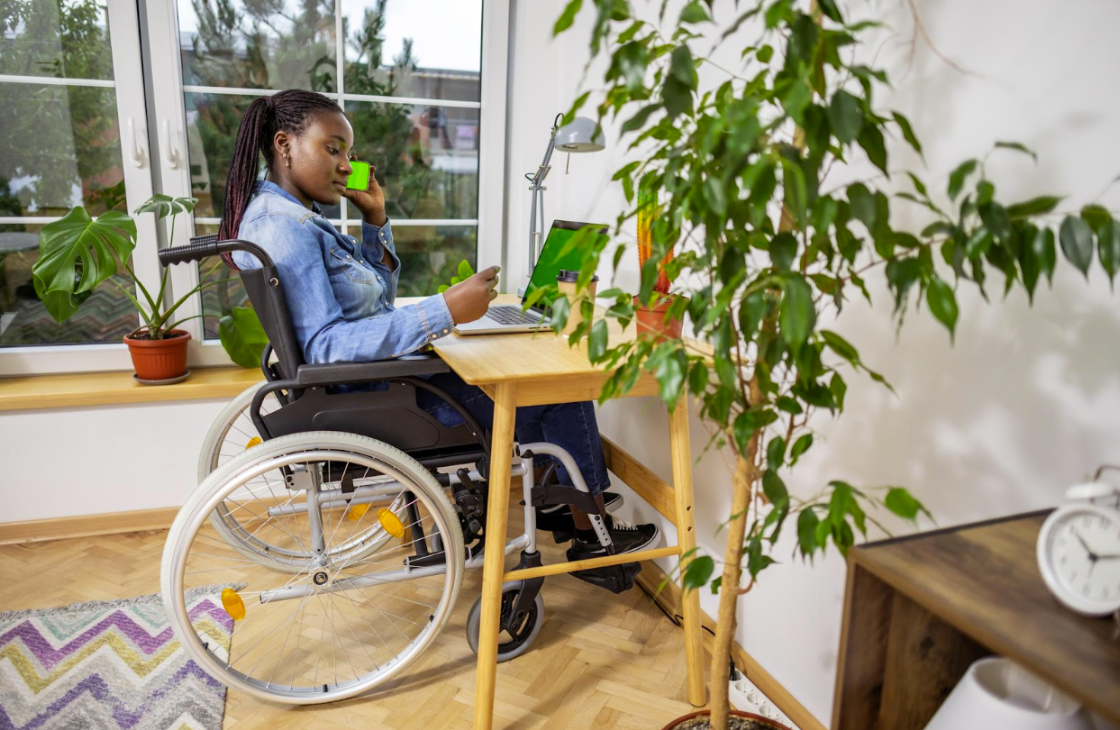
Fear of Abandonment When You Live With a Chronic Illness or Disability
Fear of abandonment for Black women with physical, medical, or neurological conditions is shaped by being misunderstood, dismissed, and made to feel like a burden, revealing how survival, self-protection, and the need to be truly seen intersect! We discuss it here!
Fear of Abandonment While Living With Disability or Chronic Illness
Photo Credit: Constantinis via iStockPhoto.com
By: Jamila Gomez
Fear of abandonment looks different when you’re a Black woman living with a physical, medical, or neurological condition. It’s not just the fear of someone walking away — it’s the quiet, lingering question of whether anyone will stay long enough to understand the life you carry. It’s the weight of wondering if your body, your limits, your fatigue, or the way you move through the world will make you “too much” for people who say they care.
For many of us, the fear didn’t start with a dramatic event. It started with the way people reacted to our needs. The sighs. The impatience. The disbelief. The way folks minimized our symptoms because we didn’t “look sick.” The way we were praised for pushing through pain instead of protected from it. We learned early that our bodies were negotiable, but other people’s comfort was not. And once that message sets in, it becomes second nature to guard yourself against the possibility of being left — not because you’re fragile, but because you’ve been conditioned to survive disappointment before it arrives.
Living with a condition that shapes how you function means living with a level of vulnerability most people never have to consider. Every plan depends on how your body feels. Every commitment comes with a quiet calculation: Will I have the energy? Will they understand if I don’t? Will this inconvenience them? Will I lose them if I’m honest? That mental load alone can push you into silence, isolation, or overcompensation. You end up trying to be “easy,” “flexible,” and “low-maintenance,” just so no one can accuse you of needing too much. But in the process, you abandon yourself long before anyone else gets the chance.
The fear of abandonment hits differently when you’ve had people dismiss your reality because they couldn’t see it. Invisible limitations create invisible grief. You carry the loss of who you thought you’d be by now. You grieve the friendships that faded because you canceled too much. You grieve the partners who got tired of adapting. You grieve the dreams that now require more support than you feel allowed to ask for. And beneath all of that grief is the fear that anybody you let close will eventually decide you’re a burden.
But here’s the truth most women like you never say out loud:
You’re not afraid of being left — you’re afraid of being misunderstood in the one place you should feel most held.
This fear shows up in the way you hesitate before expressing discomfort. It shows up in the apologies you give for pain you didn’t choose. It shows up every time you hide how hard the day was because you don’t want to look like you’re “complaining.” It shows up when you overextend yourself just to prove your worth. And it shows up when you stay in relationships that run on crumbs because at least crumbs don’t disappear.
But the deeper truth is this: your fear doesn’t mean you’re weak. It means your lived experience has taught you to be cautious. You’ve learned that not everyone has the capacity to love a woman with boundaries, limitations, and expectations. You’ve learned that some people only know how to hold you as long as you’re convenient. And that kind of history will shape how you love, how you trust, and how you let people close.
Still, there’s another side of the story — the part where you stop apologizing for the life you live. The part where you release the shame around your needs. The part where you stop shrinking your reality just to keep people who don’t deserve a front-row seat. Because the fear of abandonment loses its grip the moment you stop negotiating your belonging.
You don’t need people who are intimidated by your truth. You need people who can sit in the room with it without flinching. People who don’t make your limitations feel like liabilities. People who stay when things get inconvenient. People who understand that your body isn’t a burden — it’s a story, and you deserve to be surrounded by those who are willing to read it.
That kind of connection doesn’t eliminate the fear, but it gives it somewhere honest to land. And when a woman like you finally finds that? She stops bracing for abandonment and starts trusting her right to be chosen.
YOU MAY ALSO BE INTERESTED IN:
SHARE TO SOCIAL MEDIA

When Faith Forgets the Human: How Spirituality Can Shrink or Expand Us
Spirituality should expand, not shrink, who we are, inviting us to embrace our full humanity rather than hide behind rules or expectations! We discuss it here!
When Faith Forgets the Human
Photo Credit: Jacob Wackerhausen via iStockPhoto.com
By: Jamila Gomez
There’s a version of religion and spirituality that pulls people closer to themselves. And there’s another version—far more common—where faith becomes a shadow people hide behind, a set of rules that squeezes their humanity until they barely recognize themselves. The tension between the two has shaped entire generations, leaving many wondering whether faith is supposed to free them or restrain them.
For a lot of people, the faith they inherited wasn’t about becoming whole; it was about becoming acceptable. They were taught early that certain feelings were sinful, certain questions were rebellious, and certain parts of themselves needed to be tucked away to be “worthy.” Spirituality, in this form, becomes a performance. It asks people to show their polished parts and bury the rest. Over time, they learn to shrink—emotionally, mentally, and even relationally—because the space they’re allowed to take up is carved out by someone else’s interpretation of holiness.
This kind of shrinking shows up everywhere. People stop being honest about their doubts because doubt is labeled as weakness. They disconnect from their anger because anger is treated as disrespect. They hide their grief because grief is seen as a lack of faith. They suppress their joy because joy that doesn’t look like praise is sometimes judged as worldliness. Slowly, they begin to edit themselves. Not because God asked them to, but because their religious environment demanded a smaller, quieter, more obedient version of who they actually are.
But the truth is this: humanity isn’t the enemy of spirituality. It’s the birthplace of it. The most honest spiritual moments are rooted in very human experiences—fear, love, loss, hope, confusion, connection. When religion forgets that, it forgets the people it’s supposed to serve.
The other side of spirituality—the healthy side—doesn’t shrink people. It stretches them. It reminds them that being human is not a flaw but a fact, and that faith isn’t meant to erase their complexity but hold it. In a nurturing spiritual environment, doubt becomes a doorway to curiosity, not a threat. Anger becomes a signal that something needs attention. Grief becomes a sacred language. Joy becomes an expression of presence, not performance. The fullness of a person’s emotional life becomes a landscape where growth actually happens.
Healthy spirituality makes room for the whole person: the questions they haven’t answered, the wounds they haven’t healed, the dreams they haven’t said aloud. It encourages people to show up as themselves, not as an edited script. It honors their boundaries, their imperfections, and their individuality. It makes faith something lived, not performed.
So does spirituality shrink humanity? It can. And for many, it has. But it doesn’t have to. Faith was never meant to turn people into smaller versions of themselves. At its best, it calls them into wholeness—a place where their humanity is not something to hide, but something to embrace.
YOU MAY ALSO BE INTERESTED IN:
SHARE TO SOCIAL MEDIA
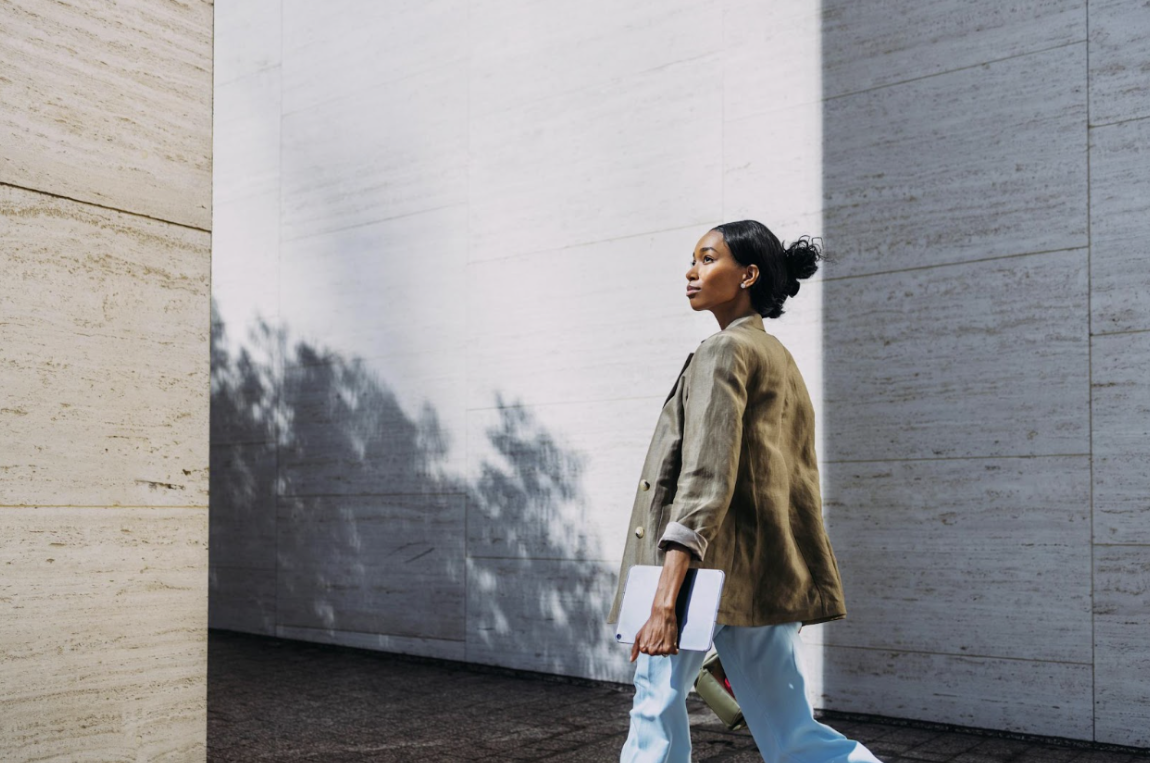
When Black Women Pivot, We Prosper: How Black Women Thrive Through Life Transitions
Life has a way of pushing Black women into seasons we never asked for, yet somehow we rise, rebuild, and become even more ourselves in the process! We discuss it here!
Black Women Thrive Through Life Situations
Photo Credit: FreshSplash via iStockPhoto.com
By: Jamila Gomez
Life has a way of pushing Black women into transitions we never asked for. Breakups, health scares, job changes, relocations, identity shifts, spiritual shifts, motherhood, caregiving, empty nesting, all of it forces us into seasons where we have to choose between shrinking back or stepping forward. And even when the world expects us to collapse under the weight of those changes, what actually happens is something far more powerful. We start building. We start creating. We start redirecting our lives toward wealth and success on our own terms.
Not the kind of “success” people project onto us. The real kind that comes from alignment, courage, and giving yourself permission to see possibilities where you once only saw survival. For Black women, transition is rarely gentle. But it is almost always fertile. When everything is shifting, we finally get quiet enough to hear what we have been ignoring. We get honest about what has drained us. We get clear about what we will not carry anymore. And that clarity becomes a business plan, a new career path, a new service, a new investment strategy, or a new discipline around money and boundaries.
Many of us did not grow up around generational wealth or examples of strategic reinvention. What we did inherit was resilience, resourcefulness, and the ability to pivot under pressure. So when a major transition hits, we turn that inner muscle memory into something tangible. Some go back to school. Some launch businesses. Some start saving and investing for the first time in their lives. Some negotiate salaries with a level of confidence they used to deny themselves. Some walk away from relationships or environments that kept their gifts small. Suddenly the same Black woman who spent years pouring into everyone else starts pouring into the life she wants to build.
This is not a coincidence. Transition strips away distractions. It exposes what we have been tolerating. It wakes up the part of us that knows we are meant for more. And in that raw space, Black women stop performing and start constructing. Wealth becomes less about a dollar amount and more about ownership. Ownership of our time. Ownership of our choices. Ownership of our stories. Ownership of the skills and talents we have downplayed for too long.
More and more Black women are using transitions to rethink their relationship with work. Instead of staying loyal to jobs that offer no stability or advancement, they are walking away and choosing pathways that honor their well-being. Instead of letting burnout silence them, they are building businesses rooted in creativity, wellness, tech, coaching, beauty, design, consulting, and caregiving. Instead of clinging to roles centered on sacrifice, they are choosing roles centered on growth. And every time they choose themselves, they widen the path for another sister who needs proof that reinvention is possible.
Life transitions force a kind of self-recognition that we can no longer avoid. When everything else is shaking, we finally ask the question we should have asked years ago. “What do I want my life to look like now?” From that question, we build differently. We spend differently. We rest differently. We say no differently. We choose relationships differently. And because of that, the wealth we build is not fragile, it is rooted in awareness, clarity, and self-respect.
Black women have always been innovators. The difference now is that we are giving ourselves permission to innovate for ourselves. Every transition becomes a doorway. Every loss becomes a lesson that sharpens our discernment. Every shift reminds us that staying the same is optional. Reinventing ourselves is always available.
Black women are building wealth and success in the middle of transition because transition finally gives us the space to treat ourselves like the investment we are. And once a Black woman decides to invest in herself, everyone can feel the shift. The life she creates from that point on will not be shaped by survival. It will be shaped by choice.
YOU MAY ALSO BE INTERESTED IN:
SHARE TO SOCIAL MEDIA
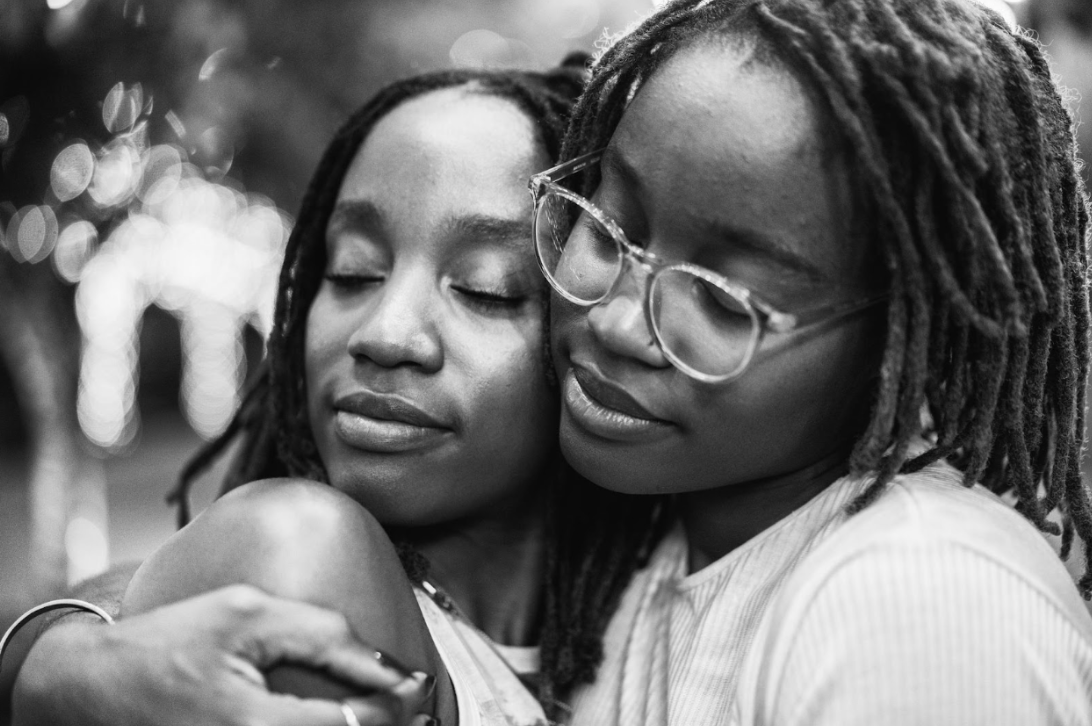
How Sharing Your Personal Story Can Heal Emotional Pain
Telling your true story can free you from the weight of silence and help others feel seen and understood! We discuss it here!
How Sharing Your Personal Story Can Heal Emotional Pain
Photo Credit: grandriver via iStockPhoto.com
By: Jamila Gomez
There is something powerful about a person deciding to tell the truth about their life. Not the polished version they offer in passing, but the real story. The one that still sits heavy in their chest. The one they have edited and reedited in their head because they worry how people will react. That kind of honesty can save lives. And it does more than help the listener, it reshapes the storyteller too.
We live in a world full of quiet suffering. People hold their breath through their days. They pretend they are fine because they think they are supposed to be. They convince themselves nobody else is going through what they are going through. So when someone speaks up and names their experience out loud, it cuts through all that isolation. It lets people breathe again. It gives them language they did not have. It lets them know they are not as alone as they assumed.
But we rarely talk about the other half of that truth. Telling your own story is not just generous, it is healing. When you bring your pain into the light, it loses the hold it once had on you. You stop carrying the weight in silence. You stop hiding the parts of yourself you think make you unlovable. You begin to see your life from a wider view. You see what you survived and how much you have grown. There is freedom in saying, “This happened, and I am still here.”
People hesitate to tell their story because they think it needs to sound brave or inspirational. It does not. Real stories are messy. They come with contradictions and confusion and things you wish you had done differently. That is exactly why they matter. Perfection does not save lives. Honesty does.
Someone out there needs to hear a truth that you have been sitting on. They need the reminder that they are not strange or weak or alone. They need proof that people survive things like theirs. They need hope from someone who understands from the inside. And sometimes, the person who needs that proof the most is you.
Telling your story is not about reliving the pain. It is about reclaiming your voice. It is about choosing connection over shame. It is about refusing to shrink just to keep other people comfortable. And in a world full of quiet hurting, speaking up is one of the most lifesaving things any of us can do. It has the power to heal the listener, and it has the power to heal the one who finally decides to speak.
YOU MAY ALSO BE INTERESTED IN:
SHARE TO SOCIAL MEDIA

Access Free Food Resources in Los Angeles During the Federal Government Shutdown
LA County Parks is expanding free food programs for youth, teens, and seniors to help families stay fed during the federal government shutdown! We discuss it here!
Access Free Food Resources in Los Angeles
By: Omar Cook
With the federal government shutdown ongoing, food security has become a serious concern for vulnerable populations across Los Angeles, including youth, seniors, and families. The loss of SNAP and CalFresh benefits has created a critical gap in food access, leaving many residents at risk.
LA County Parks is stepping in to help fill this gap by expanding its food programs at parks, teen centers, and senior centers. These programs have long been a vital part of the county’s food safety net, and now more than ever, they are providing essential meals and snacks to those in need.
Available Food Programs:
Free Healthy Snack Program for Youth – Offered at 48 parks Monday through Friday from 3 PM to 4 PM for children ages 17 and under.
Free Hot Supper Program at Our SPOT Teen Centers – Available at 16 parks Monday through Friday at 7 PM for teens ages 12 to 18.
Free Senior Food Program – Serving older adults at 9 parks Monday through Friday for anyone age 55 and older.
Due to the shutdown, CalFresh benefits for November may be delayed, making these programs an essential lifeline. LA County Parks encourages everyone to take advantage of these resources so that no one goes hungry while communities work to protect democracy.
Click here for Locations
Additional Resources:
Call 211 for food assistance and local programs
Make sure to spread the word—everyone deserves access to healthy meals.
YOU MAY ALSO BE INTERESTED IN:
SHARE TO SOCIAL MEDIA

Learning to Accept Pain: Not All Pain Has a Purpose
Sometimes pain has no grand purpose and simply exists to be felt, witnessed, and survived without needing to be justified or turned into a lesson. We discuss it here!
By: Jamila Gomez
We’ve all heard the sayings. “Everything happens for a reason.” “There’s purpose in the pain.” “This is just a lesson in disguise.” These phrases get tossed around like lifelines, especially when someone is going through it. But let’s be real: sometimes pain has no grand design. Sometimes it’s just pain. It’s not always a sign. It’s not always a test. And no, it’s not always a setup for something better.
Some pain is senseless. Some pain is caused by other people’s cruelty, carelessness, or unchecked power. Some pain is the byproduct of systems that were never meant to protect you in the first place. And trying to assign purpose to it—to spiritualize it, moralize it, or explain it away—can leave you feeling more confused than comforted. Especially when you’re already hurting.
There’s a quiet violence in telling people their suffering is meaningful when they haven’t been given the space to feel the weight of it. When they haven’t had the chance to say, “This shouldn’t have happened.” When the wound is still fresh and someone tries to slap a purpose on it like a Band-Aid. Sometimes we do this to ourselves, too. We scramble to make sense of what broke us because the thought of it being meaningless feels worse than the pain itself.
So we force meaning onto it. We tell ourselves, “Maybe I needed that to grow,” even when deep down, we’re not sure we believe it. And while it’s true that growth can come from pain, that doesn’t mean the pain had to happen in order for growth to be possible. That’s the distinction we don’t talk about enough.
We like to call pain a teacher. And yes, there are times it does teach us something—about ourselves, about the people around us, about what we will no longer accept. But there are also times when pain doesn’t teach anything. It just lingers. It disrupts. It steals. It silences. And the pressure to find meaning in those moments can feel like yet another burden to carry. The truth is, not every hurt has wisdom on the other side of it. Some pain just needs to be felt. Witnessed. Survived. We don’t need to tie a bow around every breakdown. We don’t need to alchemize every ache into a breakthrough. That’s hustle culture spirituality dressed up as healing.
Here’s where it shifts. While pain doesn’t always have a purpose, you can choose what to do with it. That doesn’t mean you’re obligated to “turn your pain into power” the way social media loves to glorify. It just means that somewhere in the aftermath—when the dust settles, when the sting dulls—you get to decide how this pain will or won’t shape you. You get to ask: Do I want to carry this forward, or set it down? What do I need to unlearn from this experience? Who am I now that this pain has passed through me? None of those questions rush the healing. They honor the fact that something happened, and you’re still here. That’s it. That’s enough.
Not every storm is followed by a rainbow. Some things don’t get wrapped up with clarity or closure. And that doesn’t mean you failed to “find the lesson.” It means you’re human. So if you’re in a season where you’re asking why—why this happened, why it hurts, why nothing makes sense—know this: you don’t have to give your pain a purpose it never asked for. You don’t have to find beauty in what broke you. Some pain just is. And surviving it is more than enough.
YOU MAY ALSO BE INTERESTED IN:
SHARE TO SOCIAL MEDIA

Behind The Strength: The Overlooked Reality of Depression in Black Women
High-functioning depression among Black women often hides behind strength, success, and survival, revealing how deeply exhaustion can disguise itself as resilience. We discuss it here!
By: Jamila Gomez
We know how to show up. We know how to smile through it, handle the details, meet the deadlines, send the check-ins, cook the meals, run the errands, answer the texts, and follow up when no one else does. We know how to get through the day without falling apart. And to most people, that looks like being “fine.” But high-functioning depression is what happens when “fine” is just a mask that fits too well. It’s what lives underneath the competence, the caretaking, the survival mode. It’s the part no one checks on because we don’t “look” like we’re struggling.
For Black women especially, high-functioning depression often goes unnoticed—not just by others, but by us. Because we were raised to be strong. We were raised to hold it down, hold it together, hold everybody else. And when you’ve been taught that rest is laziness and sadness is weakness, you learn to suppress, minimize, and keep it moving. You don’t get the luxury of falling apart, so you never let yourself consider how tired you actually are. Even exhaustion becomes something you normalize. Even numbness becomes something you ignore.
The danger of high-functioning depression is that it hides in plain sight. It doesn’t look like staying in bed all day. It looks like showing up to work and still feeling like a ghost in your own life. It looks like replying to every message and still feeling disconnected. It looks like accomplishing things that don’t even feel real anymore—like you’re just going through the motions on autopilot. It looks like success that doesn’t feel like success. Joy that feels like work. Laughter that feels borrowed. And it’s heavy. Heavier than most people understand.
What makes this even more complicated is that Black women are rarely believed when we name our pain. We’re told we’re “strong,” as if that means we don’t struggle. We’re told we’re “resilient,” as if that means we don’t need rest. Our high functioning becomes our hiding place. And the world rewards us for it. We get praised for being dependable while quietly breaking down. We get affirmed for being “the strong friend” while no one notices we’re slipping. And because we don’t fit the typical image of what depression is supposed to look like, we get overlooked—by doctors, by therapists, by systems, by our own people, and sometimes by ourselves.
But just because you’re still standing doesn’t mean you’re okay. Just because you’re handling it doesn’t mean you should have to. Just because you’re functioning doesn’t mean you’re thriving. We have to stop equating productivity with wellness. We have to stop confusing performance with peace. We have to start asking ourselves not just “Did I get it all done?” but “How am I actually doing?” And we have to be willing to answer that honestly, even when the truth is uncomfortable.
Living with high-functioning depression doesn’t mean you’re broken. It means you’ve been surviving. It means your body and brain have adapted to pain in a way that kept you moving when slowing down didn’t feel like an option. That’s not weakness—that’s resourcefulness. But survival isn’t the same as healing. And I know we’ve been taught to put everyone else first. I know we’ve been taught that self-care is selfish. But the truth is, ignoring your needs doesn’t make you noble. It makes you disappear.
So here’s the reminder: You are not alone in this. You are not the only one who feels this way. You are not the only one who’s been smiling through the ache, pushing through the fog, showing up while feeling empty. There are more of us than you think. And you deserve spaces where you can be seen, not just for what you do, but for who you are. You deserve rest. You deserve softness. You deserve to be supported—not only when you’re falling apart, but also when you’ve mastered the art of holding it together.
Let’s stop making pain invisible. Let’s stop wearing strength as armor. Let’s start checking in on ourselves and each other in real, honest ways. Not the “you good?” texts, but the “how’s your spirit?” kind of check-ins. The kind that give us room to not be okay and still be loved. This is how we create community. This is how we come home to ourselves.
YOU MAY ALSO BE INTERESTED IN:
SHARE TO SOCIAL MEDIA

'Find Your Passion': The Career Advice That Keeps Women Exhausted
For many women, especially Black women, the pressure to “find your passion” has turned purpose into exhaustion and fulfillment into survival, reminding us that meaning should never come at the cost of our peace! We discuss it here!
Career Advice That Keeps Women Exhausted
Photo Credit: LaylaBird via iStockPhoto.com
By: Jamila Gomez
“Find your passion.” It’s the line that’s been etched into commencement speeches, career panels, and motivational posts for decades. It sounds noble—who wouldn’t want to spend their life doing what they love? But for many women, especially Black women and women of color, this advice has become another kind of trap. Instead of leading to fulfillment, it often leads to guilt, burnout, and the endless pressure to turn passion into proof of worth.
The message behind “find your passion” assumes privilege. It imagines a world where people have the time, safety, and resources to explore what lights them up—and to walk away from what doesn’t. But most women don’t live in that world. They live in one where bills are due, children need care, parents need help, and stability isn’t optional. Passion sounds lovely, but it doesn’t pay rent. And yet, women are constantly told that if they’re not doing what they love, they’ve somehow failed themselves.
What this advice rarely admits is that passion work often becomes more exploitative than traditional labor. Women who turn their gifts into businesses or creative careers are told to “monetize what you love,” only to find themselves working longer hours for less security. Their emotional investment becomes part of the job description. The line between purpose and labor blurs until both feel heavy. Passion becomes another way to justify unpaid work, low pay, or burnout—because if you “love it,” you’re supposed to keep pushing through.
This is especially true in care-driven professions—teaching, social work, counseling, nursing, and nonprofit roles—fields dominated by women. Passion is treated as both requirement and reward: the very thing that makes the job meaningful is also what makes the exploitation easier to ignore. Employers don’t have to offer adequate pay or support when they can point to passion as the moral substitute. “You’re here because you care,” they say, as if care alone should cover the cost of survival.
It’s time to tell the truth: passion is not protection. Loving what you do does not make you immune to burnout, underpayment, or being undervalued. Purpose is not a shield—it’s a responsibility that still requires boundaries. The idea that passion should carry us through exhaustion has left too many women working twice as hard for half the return, still questioning whether their effort is enough.
There’s nothing wrong with wanting work that feels meaningful. But meaning shouldn’t demand martyrdom. The better question isn’t what’s your passion? It’s what kind of life do you want your work to make possible? That’s a question about sustainability, not sacrifice—about balance, not branding.
Work doesn’t have to be a calling to be worthwhile. It just has to leave room for you to live.
YOU MAY ALSO BE INTERESTED IN:
SHARE TO SOCIAL MEDIA
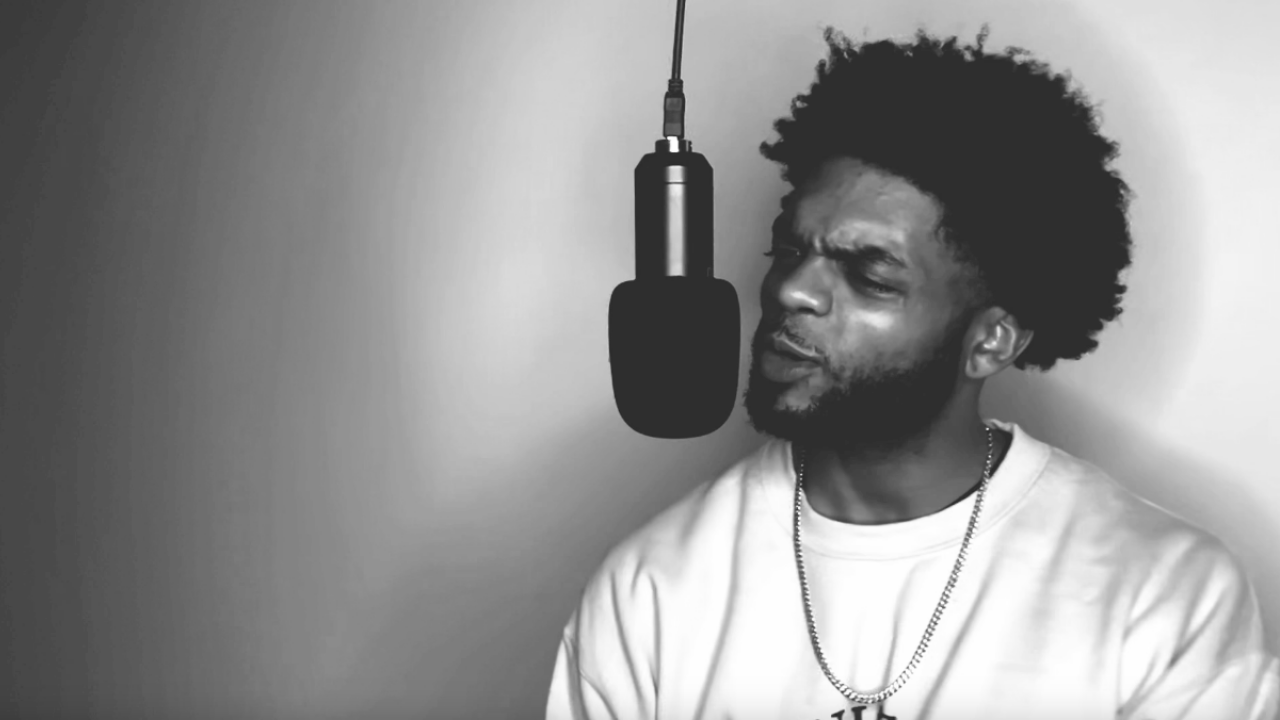
The Power of Black Art: Using Music and Creativity to Heal and Elevate
Black artists have the power to shape culture, and when we use our music and creativity to heal, inspire, and uplift, we leave a legacy that elevates our communities and transforms lives. We discuss it here!
Omar Cook Performs “Spiritual War”
By: Omar Cook
Art is powerful. Every note, every lyric, every visual we put into the world carries energy. As Black artists, we hold a unique platform to influence minds, hearts, and culture. Unfortunately, mainstream Black entertainment has often been steered toward negative agendas—glorifying sex, drugs, and materialism—rather than uplifting, healing, or inspiring. This imagery and messaging aren’t harmless; they shape how people think, feel, and act.
Music is spiritual. It affects the soul whether we acknowledge it or not. When hate, destruction, or death are the themes we amplify, that energy is released into the world, and eventually it comes back to us. Every song, every performance is a choice. It doesn’t have to be gospel or a political speech, but it should be intentional. Ask yourself: Does what I’m creating benefit others? Does it uplift, heal, or inspire, or does it add to the destruction of our people?
The youth feel the impact the most. They attend concerts, watch videos, and consume music on a massive scale. They are receiving this energy, absorbing it, and it becomes part of the environment they grow up in. As artists, we have a responsibility to be conscious of that influence. The music we create isn’t just entertainment; it’s shaping the mindset and spirit of generations.
Promoting positive, high-vibrational artistry starts with us as creators. It starts with being a catalyst for change and holding ourselves accountable for the legacy we leave behind. I want my art to exist as a source of healing, growth, relatability, and inspiration—something that gives people strength to keep going despite life’s challenges. That is the power of intention in art.
But the responsibility isn’t only on artists. As consumers, we also hold power. Where we put our energy—what we stream, share, and support—determines which artists rise and which messages dominate culture. Supporting artists who inspire and uplift is just as important as creating that content.
The shift starts now. It’s time to check ourselves, both as creators and as audiences. Black entertainment can evolve. Our art can carry the vibration of hope, love, and unity. Our legacies can be measured not only by hits and streams but by the healing and inspiration we leave behind. The question is simple: what energy do you want to leave on this planet, and how will your gifts serve the people?
YOU MAY ALSO BE INTERESTED IN:
SHARE TO SOCIAL MEDIA

From Empowerment to Exploitation: How Companies and Culture Exploit the Word | Oped
Empowerment has become a buzzword stripped of meaning, used to market overwork, consumption, and illusion instead of real power and change. We discuss it here!
When Empowerment Becomes Exploitation
Photo Credit: pixelfit via iStockPhoto.com
By: Jamila Gomez
Empowerment is everywhere. Companies claim they empower employees. Brands promise their products empower women. The word saturates ad campaigns, annual reports, and hashtags. But the more it circulates, the more hollow it becomes. Too often, what’s sold as empowerment is exploitation dressed in affirmations—demanding more while insisting you should be grateful for the chance.
The workplace is the clearest case. Employers boast about empowering staff with “flexibility” or encouraging “ownership.” In practice, flexibility means being reachable at all hours, and ownership translates into absorbing responsibilities without pay, support, or decision-making power. You’re told you’re being empowered to grow while your job quietly expands into what used to be two jobs. Autonomy becomes a brand name for overwork.
Consumer culture runs the same play. A fashion label celebrates “empowered women” in glossy ads while underpaying women of color who sew its garments under unsafe conditions. Wellness companies sell supplements, apps, and retreats as tools for empowerment, telling you peace is a purchase away. The burden lands on individuals to buy, optimize, and “fix” themselves, while the forces driving their stress—precarious wages, long hours, unaffordable housing—stay untouched.
The gig economy perfected the script. Platforms talk about empowering workers to “be their own boss,” but what many actually get is fluctuating pay, opaque algorithms, and the risks of employment without protections. The freedom to choose your hours often means stitching together income across multiple apps with no benefits. Again, the language elevates choice while the structure limits it.
This rhetoric doesn’t merely mislead; it relocates accountability. If you don’t feel empowered, the diagnosis becomes personal: you didn’t lean in, hustle harder, manifest correctly, or maintain the right mindset. Structural barriers fade from view, shielded by uplifting copy. Meanwhile, the people with the least control over their time and safety are told to self-improve their way out of systems designed to exhaust them.
Real empowerment is not a slogan. It is structural. It looks like fair wages, predictable schedules, safe workplaces, paid leave, and accessible healthcare. It means transparent advancement, independent recourse for harm, and a voice with teeth—unions, worker councils, tenant protections.
We should retire the applause lines and adopt testable questions: Who decides? Who benefits? Who bears the risk? How quickly can harm be remedied, and by whom? If the answers still point up the chain, that’s not empowerment—it’s marketing. Power that can be taken away without due process or a collective say was never power to begin with.
If institutions are serious, they should stop using empowerment as camouflage and ask harder questions: Are we shifting control to the people most affected, or simply rebranding extraction? Until “empowerment” is tied to actual power—time you can protect, money you can live on, safety you can trust—it will remain a flattering mask.
And masks, no matter how inspirational the slogan across them, cannot clean the air we’re forced to breathe. Real empowerment changes the air. Everything else is costume.
YOU MAY ALSO BE INTERESTED IN:
SHARE TO SOCIAL MEDIA

Who Gets Saved? Cancel Culture’s Double Standard Against Black Women in Media
Cancel culture reveals a double standard—Jimmy Kimmel was defended and saved, while Joy-Ann Reid and Tiffany Cross faced harsher scrutiny and silence when targeted. We discuss it here!
Who Gets Saved? Cancel Culture’s Double Standard Against Black Women in Media
Photo Credit: Monkey Business Images via Shutterstock
By: Jamila Gomez
“Cancel culture” is often framed as a cultural reckoning where public figures are held accountable for their words or actions. But the reality is far messier. Who actually gets “canceled”—and who gets forgiven—has less to do with the offense itself and more to do with power, race, and gender.
Take the case of late-night host Jimmy Kimmel. After making disparaging comments about conservative activist Charlie Kirk, Kimmel found himself facing backlash that could have easily ended his career. For weeks, social media buzzed with calls for his removal. But then something telling happened: hundreds of people, from loyal fans to high-profile allies, rallied to his defense. Petitions circulated, hashtags trended, and a narrative quickly formed that Kimmel was “too important” to lose. In the end, his job was saved.
Contrast that with what has happened to several Black women in media. Joy-Ann Reid, the host of MSNBC’s The ReidOut, has been targeted by controversy more than once, including resurfaced blog posts from years earlier. Each time, instead of a broad public outpouring to defend her, she was left to navigate the storm largely alone. While Reid still has her show, the scrutiny has been relentless, and her career hangs under a different kind of spotlight than her white male peers.
Tiffany Cross faced an even starker example. As host of The Cross Connection on MSNBC, she brought sharp, unapologetic commentary to the weekend lineup. Despite cultivating a dedicated audience and providing a platform for voices often excluded from mainstream news, Cross was abruptly dropped from the network in 2022. The “why” was never clearly explained. What stood out most was the silence that followed. No widespread campaigns. No petitions. Few celebrities stepping forward to demand her reinstatement. For all her impact, Cross was treated as dispensable.
This disparity is not accidental. It reveals a cultural double standard in how cancellation and forgiveness are distributed. When white male hosts stumble, institutions and audiences alike often bend over backward to frame them as redeemable. Their platforms are considered essential, their voices too valuable to lose. But when Black women in media face controversy—or simply push against the status quo—the instinct is to cut ties quickly, with little effort to preserve their place at the table.
At its core, this is about power. Late-night television has long been dominated by white men, who benefit from built-in networks of institutional loyalty and public goodwill. Meanwhile, Black women in journalism and broadcasting often fight uphill battles just to be heard. They are scrutinized more harshly, penalized more quickly, and defended less fiercely. The question isn’t whether cancel culture exists—it’s who it protects and who it erases.
The broader consequence is chilling. If Black women know their jobs can disappear without public defense, the incentive is to self-censor, to avoid being “too bold” or “too controversial.” That silences perspectives we desperately need. It narrows the range of stories told in mainstream media and reinforces the notion that some voices are disposable while others are indispensable.
Jimmy Kimmel was saved not just because of his talent or popularity, but because he belonged to a group that society has already decided is worth saving. Joy-Ann Reid and Tiffany Cross didn’t receive that same grace. Until media institutions and audiences confront this uneven playing field, cancel culture will continue to function less as accountability and more as a mirror—showing us, again and again, whose voices are valued and whose are easily erased.
YOU MAY ALSO BE INTERESTED IN:
SHARE TO SOCIAL MEDIA

The Complicity of Disengagement: Why Silence in the Face of Injustice Isn’t Neutral | Op-Ed
From police killings at home to wars abroad, silence isn’t just absence, but complicity that leaves communities of color and marginalized people carrying the weight. We discuss it here!
Complicity of Disengagement
Credit: Prostock-studio via Shutterstock
By: Jamila Gomez
Every time the world cracks open—another killing, another war, another headline that makes your stomach drop—I notice the patterns. Some people respond with outrage. Some respond with grief. And some respond with silence. That last group—the ones who consistently turn away from tragedy as if distance will protect them—often treat disengagement as harmless. But turning away isn’t neutral.
Avoidance is a privilege, and it’s a privilege not everyone has. Some people can shut their laptops, mute the conversation, or scroll past the news without consequence. They can walk through the world buffered by race, money, geography, or status and convince themselves that the pain doesn’t touch them. But for others, there is no buffer.
For Black communities, for queer folks, for people already living at the margins, the news cycle isn’t just headlines—it’s lived reality. We can’t mute another police killing when that victim could be our cousin. We can’t ignore another law erasing rights when it chips away at our very existence. We can’t dismiss violence in a far-off country when our families are still there. To look away, when you have the option, is to quietly decide the pain belongs to someone else.
The silence that follows isn’t empty—it’s heavy. It doesn’t just shield the one who chooses it; it shifts the burden onto others. Those who keep showing up, speaking out, and carrying the weight end up carrying it alone. And silence sends a message. It signals that injustice can go unchecked. It suggests that grief doesn’t need acknowledgment. It tells us that distance is an acceptable substitute for solidarity.
None of this is to say we don’t need rest. No one can live in a constant state of crisis without breaking. Boundaries matter. Self-preservation matters. But there’s a difference between stepping back to catch your breath and building a habit of avoidance. Rest is temporary; disengagement as a lifestyle is something else entirely. When silence becomes the default posture, it becomes complicity.
And the truth is, people don’t always need perfect words. They don’t always need a plan. What they need is presence. A simple acknowledgment: I see what happened, and it hurts. A check-in: Are you holding up? A refusal to normalize harm by pretending nothing happened. Presence doesn’t solve the problem, but it communicates something critical—that suffering matters enough to witness, even if it can’t be fixed. To show up is to affirm that we are not as alone as the world often makes us feel.
Turning away may feel like self-protection. But it comes at a cost, and others pay it. Witnessing is hard. Staying present is harder. But neutrality in the face of suffering? That’s not neutrality at all.
YOU MAY ALSO BE INTERESTED IN:
SHARE TO SOCIAL MEDIA

We Made a Way Out of No Way: How Black Creativity Saves Us
Black creativity is a living force that transforms struggle into joy, pain into prophecy, and vision into tomorrow. We discuss it here!
By: Jamila Gomez
“We made a way out of no way.” It’s a phrase passed down through generations, born in pulpits and whispered in kitchens, a declaration of faith and survival. And it’s not just about getting by, but how we transformed impossible circumstances into something beautiful. At the center of that transformation is creativity. Black creativity has always been more than talent or art. It has been the medicine we reach for when life feels unbearable, the tool we use to carve space in a world that tries to squeeze us out.
From the rhythms of a drum that carried coded messages across plantations to the call-and-response of the Black church, creativity has always been a way to cope with what was placed on us. What looks like music, slang, or fashion on the surface is often the echo of generations finding ways to breathe under pressure. When the world gave us silence, we sang louder. When doors closed, we built our own. When grief was heavy, we danced to remind our bodies that joy is still possible.
Creativity is how we metabolize what would otherwise break us. Think about how often we laugh at pain. The jokes that come out of tragedy aren’t just jokes; they’re survival tools. Black Twitter doesn’t just create memes—it creates release valves for collective grief and stress. And in everyday life, it shows up in smaller ways too. The auntie who turns Sunday dinner into a feast, stretching little into plenty. The barber who turns a haircut into therapy. The teenager who flips thrift-store finds into fashion. These aren’t just skills—they’re coping mechanisms disguised as culture.
This is why our creativity is never just entertainment. It’s not frivolous, it’s not extra—it’s medicine. Art, music, fashion, food, humor, even the way we remix language—all of it is how we keep going when life feels unlivable. Creativity has always been both expression and exhale.
And it’s not only about survival. Creativity is prophecy. It doesn’t just help us live through what is; it gives us vision for what could be. Every beat, every line, every invention is both therapy and blueprint. It points to a future bigger than our circumstances.
That’s the power of making a way out of no way: Black creativity saves us because it reminds us we’re more than what we’ve endured. It takes pain and transforms it into power, despair and reshapes it into possibility. We are not just survivors. We create our way into tomorrow.
YOU MAY ALSO BE INTERESTED IN:
SHARE TO SOCIAL MEDIA
Angel Guice Releases Intimate New Book: ‘My Secrets Your Promises: My Diary – The Month of October 2024’
Actress and author, Angel Guice, releases her deeply personal new book 'My Secrets Your Promises: My Diary – The Month of October 2024', inviting readers into her daily reflections, emotional battles, and a journey toward self-love and spiritual connection. We discuss it here!
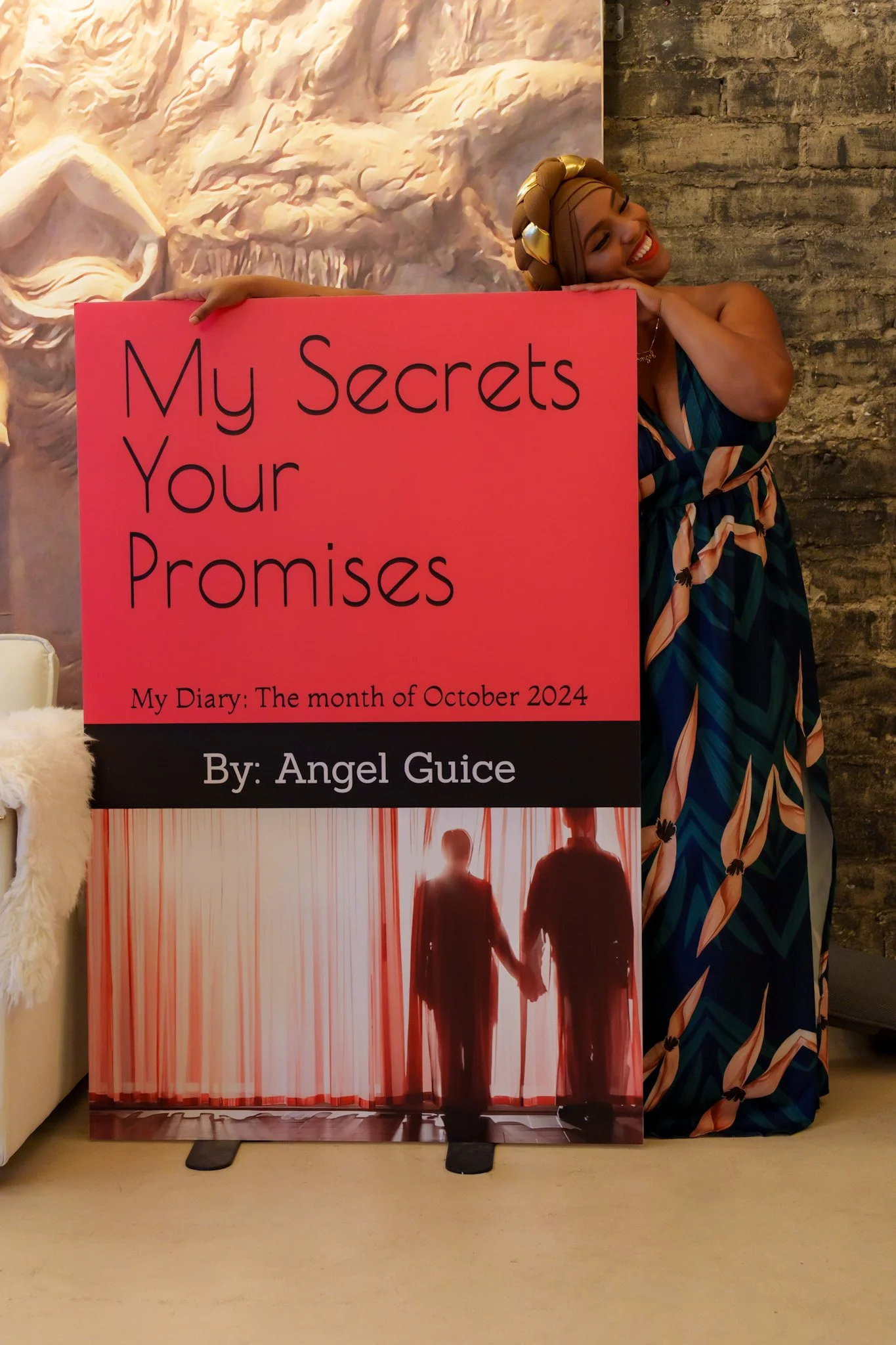
Angel Guice at the Release Party of Her New Book: My Secrets Your Promises: My Diary – The Month of October 2024
“If there’s no enemy within, the enemy outside can do you no harm.”
By: Omar Cook
LOS ANGELES, CA — Actress, creative, and visionary Angel Guice invites readers into her heart and mind with the release of her newest literary work, My Secrets Your Promises: My Diary – The Month of October 2024, now available on Amazon.
Part diary, part self-reflection workbook, and part soul-to-soul conversation, this book is a bold and vulnerable journey through Angel’s daily thoughts, emotions, and revelations throughout one transformative month. With raw honesty and poetic rhythm, she shares what it feels like to live, to question, to love, to overthink, and to grow.
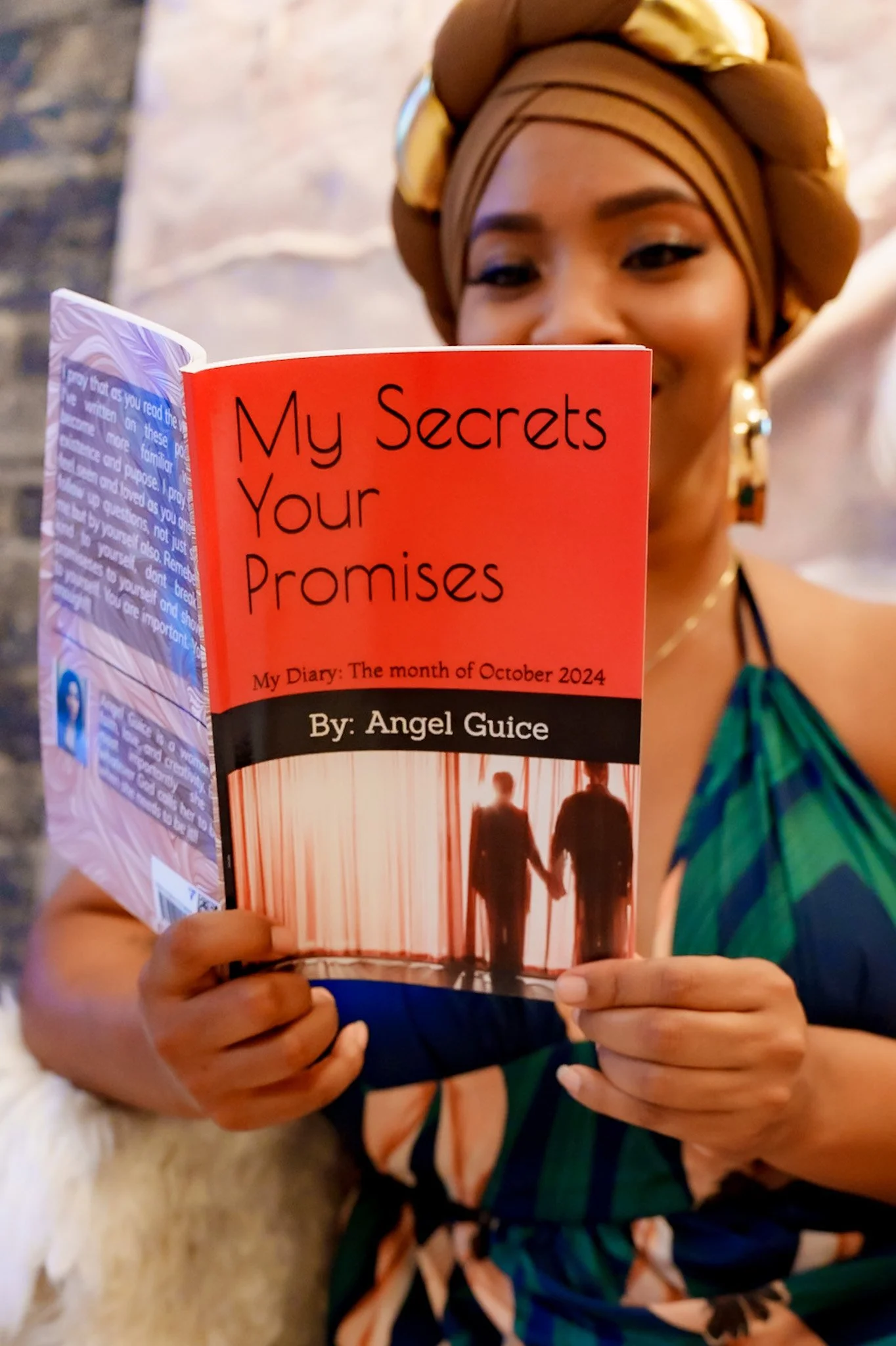
Angel Guice Reads Her New Book: My Secrets Your Promises: My Diary – The Month of October 2024
“Take a trip with me,” Guice writes. “You will see how I battle with myself on different topics and subjects that I face on a day-to-day journey in my world. Experience how I see the world THROUGH MY EYES, and sometimes how I see other people’s worlds through my eyes.”
At the end of each entry, she poses reflective questions, gently encouraging readers to examine their own lives, emotions, and intentions. It’s an exchange of trust and Angel shares her secrets, and you’re invited to make your promises. Promises to yourself. To your healing. To your growth.
“As I share my secrets with you, I want you to share your promises with me,” she says. “Now you don't have to share your promises with me at all. But since I'm baring my soul, why not bare yours!?!?!”
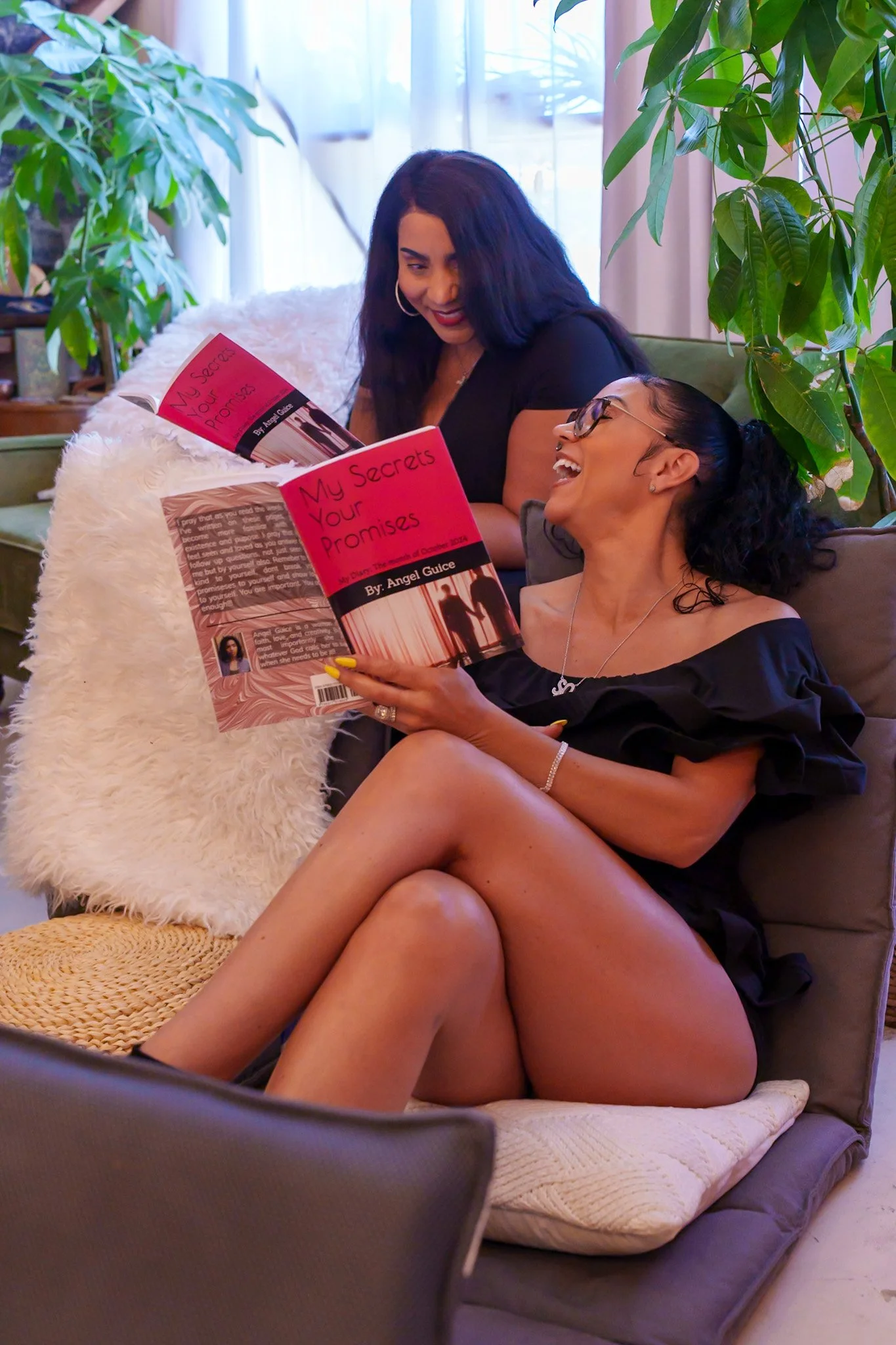
Readers Enjoy the Release of Angel Guice’s New Book: My Secrets Your Promises: My Diary – The Month of October 2024
Whether you’re navigating emotional highs, inner conflicts, or simply trying to stay grounded in a noisy world, My Secrets Your Promises offers a safe space to pause, reflect, and breathe.
This book is perfect for anyone craving realness in an era of filters and perfection. It’s about showing up honestly, healing out loud, and learning how to live more intentionally, one day at a time.
“I wrote this book initially to slow down and reflect on my thoughts and feelings and learn about myself, with hopes that my readers would do the same and to help them understand that they aren’t alone in their thoughts and feelings” Guice says. “I wrote this book also for my successors/legacy, so that when I’m long gone they’ll know who I was through my own words!”

Angel Guice shares that her intention for My Secrets Your Promises is to encourage readers to truly learn themselves and to dive deep into their inner world and build a strong, authentic relationship with who they are at the core. She emphasizes that the most important connection we can have is with ourselves and the God within us. Through her vulnerability, she hopes to inspire self-awareness, spiritual alignment, and a deeper sense of self-love, because as she passionately reminds us: SELF-LOVE IS THE BEST LOVE!
Grab your copy of My Secrets Your Promises: My Diary – The Month of October 2024 today on Amazon
🔗 Click here to purchase
Let the secrets be shared. Let the promises be made. And let the healing begin.
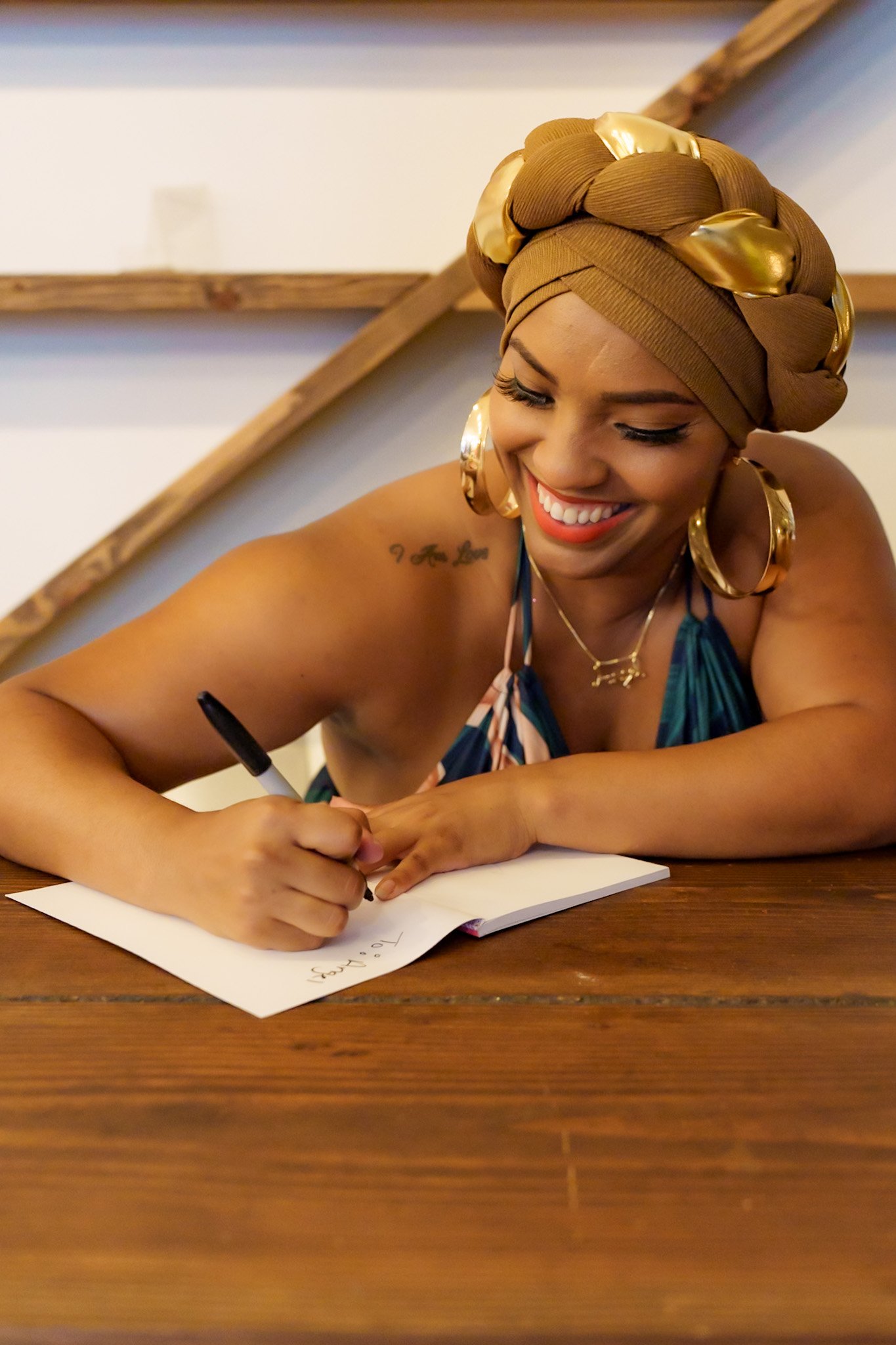
Angel Guice Signs Her New Book: My Secrets Your Promises: My Diary – The Month of October 2024
YOU MAY ALSO BE INTERESTED IN:
SHARE TO SOCIAL MEDIA
The Power of Storytelling: A Black Experience
Black storytelling is a powerful act of survival, resistance, and cultural preservation, ensuring that Black history, voices, and futures are reclaimed, honored, and written on our own terms. We discuss it here!
Photo cred: SeventyFour via iStockPhoto.com
By: Jamila Gomez
Storytelling has always been the heartbeat of Black existence. Before we wrote, we spoke. Before we recorded, we remembered. And even in the face of forced silence, we sang. Our stories—whether whispered between kinfolk in cotton fields, laid down in Harlem Renaissance poetry, or coded in the rhythm of a drum—have been the means through which we preserve our history, affirm our humanity, and shape our future.
For Black people, storytelling is not just art—it’s survival. It’s resistance. It’s power.
Memory as Liberation
Our ancestors understood that history, when controlled by the oppressor, becomes a weapon. It erases, distorts, and rewrites until our truths are buried beneath someone else’s lies. But storytelling has always been our tool for reclamation.
The griots of West Africa held entire dynasties in their memories, passing down the names, victories, and struggles of our people long before European conquest. This tradition lived on when we were stolen from our lands—through folktales like Br’er Rabbit, subversive spirituals, and oral histories that ensured our ancestors were never truly lost.
Even today, Black storytelling pushes back against historical erasure. From writers like Toni Morrison, who resurrects the ghosts of our past, to filmmakers like Ava DuVernay, who refuses to let history be sanitized, we use our stories to carve our truths into the fabric of the world.
The Power of Our Voices
For centuries, Black people were denied the right to tell their own stories. Enslaved people were forbidden from reading and writing, and when they spoke, their words were dismissed or criminalized. Yet, our voices persisted.
Frederick Douglass wielded his autobiography as a weapon against slavery. Zora Neale Hurston captured the raw beauty of Black Southern life. James Baldwin’s words still slice through America’s conscience like a hot knife.
But storytelling is not just for the published and the acclaimed. Every grandmother who tells the family’s migration story at the dinner table, every barbershop debate that transforms into a history lesson, every spoken-word poet who pours their soul onto a mic—these are all acts of cultural preservation. Every time a Black person tells their truth, they disrupt a world that was built to silence them.
The Future Written by Us
Black storytelling is not just about looking back; it’s about shaping the future. When we tell our own stories, we define ourselves outside of the white gaze. We remind the world—and ourselves—that we are not just trauma, not just struggle, not just footnotes in someone else’s history book.
We are joy. We are love. We are creators of worlds, builders of dreams.
This is why hip-hop became a global phenomenon—because it was the raw, unfiltered voice of a people who refused to be ignored. This is why Afrofuturism is so powerful—it dares to imagine a world where Black people are free beyond the constraints of history. This is why we must keep telling our stories—because no one else can tell them the way we do.
So whether it’s through literature, music, film, or simple conversation, keep speaking. Keep writing. Keep remembering. Because every Black story told is a world reclaimed. And when we control our narratives, we control our destiny.
Our stories are our power. Let’s never let them go.
YOU MAY ALSO BE INTERESTED IN:
SHARE TO SOCIAL MEDIA

HBCU Marching Bands Take Over SoFi Stadium for Historic Honda Battle of the Bands 2025
HBCU marching bands made history at SoFi Stadium with an electrifying Honda Battle of the Bands 2025, celebrating Black excellence, culture, and musical legacy with show-stopping performances. We Discuss It Here!
Feb. 1, 2025 - Hampton University Marching FORCE performing SoFi Stadium at the 2025 Honda Of The Bands in Ingelwood, CA.
The Honda Battle of the Bands (HBOB) just made history, and SoFi Stadium will never be the same. Six powerhouse HBCU marching bands brought the house down in a first-of-its-kind West Coast takeover, turning up the energy and setting the perfect tone for Black History Month. The 19th annual showcase wasn’t just a performance—it was a cultural moment, a celebration of the rhythm, resilience, and legacy of HBCUs.
Nick Cannon held it down as host, keeping the crowd hyped, while GRAMMY-nominated rap star GloRilla had the stadium rocking with a performance that had folks out of their seats.

The Honda Battle of the Bands (HBOB) press conference at SoFi Stadium on February 1, 2025, brought together GRAMMY-nominated artist GloRilla, HBOB Project Lead at American Honda Jasmine Cockfield, and multi-talented entertainer and entrepreneur Nick Cannon for an exciting kickoff event.
The Bands That Shut It Down:
● Alabama A&M University | Marching Maroon & White Band
● Alabama State University | Mighty Marching Hornets
● Hampton University | The Marching Force
● North Carolina A&T State University | The Blue and Gold Marching Machine ● Southern University | Human Jukebox
● University of Arkansas at Pine Bluff | Marching Musical Machine of the Mid-South
From the precision footwork to the booming drumlines, these bands brought that undeniable HBCU energy. The dancers, the musicians, the pure showmanship—it was a full-on spectacle that had the crowd roaring from start to finish.
Bigger Than the Bands: Investing in the Culture
Honda didn’t just bring the bands to L.A. they also invested in them. Each participating HBCU walked away with a $50,000 grant to support their music programs and career development. On top of that, Honda dropped a $500,000 grant to the Thurgood Marshall College Fund, keeping the pipeline of HBCU musical talent strong.
Before the showcase even started, Honda linked up with the Black College Expo™ for a massive college and career fair. Over 200 schools, including top HBCUs, showed up, handing out millions in scholarships, on-the-spot acceptances, and career opportunities that will change lives.
Keeping the Momentum Going
Honda’s dedication to HBCUs doesn’t stop here. The Honda Campus All-Star Challenge (HCASC) is coming back in April, giving HBCU students another stage to shine—this time, academically.
From the first drumroll to the final cheer, HBOB 2025 was a moment HBCU culture won’t forget. Tap in at www.hondabattleofthebands.com or hit up HBOB’s social channels to relive the magic.
YOU MAY ALSO BE INTERESTED IN:
Meet Sharmaine Johnson, Media Correspondent for 247 Live Culture!
Email: Sharmaine@247LCTV.com