
7 Black Women in American History Who Changed the World
From fearless activists to groundbreaking leaders and cultural icons, these seven powerful Black women in American history highlight the courage, brilliance, and impact that helped shape the nation and continue to inspire generations today! We discuss it here!

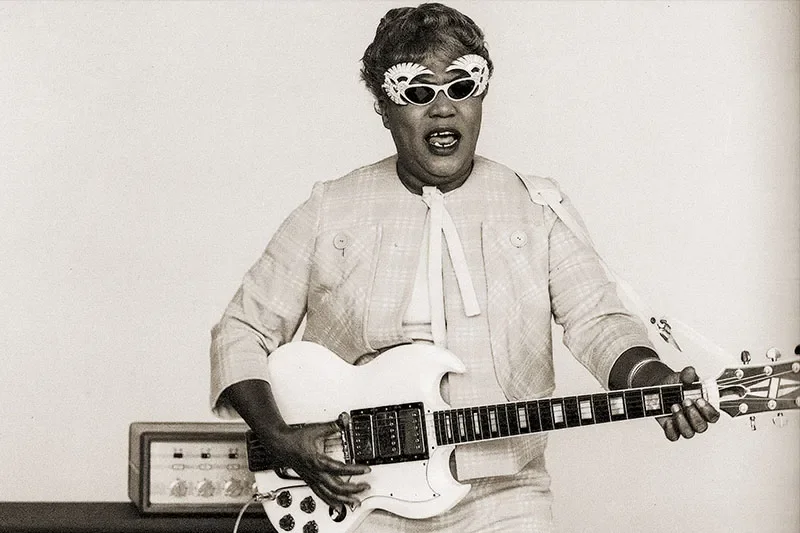
Sister Rosetta Tharpe
Credit: Hans Harzheim
By: Omar Cook
Black history is a living legacy of brilliance, courage, and transformation. At the heart of that legacy are Black women whose leadership, resilience, and vision have shaped the foundation of America as we know it today. Across generations, Black women have broken barriers in politics, civil rights, education, business, and culture, often without the recognition they deserved, yet with an undeniable impact that continues to influence the world at every level of society.
These women did more than rise to prominence. They challenged systems of oppression, redefined what was possible, and created pathways for future generations to walk boldly in their purpose. Through unwavering strength, intelligence, and fearless determination, they turned adversity into progress and purpose into power, becoming symbols of excellence and change.
In honor of their lasting influence, we’re celebrating seven iconic Black women whose contributions helped shape American history and continue to inspire greatness today.
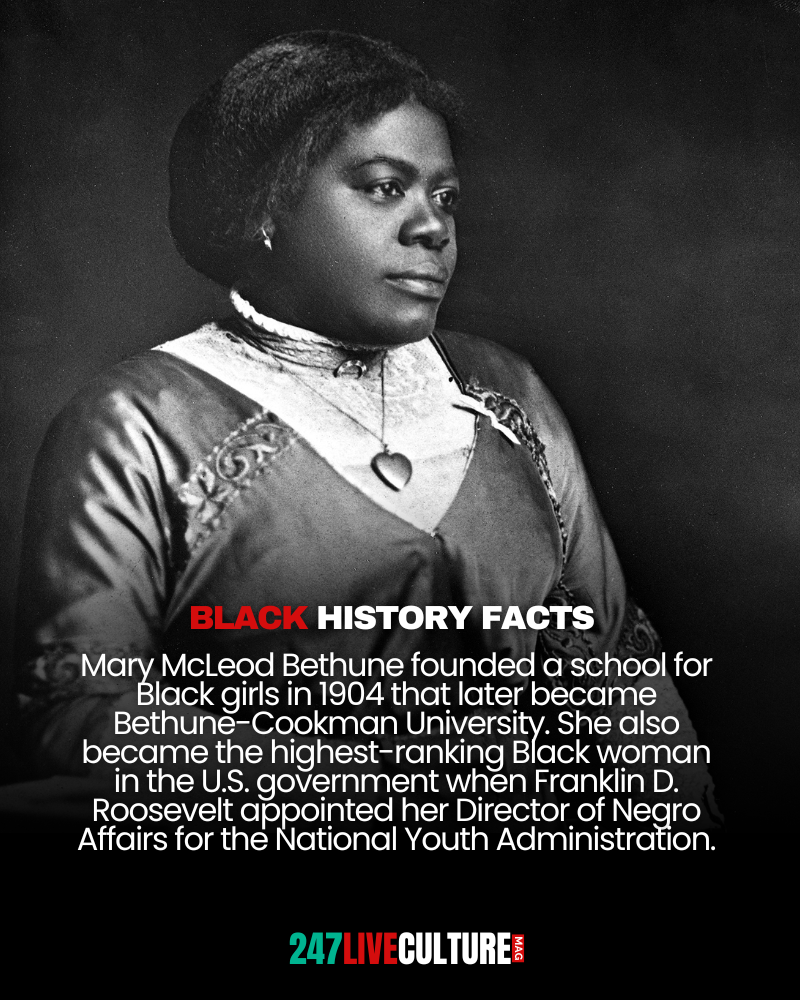
1. Mary McLeod Bethune
Mary McLeod Bethune founded a school for Black girls in 1904 that later became Bethune-Cookman University. She also became the highest-ranking Black woman in the U.S. government when Franklin D. Roosevelt appointed her Director of Negro Affairs for the National Youth Administration.
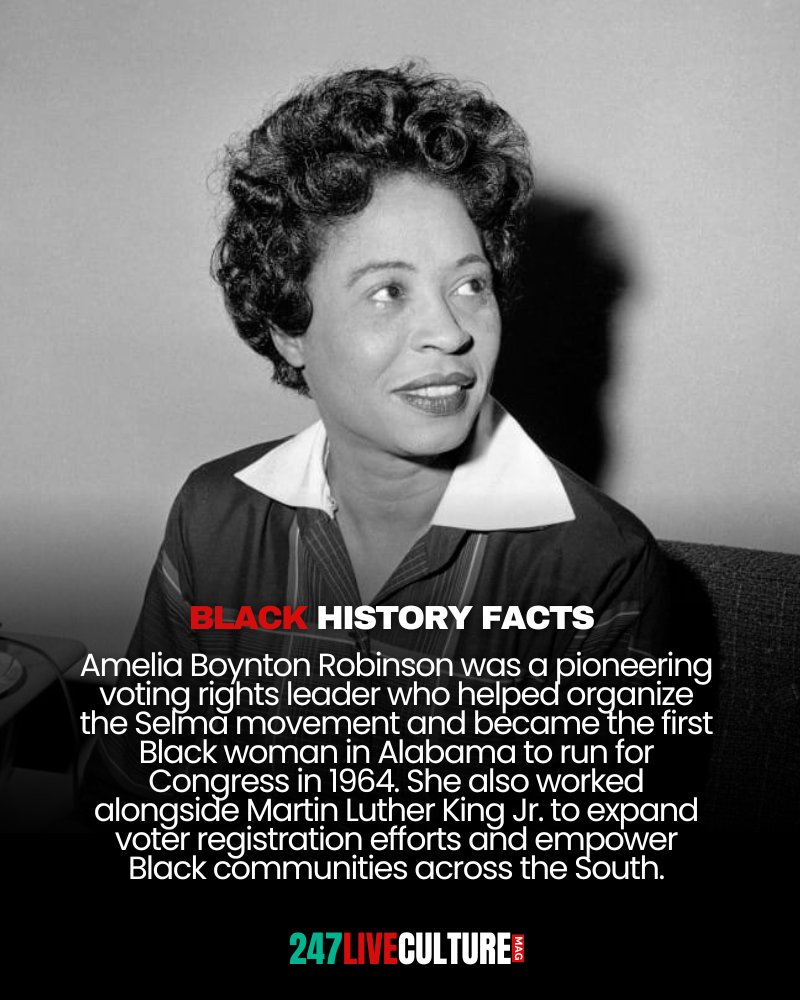
2. Amelia Boynton Robinson
Amelia Boynton Robinson was a pioneering voting rights leader who helped organize the Selma movement and became the first Black woman in Alabama to run for Congress in 1964. She also worked alongside Martin Luther King Jr. to expand voter registration efforts and empower Black communities across the South.
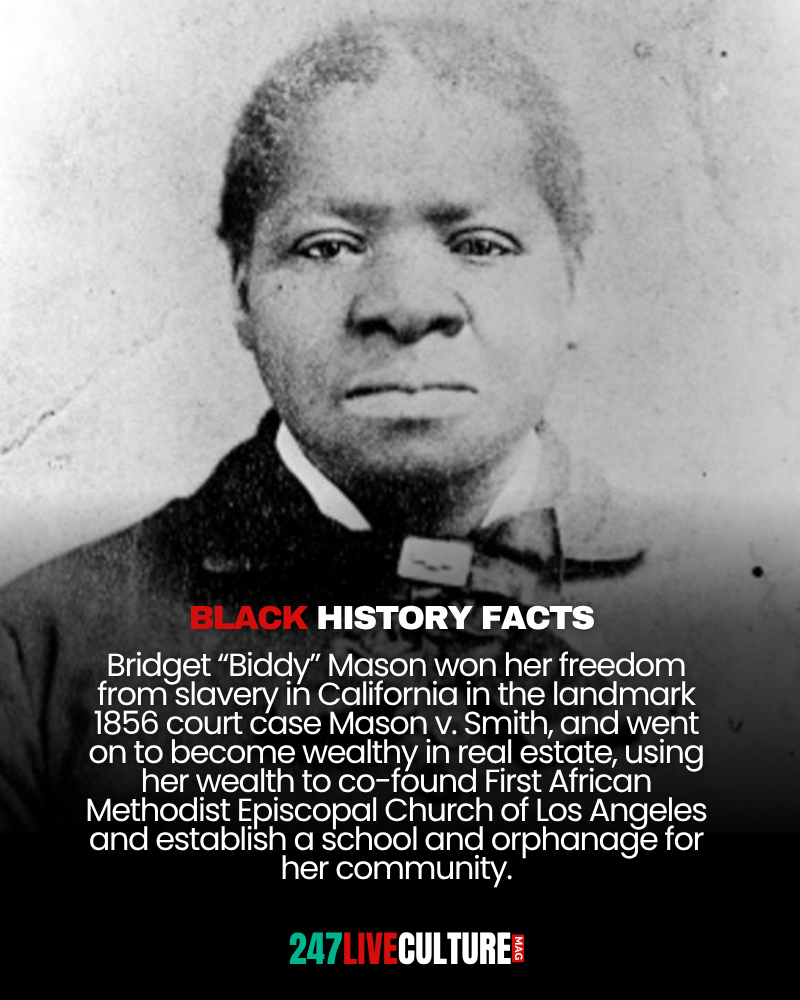
3. Bridget “Biddy” Mason
Bridget “Biddy” Mason won her freedom from slavery in California in the landmark 1856 court case Mason v. Smith, and went on to become wealthy in real estate, using her wealth to co-found First African Methodist Episcopal Church of Los Angeles and establish a school and orphanage for her community.
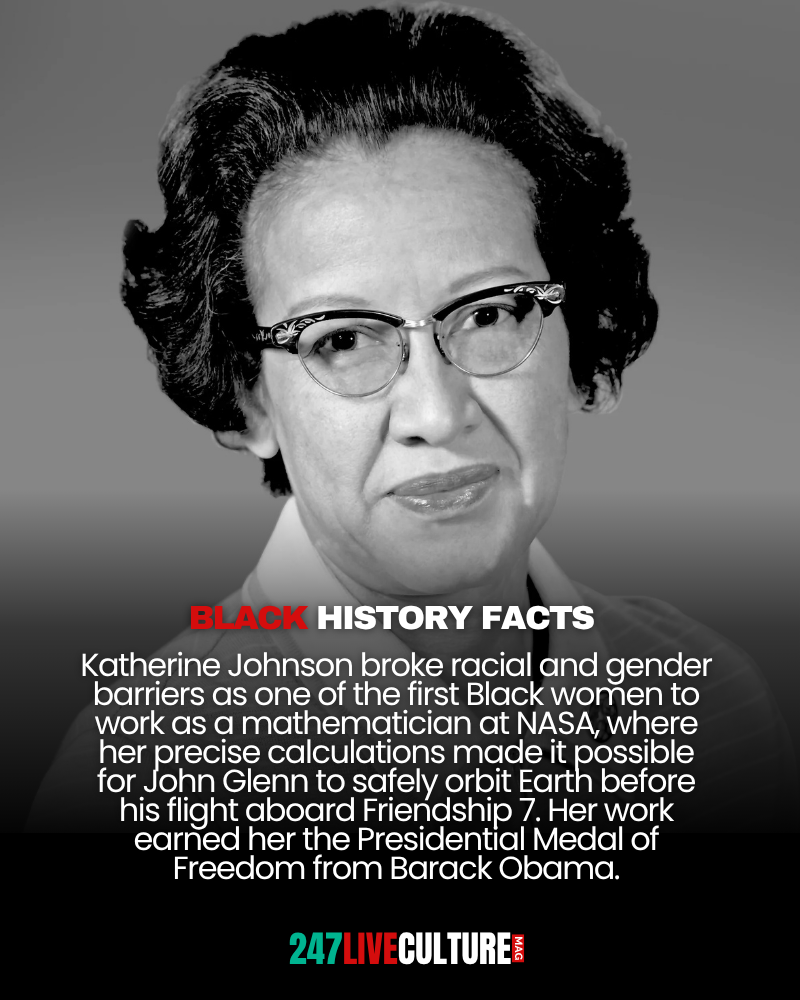
4. Katherine Johnson
Katherine Johnson broke racial and gender barriers as one of the first Black women to work as a mathematician at NASA, where her precise calculations made it possible for John Glenn to safely orbit Earth before his flight aboard Friendship 7. Her work earned her the Presidential Medal of Freedom from Barack Obama.
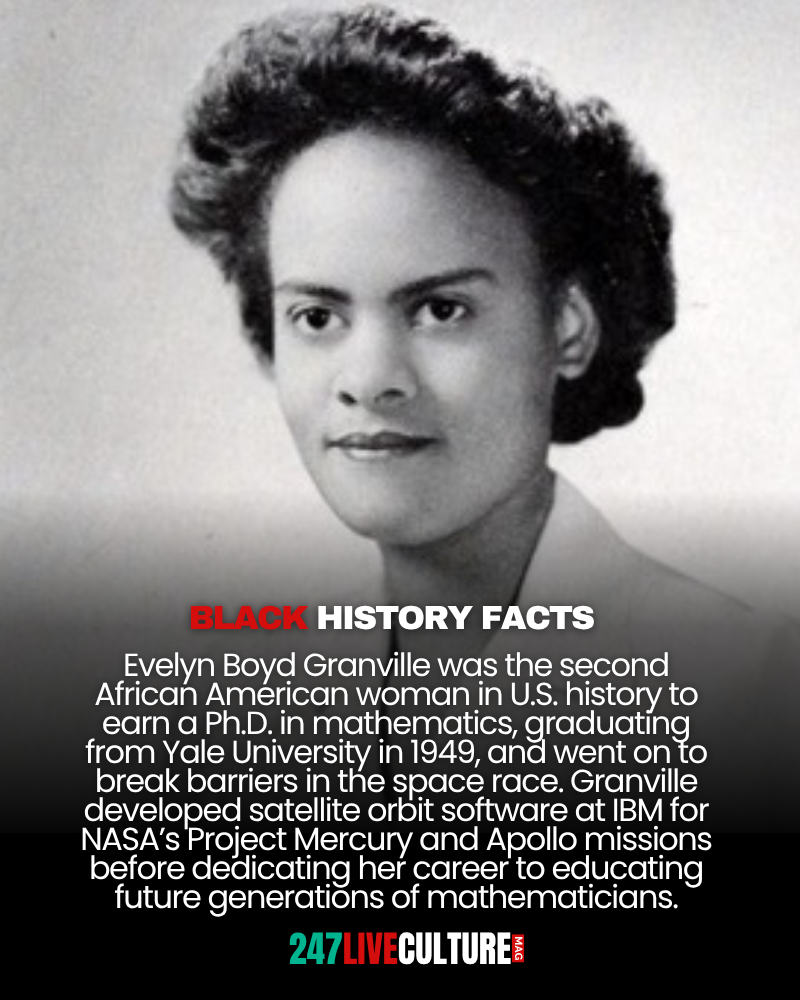
5. Evelyn Boyd Granville
Evelyn Boyd Granville was the second African American woman in U.S. history to earn a Ph.D. in mathematics, graduating from Yale University in 1949, and went on to break barriers in the space race. Granville developed satellite orbit software at IBM for NASA’s Project Mercury and Apollo missions before dedicating her career to educating future generations of mathematicians.
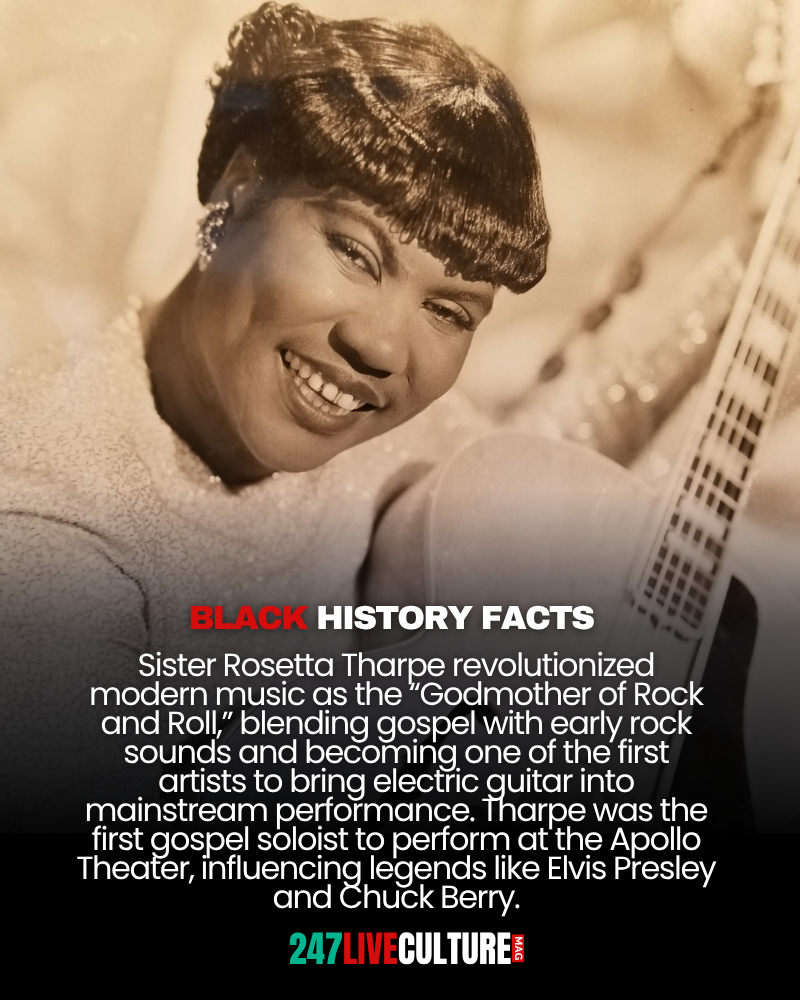
6. Sister Rosetta Tharpe
Sister Rosetta Tharpe revolutionized modern music as the “Godmother of Rock and Roll,” blending gospel with early rock sounds and becoming one of the first artists to bring electric guitar into mainstream performance. Tharpe was the first gospel soloist to perform at the Apollo Theater, influencing legends like Elvis Presley and Chuck Berry.
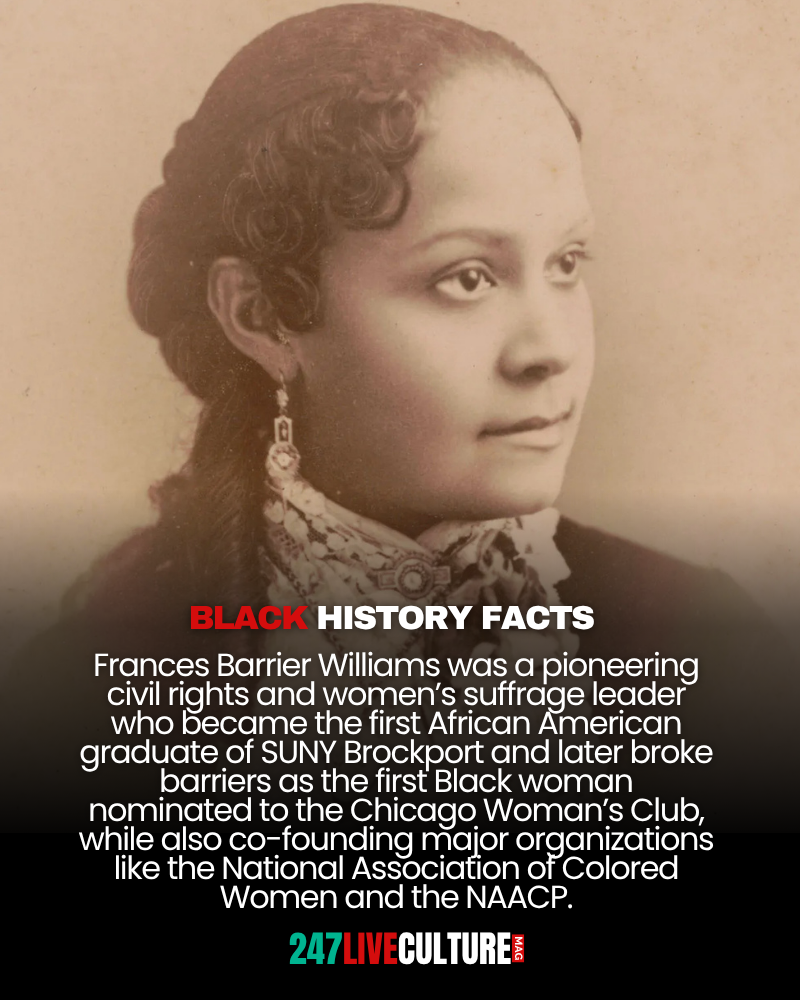
7. Frances Barrier Williams
Frances Barrier Williams was a pioneering civil rights and women’s suffrage leader who became the first African American graduate of SUNY Brockport and later broke barriers as the first Black woman nominated to the Chicago Woman’s Club, while also co-founding major organizations like the National Association of Colored Women and the NAACP.
YOU MAY ALSO BE INTERESTED IN:
SHARE TO SOCIAL MEDIA
20 Black History Facts Celebrating Icons, Innovators, and Leaders
From groundbreaking innovators to fearless activists and cultural icons, these 20 powerful Black history facts celebrate the legends whose voices, talent, and courage helped shape the world and continue to inspire generations today! We discuss it here!
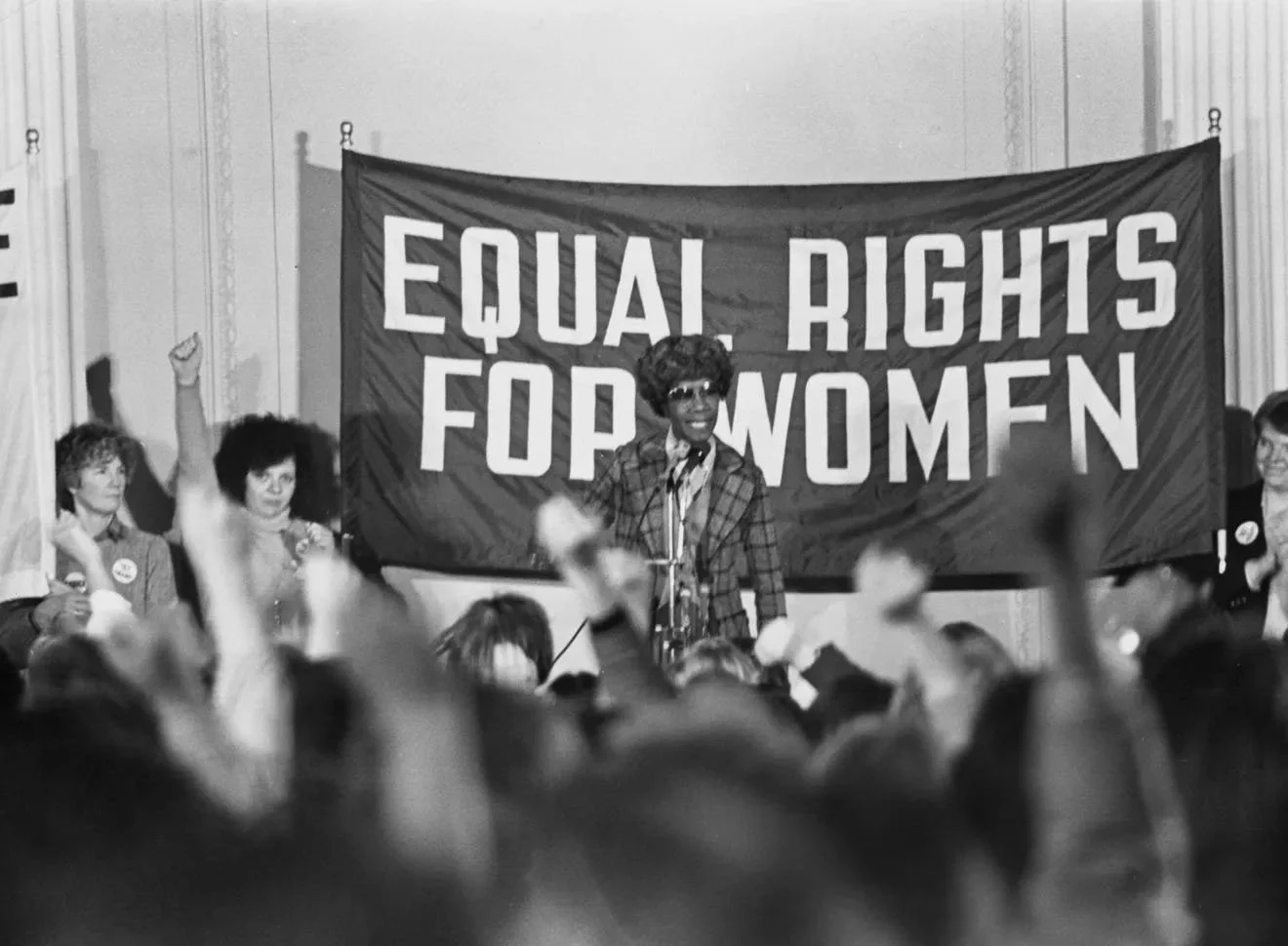
Shirley Chisholm Fought For Equal Rights For All Women
By: Omar Cook
Black history is a living legacy of brilliance, courage, and transformation. Across generations, Black innovators, activists, entertainers, and leaders have shaped the world in profound ways, leaving an undeniable mark on every major industry and influencing culture at the highest levels of society. From groundbreaking achievements in music, politics, science, and civil rights to cultural movements that changed the global conversation, Black voices have consistently carried power, vision, and purpose.
These trailblazers did more than succeed in their fields. They challenged injustice, inspired communities, and opened doors that once seemed permanently closed. Through talent, determination, and fearless leadership, they built legacies that continue to inspire generations past, present, and future.
In honor of that enduring impact, we’re celebrating some of the most iconic figures whose contributions helped shape the world we know today. Here are 20 Black History facts from legendary pioneers whose influence continues to uplift, educate, and inspire.
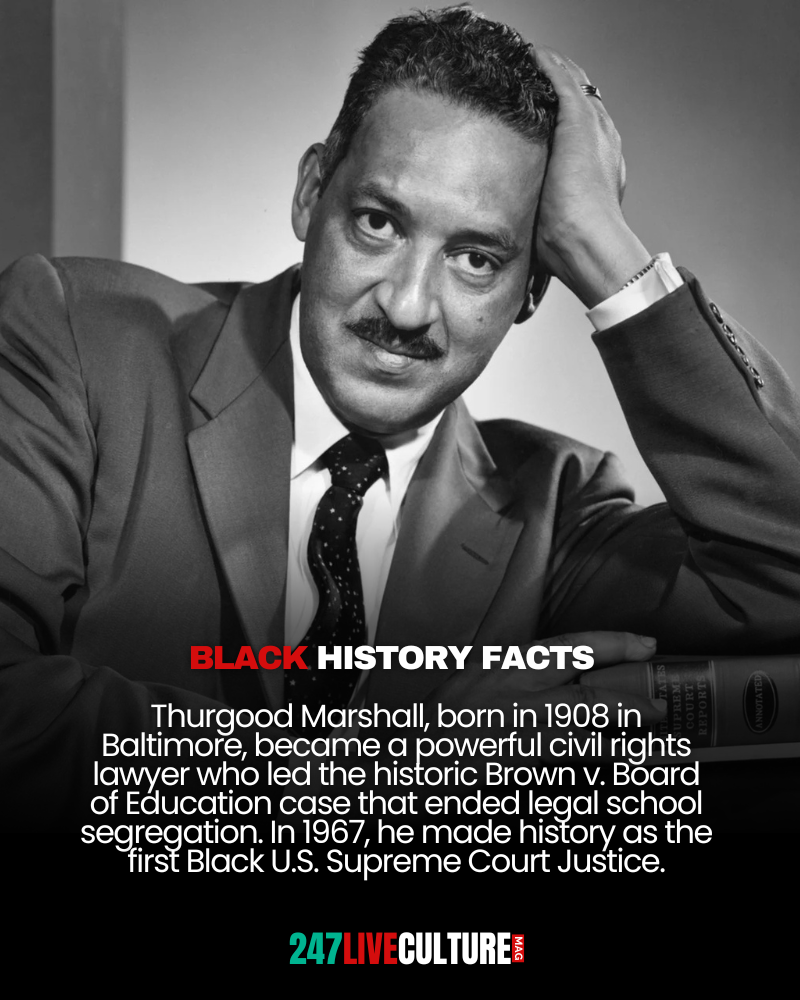
1. Thurgood Marshall
Thurgood Marshall, born in 1908 in Baltimore, became a powerful civil rights lawyer who led the historic Brown v. Board of Education case that ended legal school segregation. In 1967, he made history as the first Black U.S. Supreme Court Justice.
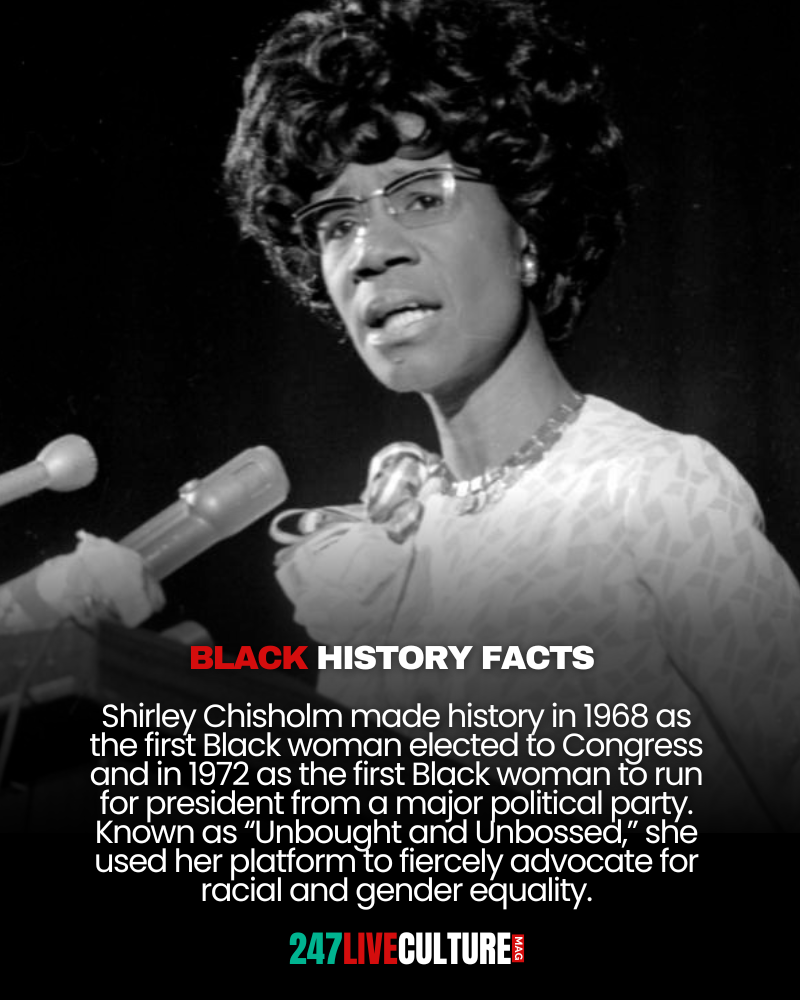
2. SHIRLEY CHISHOLM
Shirley Chisholm made history in 1968 as the first Black woman elected to Congress and in 1972 as the first Black woman to run for president from a major political party. Known as “Unbought and Unbossed,” she used her platform to fiercely advocate for racial and gender equality.
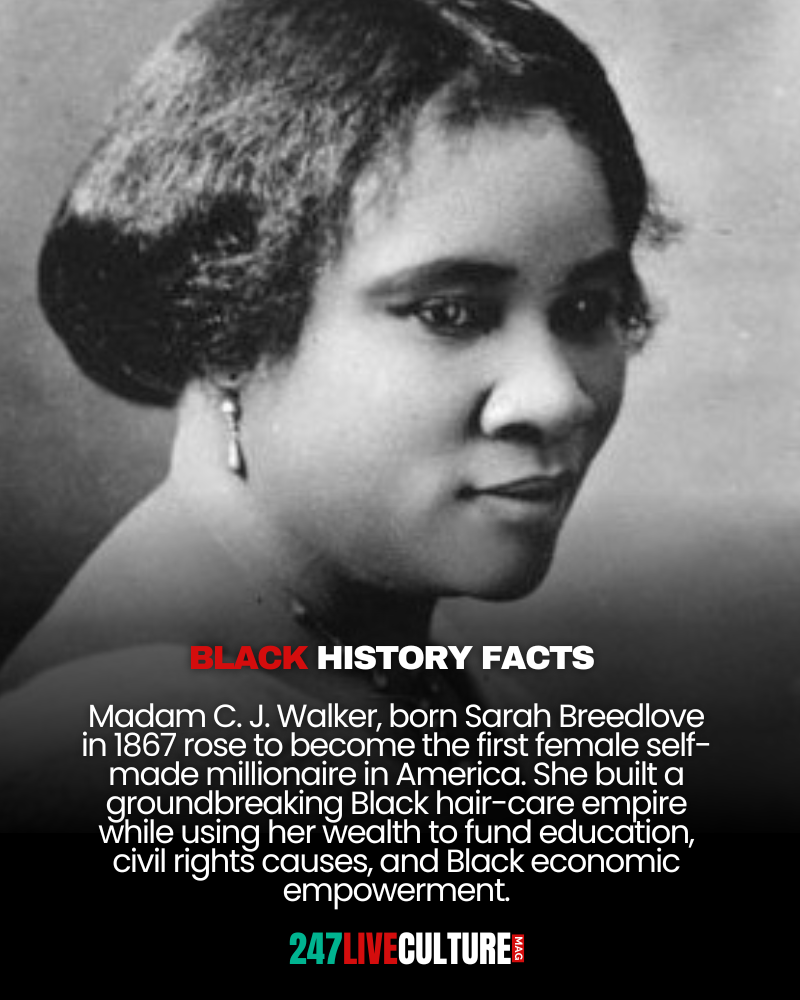
3. Madam C. J. Walker
Madam C. J. Walker, born Sarah Breedlove in 1867 rose to become the first female self-made millionaire in America. She built a groundbreaking Black hair-care empire while using her wealth to fund education, civil rights causes, and Black economic empowerment.
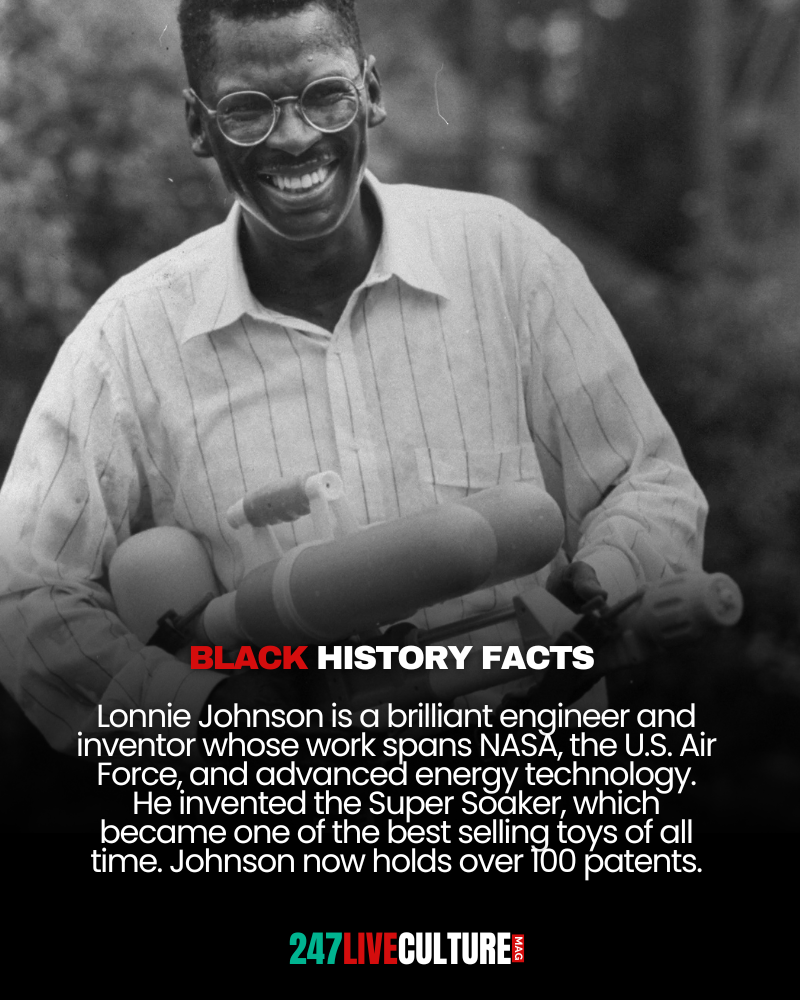
4. Lonnie Johnson
Lonnie Johnson is a brilliant engineer and inventor whose work spans NASA, the U.S. Air Force, and advanced energy technology. He invented the Super Soaker, which became one of the best selling toys of all time. Johnson now holds over 100 patents.
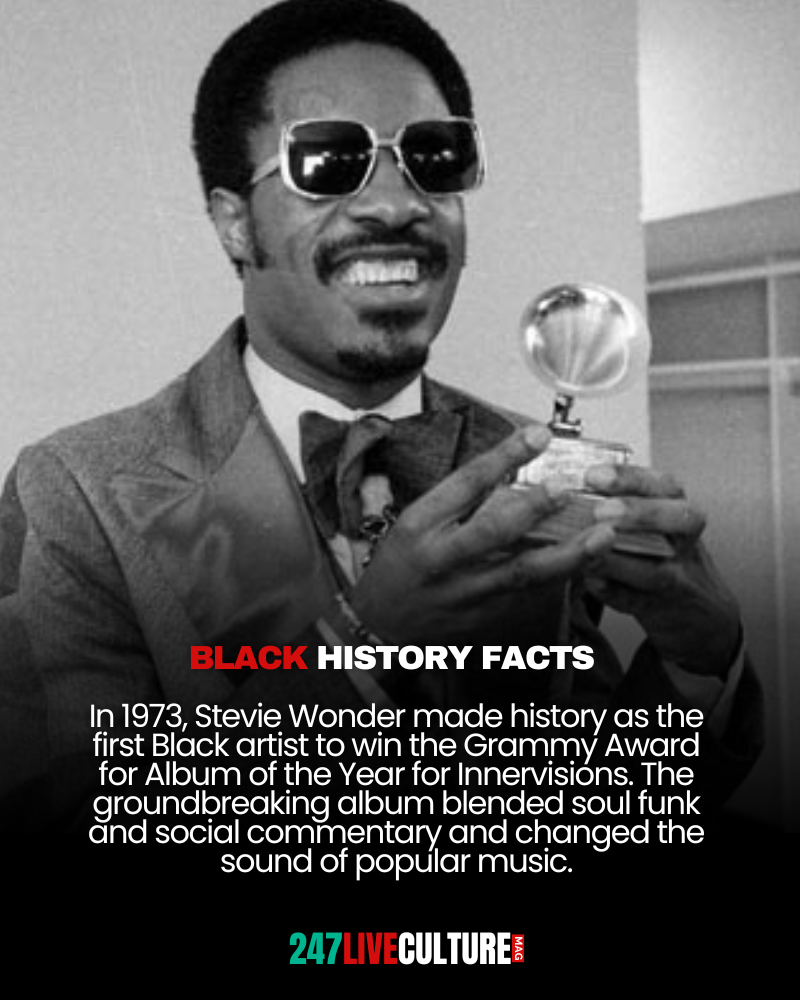
5. Stevie Wonder
In 1973, Stevie Wonder made history as the first Black artist to win the Grammy Award for Album of the Year for Innervisions. The groundbreaking album blended soul funk and social commentary and changed the sound of popular music.
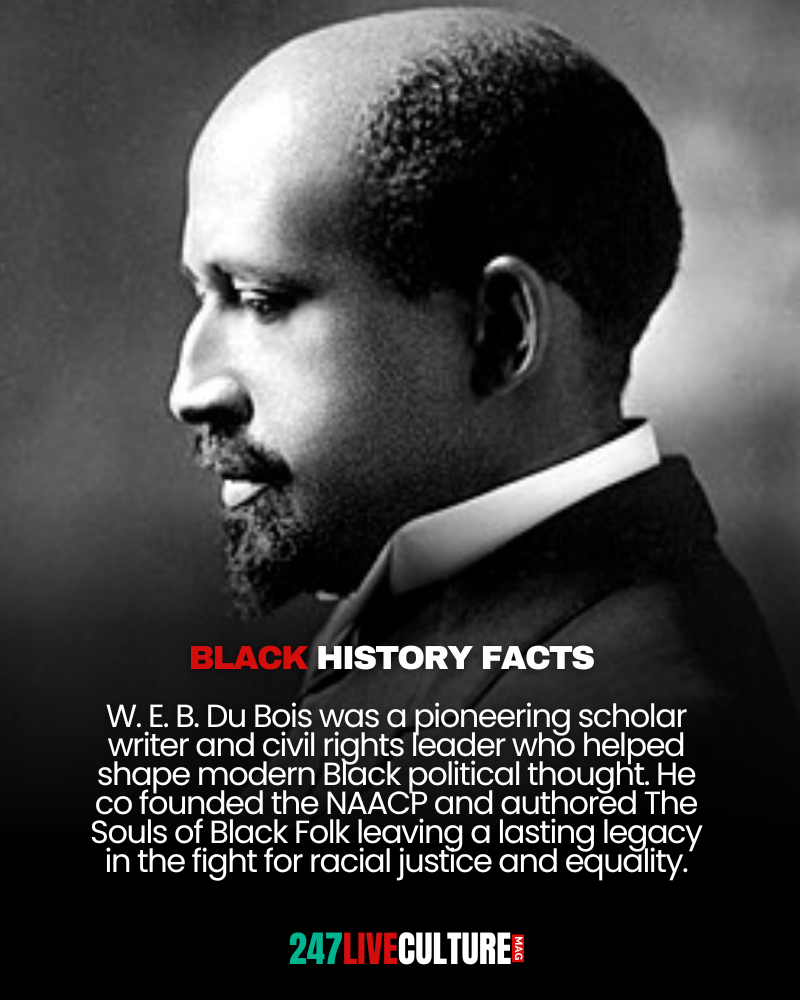
6. W. E. B. Du Bois
W. E. B. Du Bois was a pioneering scholar writer and civil rights leader who helped shape modern Black political thought. He co founded the NAACP and authored The Souls of Black Folk leaving a lasting legacy in the fight for racial justice and equality.
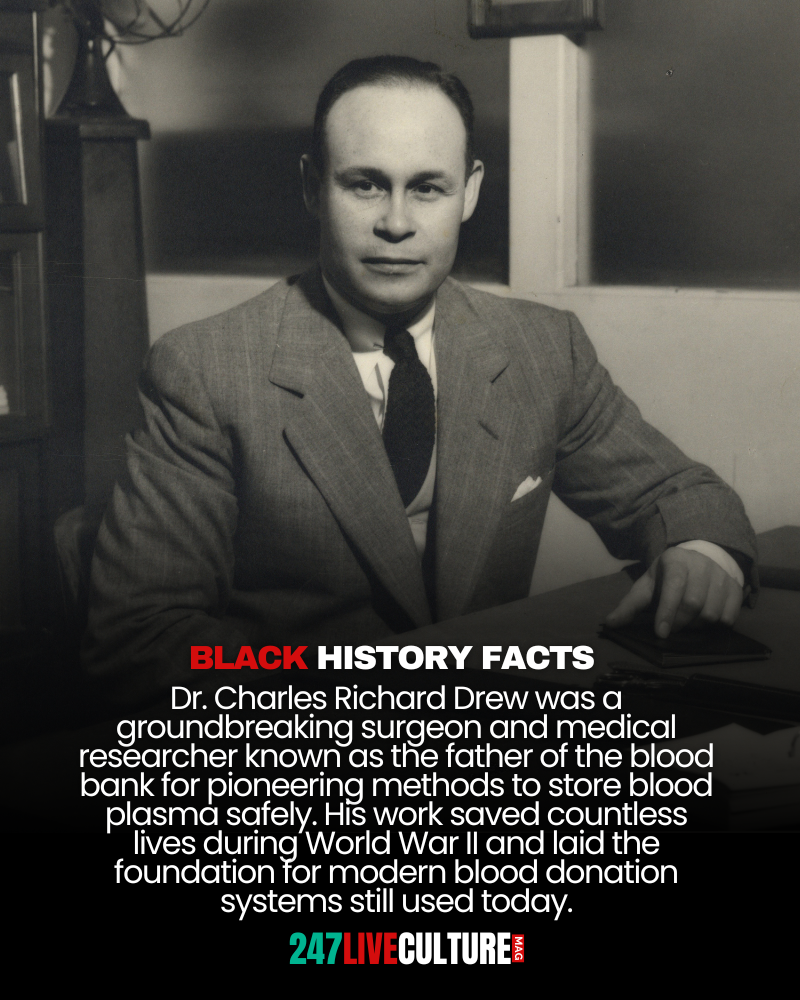
7. Dr. Charles Richard Drew
Dr. Charles Richard Drew was a groundbreaking surgeon and medical researcher known as the father of the blood bank for pioneering methods to store blood plasma safely. His work saved countless lives during World War II and laid the foundation for modern blood donation systems still used today.
8. Jack Johnson
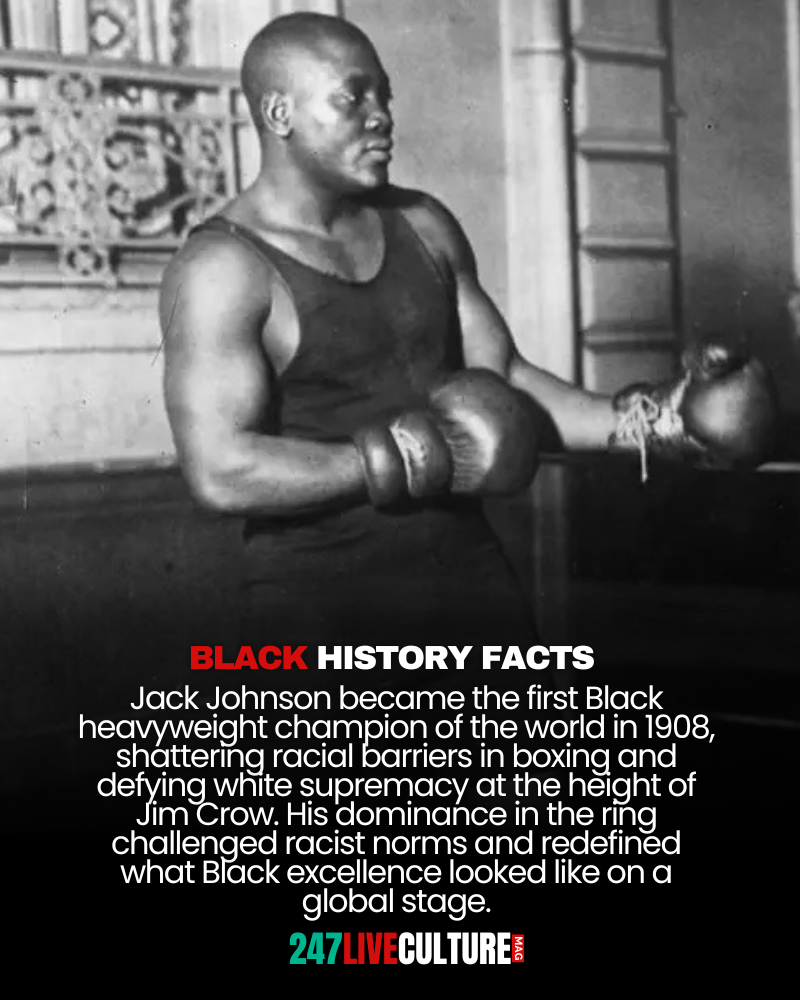
Jack Johnson became the first Black heavyweight champion of the world in 1908, shattering racial barriers in boxing and defying white supremacy at the height of Jim Crow. His dominance in the ring challenged racist norms and redefined what Black excellence looked like on a global stage.
9. Bessie Coleman
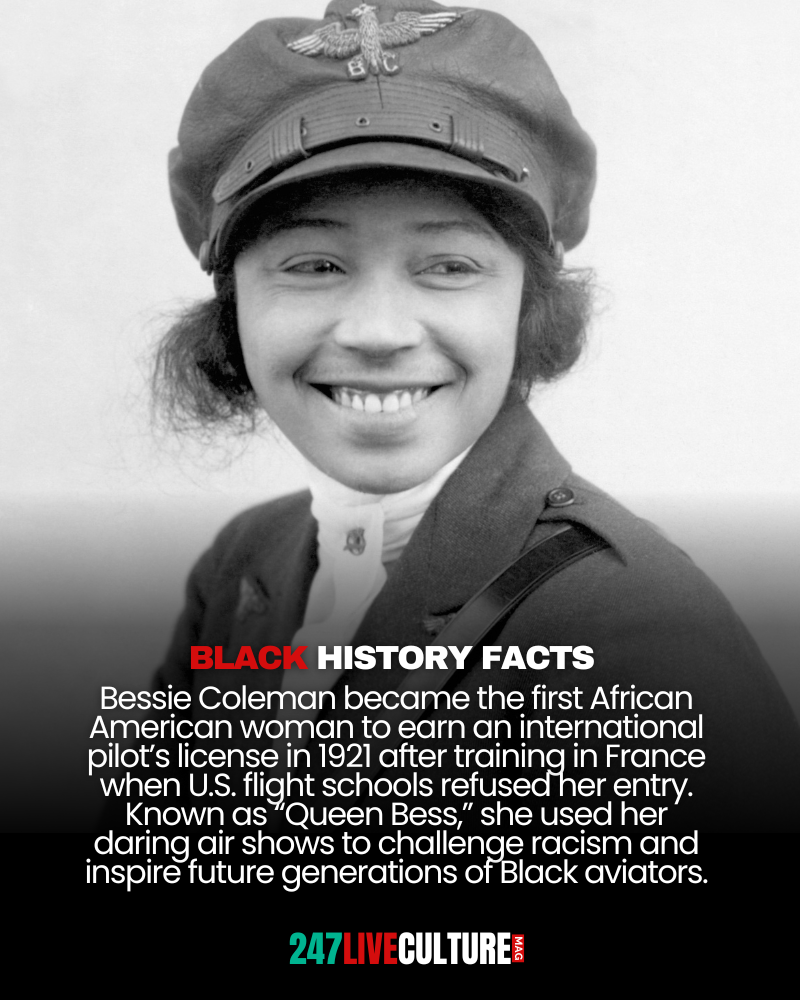
Bessie Coleman became the first African American woman to earn an international pilot’s license in 1921 after training in France when U.S. flight schools refused her entry. Known as “Queen Bess,” she used her daring air shows to challenge racism and inspire future generations of Black aviators.
10. Henry Lewis
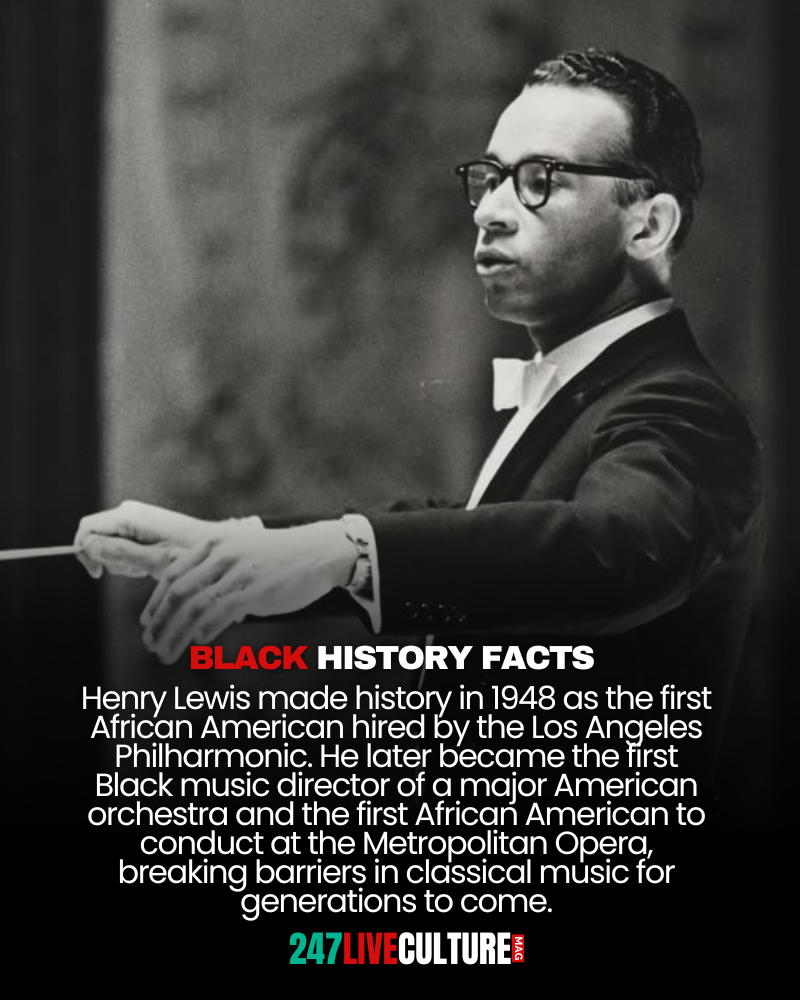
Henry Lewis made history in 1948 as the first African American hired by the Los Angeles Philharmonic. He later became the first Black music director of a major American orchestra and the first African American to conduct at the Metropolitan Opera, breaking barriers in classical music for generations to come.
11. Althea Gibson
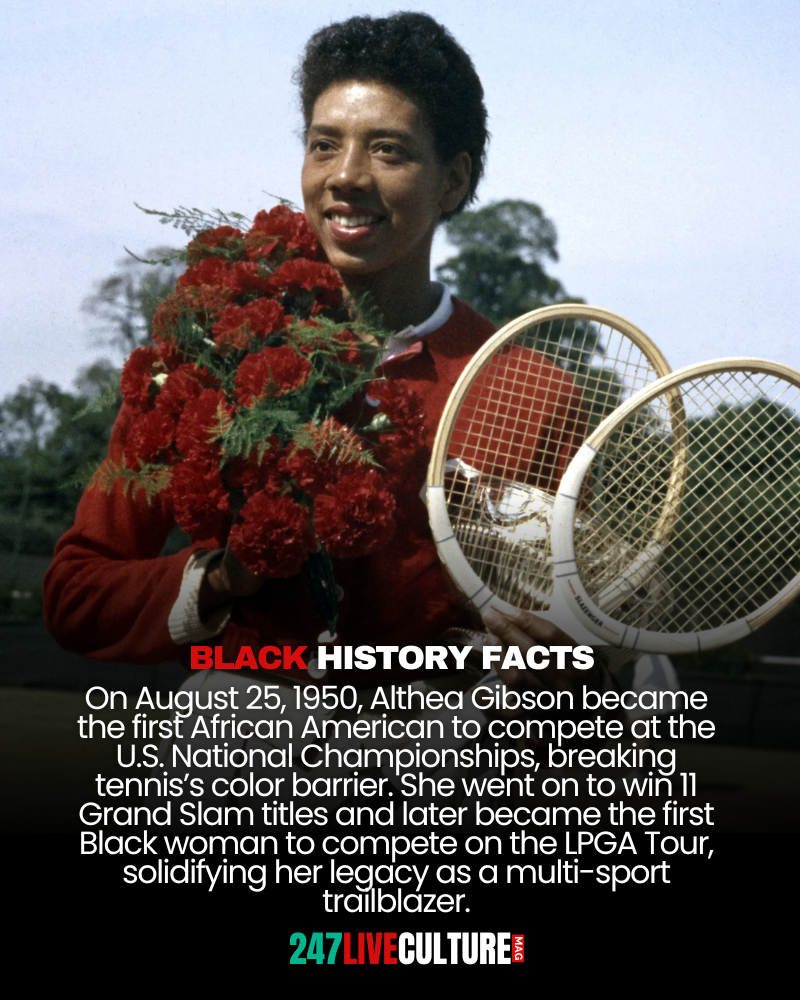
On August 25, 1950, Althea Gibson became the first African American to compete at the U.S. National Championships, breaking tennis’s color barrier. She went on to win 11 Grand Slam titles and later became the first Black woman to compete on the LPGA Tour, solidifying her legacy as a multi-sport trailblazer.
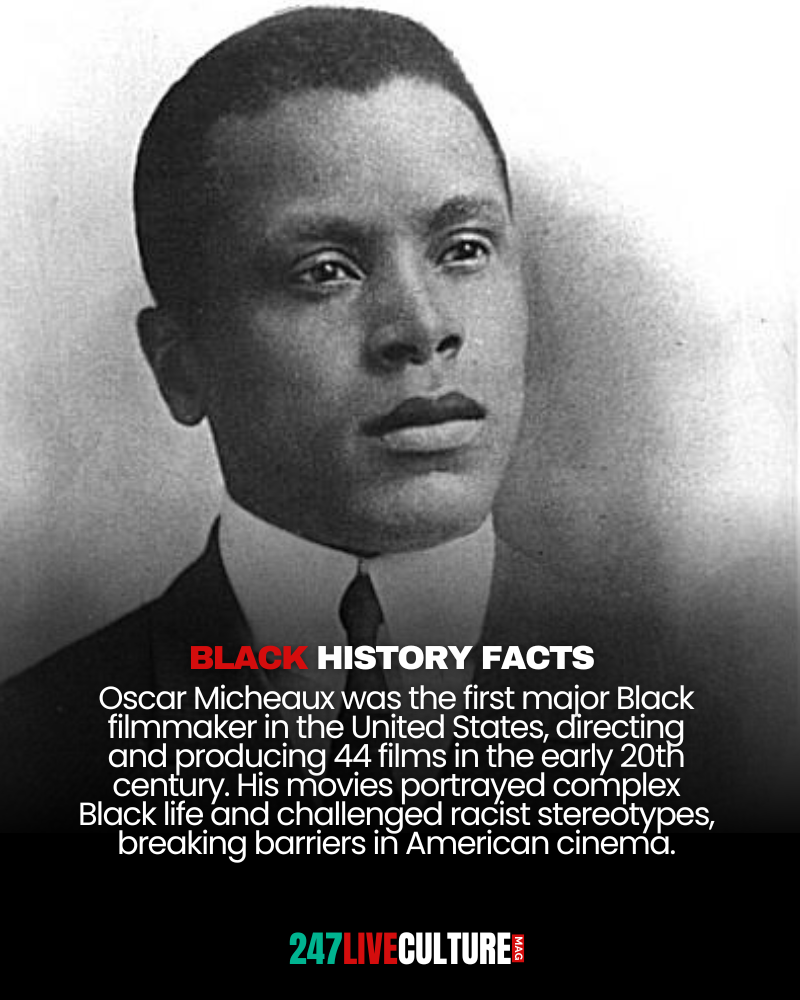
12. Oscar Micheaux
Oscar Micheaux was the first major Black filmmaker in the United States, directing and producing 44 films in the early 20th century. His movies portrayed complex Black life and challenged racist stereotypes, breaking barriers in American cinema.
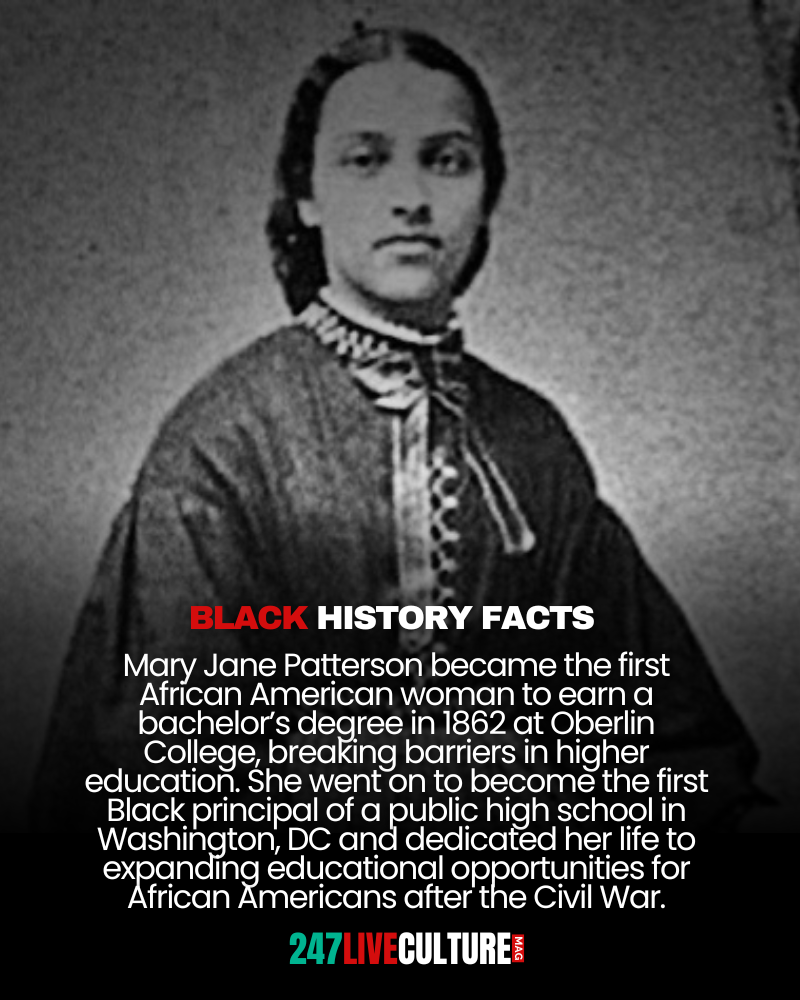
13. Mary Jane Patterson
Mary Jane Patterson became the first African American woman to earn a bachelor’s degree in 1862 at Oberlin College, breaking barriers in higher education. She went on to become the first Black principal of a public high school in Washington, DC and dedicated her life to expanding educational opportunities for African Americans after the Civil War.
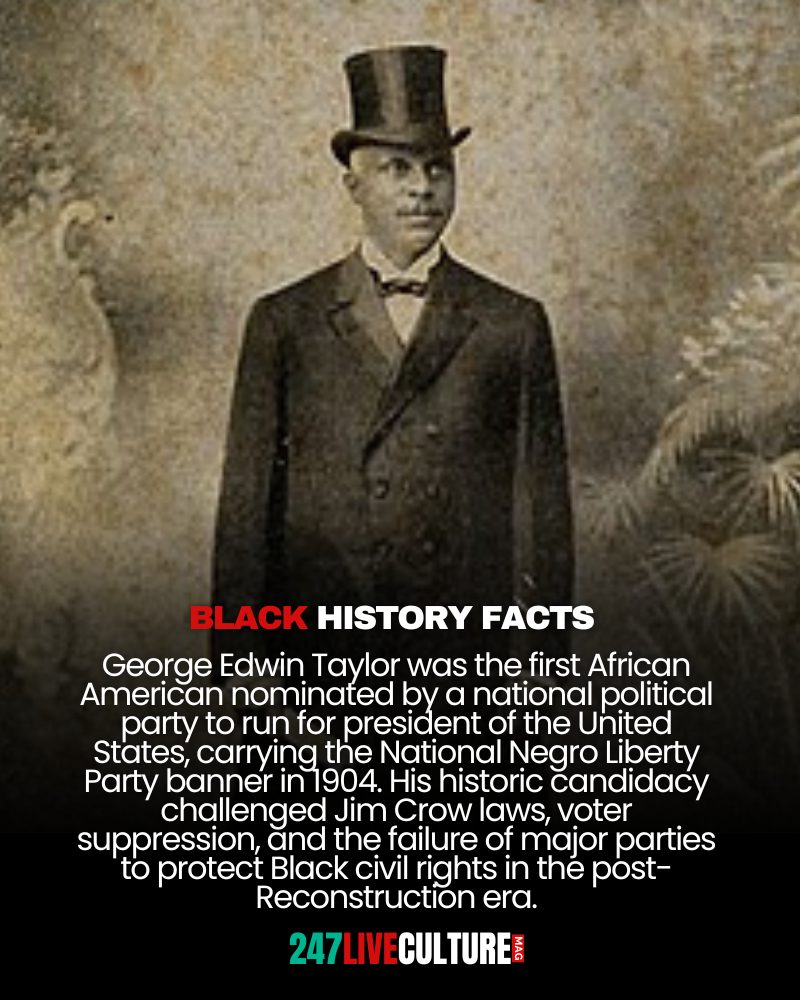
14. George Edwin Taylor
George Edwin Taylor was the first African American nominated by a national political party to run for president of the United States, carrying the National Negro Liberty Party banner in 1904. His historic candidacy challenged Jim Crow laws, voter suppression, and the failure of major parties to protect Black civil rights in the post-Reconstruction era.
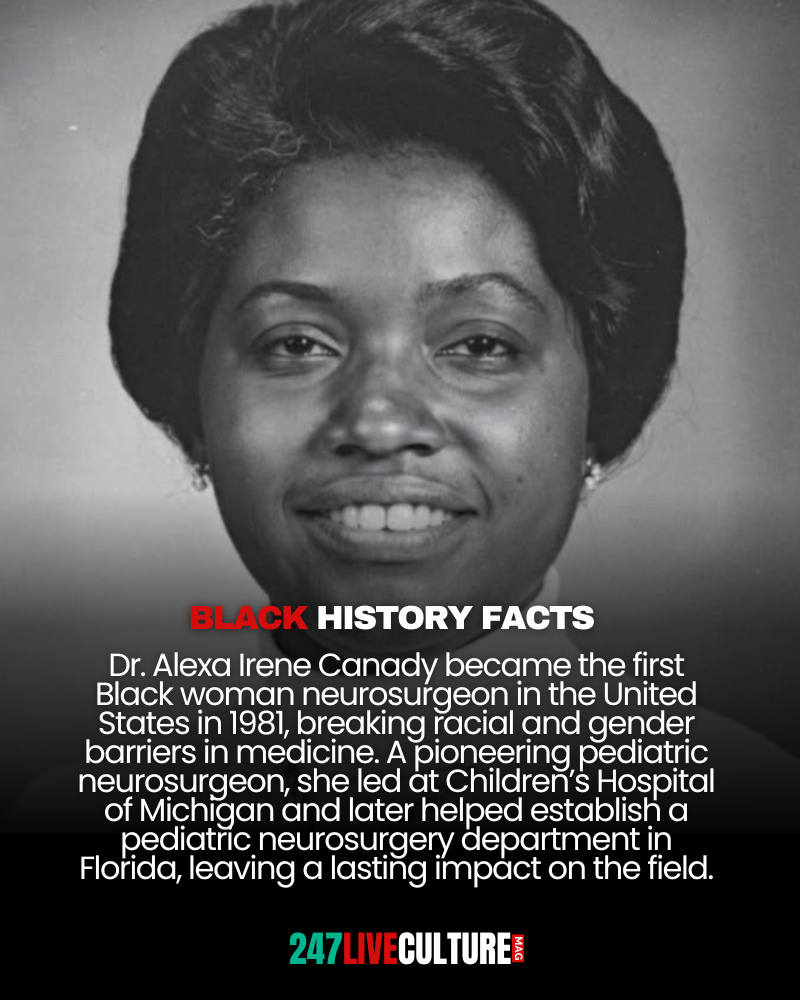
15. Dr. Alexa Irene Canady
Dr. Alexa Irene Canady became the first Black woman neurosurgeon in the United States in 1981, breaking racial and gender barriers in medicine. A pioneering pediatric neurosurgeon, she led at Children’s Hospital of Michigan and later helped establish a pediatric neurosurgery department in Florida, leaving a lasting impact on the field.
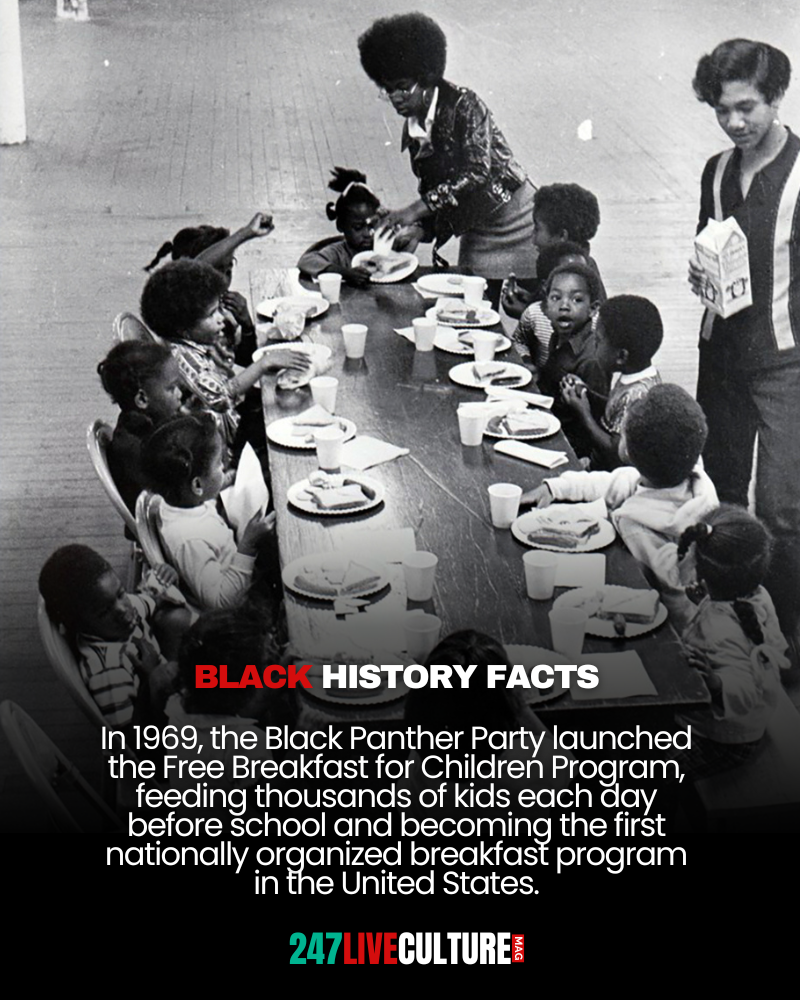
16. Black Panther Party - Free Breakfast Program
In 1969, the Black Panther Party launched the Free Breakfast for Children Program, feeding thousands of kids each day before school and becoming the first nationally organized breakfast program in the United States.
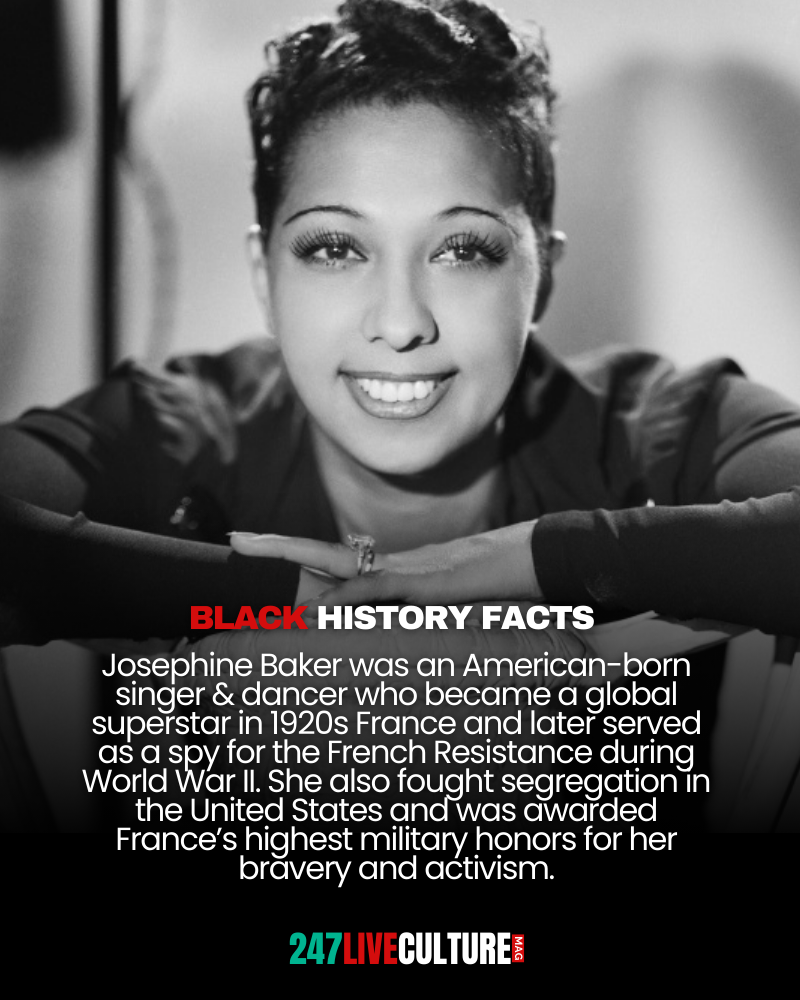
17. Josephine Baker
Josephine Baker was an American-born singer & dancer who became a global superstar in 1920s France and later served as a spy for the French Resistance during World War II. She also fought segregation in the United States and was awarded France’s highest military honors for her bravery and activism.
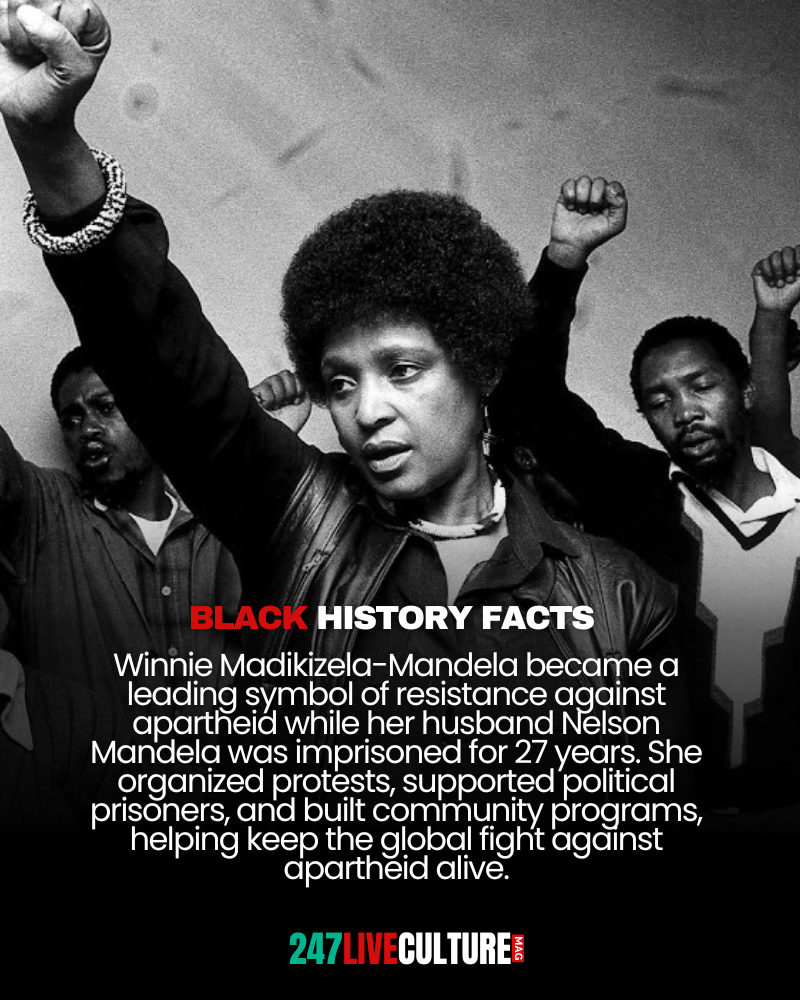
18. Winnie Madikizela-Mandela
Winnie Madikizela-Mandela became a leading symbol of resistance against apartheid while her husband Nelson Mandela was imprisoned for 27 years. She organized protests, supported political prisoners, and built community programs, helping keep the global fight against apartheid alive.
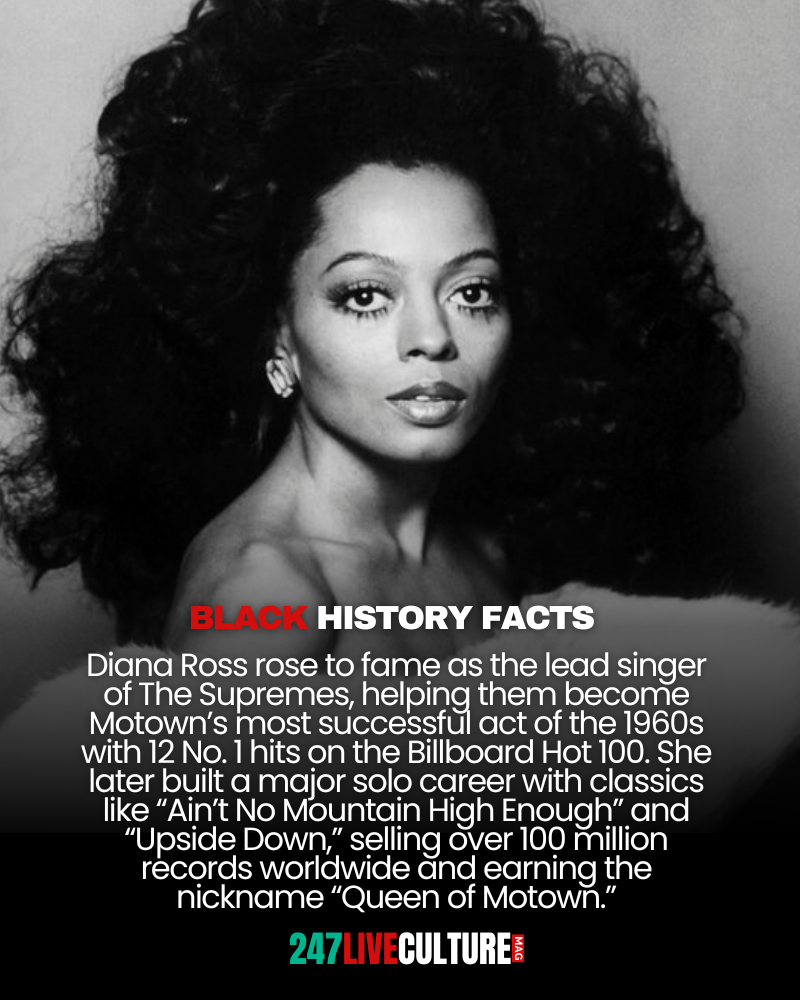
19. Diana Ross
Diana Ross rose to fame as the lead singer of The Supremes, helping them become Motown’s most successful act of the 1960s with 12 No. 1 hits on the Billboard Hot 100. She later built a major solo career with classics like “Ain’t No Mountain High Enough” and “Upside Down,” selling over 100 million records worldwide and earning the nickname “Queen of Motown.”
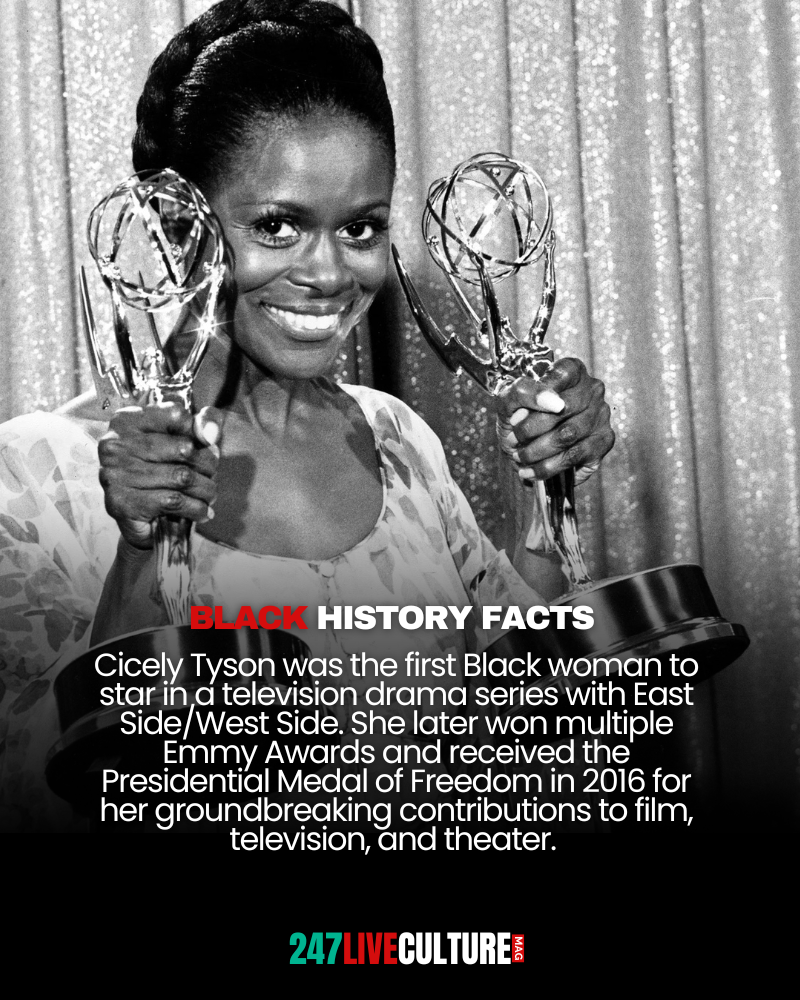
20. Cicely Tyson
Cicely Tyson was the first Black woman to star in a television drama series with East Side/West Side. She later won multiple Emmy Awards and received the Presidential Medal of Freedom in 2016 for her groundbreaking contributions to film, television, and theater.
YOU MAY ALSO BE INTERESTED IN:
SHARE TO SOCIAL MEDIA
College Board Responds to Florida's Black History Curriculum Comparisons
The College Board firmly disagrees with the notion that slavery benefited African Americans, in response to comparisons with Florida's new curriculum, sparking discussions on Black history teachings. We discuss it here!

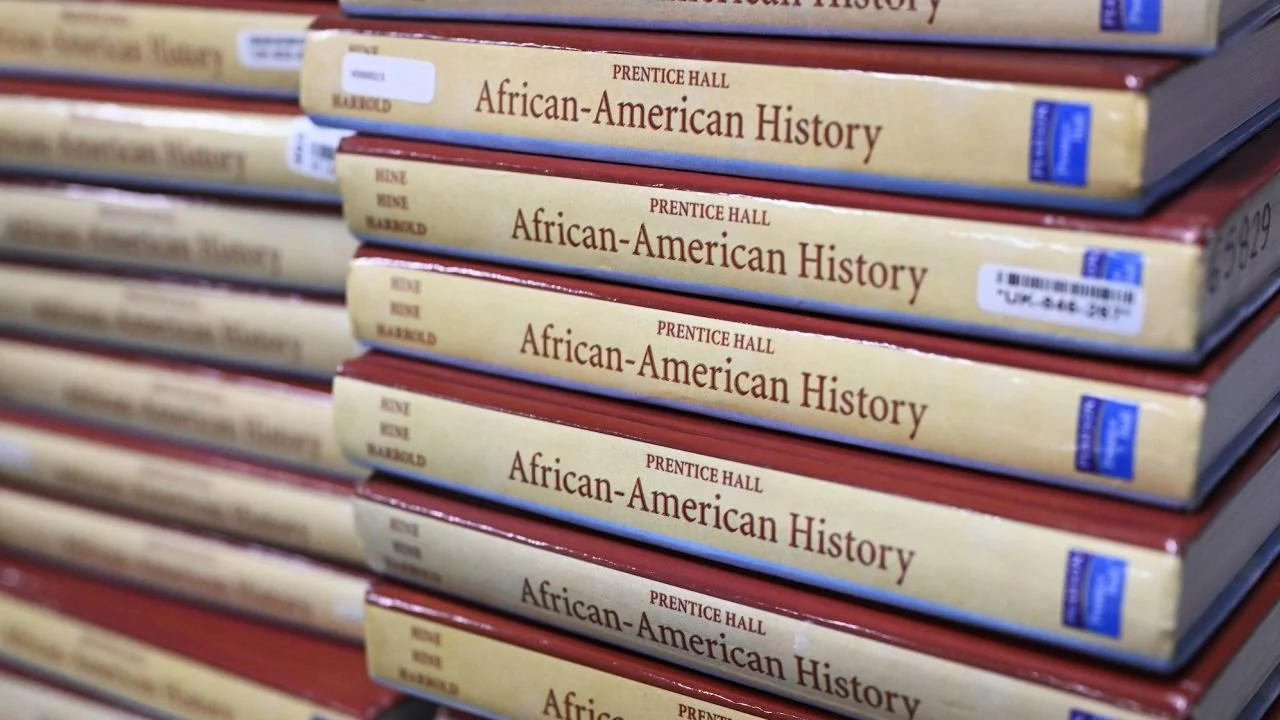
Last fall, a classroom at Overland High School in Aurora, Colorado was filled with a pile of books for students enrolled in AP African American Studies. (RJ Sangosti/The Denver Post/Getty Images)
By: Adonis Armstrong
The College Board is taking a clear stance, expressing disagreement with the idea that slavery benefited African Americans.
On Thursday July 27th, the organization issued a statement on the subject in response to the comparison of one of its courses to Florida's new curriculum on Black history. “We resolutely disagree with the notion that enslavement was in any way a beneficial, productive, or useful experience for African Americans,” the College Board informed CNN. “Unequivocally, slavery was an atrocity that cannot be justified by examples of African Americans’ agency and resistance during their enslavement.”
Remember when Florida wouldn’t allow that AP African American Studies course because it focused too much on CRT and not enough on history, and the @WhiteHouse lost its mind?
— Jeremy Redfern (@JeremyRedfernFL) July 27, 2023
Well, here is one of the standards considered “essential knowledge.”
See it here https://t.co/MFjfBjEFc9 pic.twitter.com/s8boDdYzks
The board's response to the comparison occurred following Jeremy Redfern, press secretary for Florida Gov. Ron DeSantis, sharing a picture of the organization's AP African American studies course on slavery. “Remember when Florida wouldn’t allow that AP African American Studies course because it focused too much on CRT and not enough on history, and the White House lost its mind? Well, here is one of the standards considered ‘essential knowledge,'” he penned.
Amid the approval of new standards for teaching Black history in Florida's public schools, discussions on the subject have surfaced. As part of the new guidelines, middle school teachers are required to incorporate lessons on how slaves developed skills that could be utilized for personal gain.
In a conversation with the outlet, the College Board acknowledged that some individuals pointed out similarities between its course requirements and Florida's new standards. “Unit two of the current framework includes a discussion about the skills enslaved people brought with them that enslavers exploited as well as other skills developed in America that were valuable to their enslavers,” the board stated. “Enslaved Africans and their descendants used those skills to survive, build community, and create culture in resistance to their oppression.” The organization also mentioned the AP African American studies course “will offer a holistic introduction to the history, literature, and arts of Black people in the United States.”
YOU MAY ALSO BE INTERESTED IN:
SHARE TO SOCIAL MEDIA
Malcolm X's Daughter Sues CIA, NYPD, FBI Over Concealing Evidence
Qubilah Shabazz, one of Malcolm X's daughters has filed a lawsuit against the CIA, NYPD, and FBI for allegedly withholding information related to her father's assassination. We discuss it here!

By: Adonis Armstrong
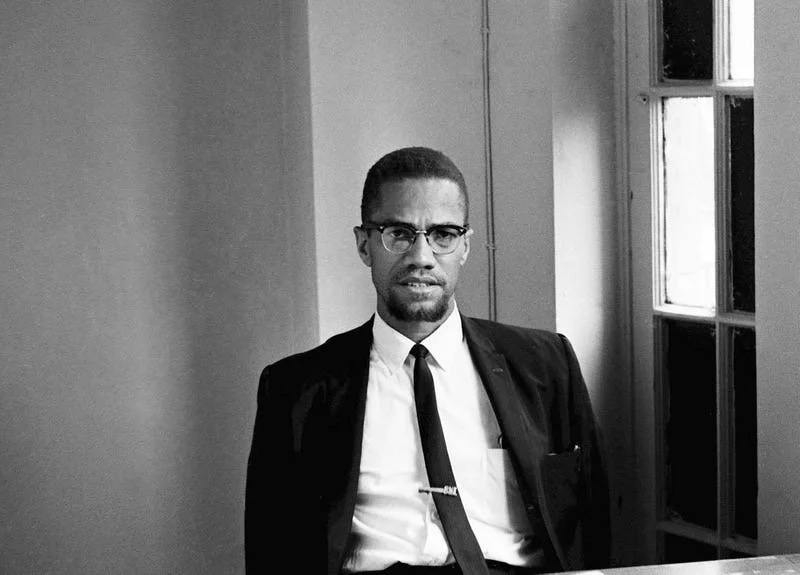
In 1965, civil rights leader Malcolm X was assassinated while giving a speech in New York City. The murder of the prominent activist and orator shocked the world and sparked a new era of activism and protest. However, despite decades of investigation the full story of Malcolm X's assassination has never been fully uncovered. Now one of his daughters is taking legal action to try and uncover the full truth. Every year we celebrate Black History in the month of February. It became a Federal institution in 1976 when President Gerald Ford made a declaration and became law signed by Congress in 1986.
Qubilah Shabazz, one of Malcolm X's six daughter is suing the CIA, the FBI, and NYPD for allegedly withholding information related to her father's assassination. The lawsuit which was filed in February 2021, claims that the agencies have failed to release records related to the assassination, despite repeated requests from Shabazz and other members of the family.
The lawsuit alleges that the agencies are in violation of the Freedom of Information Act (FOIA), which requires government agencies to release records upon request. According to the complaint the agencies have failed to release documents that could shed light on the circumstances surrounding Malcolm X's death, and including potential links to the government or law enforcement agencies.
Shabazz's lawsuit comes at a time of renewed interest in Malcolm X's life and legacy. A new documentary, Who Killed Malcolm X?, which aired on Netflix in 2020 has sparked fresh debate and investigation into the events surrounding his assassination. The documentary raised new questions about the role of the NYPD and the FBI in the killing suggesting that the agencies may have been more involved than previously thought.
Malcolm X was a controversial figure during his lifetime known for his fiery speeches and his advocacy for Black rights and self-determination. He was a leader in the Nation of Islam, a Black nationalist group, before splitting from the organization and founding his own group, the Organization of Afro-American Unity. He was assassinated on February 21, 1965, while giving a speech at the Audubon Ballroom in Manhattan.
The circumstances of Malcolm X's death have long been the subject of speculation and controversy. Three members of the Nation of Islam were convicted of his murder, but questions have persisted about whether they acted alone or were part of a larger conspiracy. The new lawsuit filed by Shabazz is just the latest attempt to uncover the truth about what happened that day.
The lawsuit seeks to force the CIA, the FBI, and the NYPD to release any records related to Malcolm X's assassination that have not already been made public. It also seeks to hold the agencies accountable for their alleged failure to comply with FOIA requests. The hope is that by forcing the agencies to release more information, the truth about what happened to Malcolm X can finally be uncovered.
The lawsuit is just one part of a larger effort to uncover the truth about Malcolm X's assassination. The renewed interest in his life and legacy sparked by the documentary and other events has led to renewed investigation and inquiry. For Shabazz and other members of the family, the hope is that the lawsuit will be a step towards closure and justice for their father.
YOU MAY ALSO BE INTERESTED IN:
SHARE TO SOCIAL MEDIA
That's the Black Fact: The History and Significance of Black History Month
Learn about the history and significance of Black History Month, including the role of Dr. Carter G. Woodson and the evolution of the celebration from a week to a month.
“Welcome to ‘That’s the Black Fact’. In this space you’ll find profiles on the culture and the people who built it!”
By: Ervin Green
Learn about the history and significance of Black History Month, including the role of Dr. Carter G. Woodson and the evolution of the celebration from a week to a month.
Black History Month (1976)
Every year we celebrate Black History in the month of February. It became a Federal institution in 1976 when President Gerald Ford made a declaration and became law signed by Congress in 1986.
But it’s true beginning was due to Harvard-educated historian and author, Dr. Carter G. Woodson, who is credited with creating Black History Month. He was inspired after attending a 50th anniversary celebration of the 13th Amendment where various exhibits portrayed events in African American culture. With a mission to amplify Black people’s contributions and achievements, Woodson went on to create what is now known as the Association for the Study of Afro-American Life and History (ASALH).
In 1926, Woodson and ASALH declared the second week of February—which aligned with Abraham Lincoln’s and Frederick Douglass’ birthdays—to be “Negro History Week.”
During the next 50 years, communities, schools and organizations started participating in the week-long recognition of African American trials and successes. As public interest grew, particularly during the 1960s civil rights movement, the celebration expanded from a week to a month.
Take time to research more about the celebration and the people that made this an official memorial.
YOU MAY ALSO BE INTERESTED IN:
SHARE TO SOCIAL MEDIA
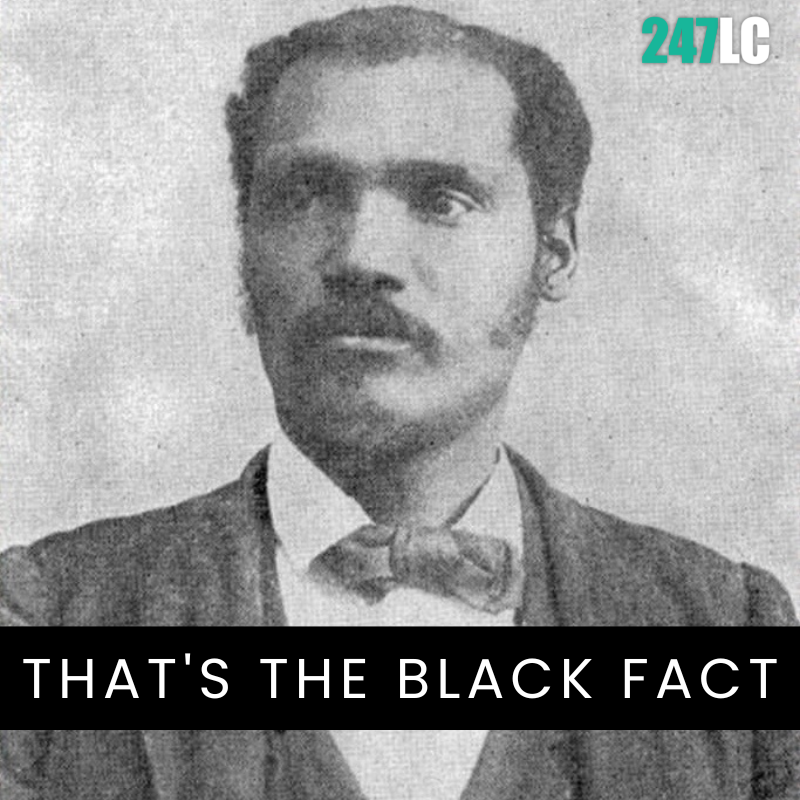
That's the Black Fact: Introducing Henry Boyd
Introducing Henry Boyd, who invented the popular Boyd Bedstead in 1826!
Henry Boyd
“Welcome to ‘That’s the Black Fact’. In this space you’ll find profiles on the culture and the people who built it!”
By: Ervin Green
Introducing Henry Boyd, inventor, carpenter, and master mechanic!
Henry Boyd (1802-1886)
Henry Boyd was born enslaved on a plantation in Kentucky in 1802. He spent the first 18 years of his life enslaved. During his youth, he was apprenticed out to a cabinet maker. He turned out to be a very skilled apprentice that allowed him to accept additional work assignments.
Doing additional work, he was able to save enough money to gain his freedom. At 24, he moved to Cincinnati, Ohio. Ohio was a free state but its close border to Kentucky didn’t make it a welcoming state for African Americans.
To make ends meet, Boyd found work at the riverfront where most African American and Irish people found employment unloading cargo from steamboats. It wasn’t long before he became a janitor at a store.
Boyd’s fortune changed when a white carpenter showed up too drunk to work. Boyd used this opportunity to build a counter for the shopkeeper. So impressed by the craftsmanship, the storekeeper began to help him get contracted by other businesses where he found himself working side by side with white carpenters.
Henry Boyd accumulated enough money to purchase his own workshop for woodworking. His workshop soon grew to encompass four buildings located at the corner of Eighth and Broadway in Cincinnati. Here, Boyd would build and assemble bedframes of his own design, the Boyd Bedstead. This was an improvement over existing bedframes of the day.
The Boyd Bedstead utilized a right and left wood screw process, with swelled rails, making for a sturdier fit to endure more stress. He was unable to obtain a patent for it, due to the color of his skin.
In 1883 George Porter, a white cabinet maker obtained a patent for the technology Boyd used for making the beds. Boyd's bed design started to be duplicated by others. He stamped his name on each frame so that people would know that they were receiving the real Boyd Bedstead.
The H. Boyd Company, as his business was known, catered to hotels as well as individuals. In 1844, the company produced over 1,000 beds. By 1855, H. Boyd Company had expanded to include a showroom that also displayed his parlor furniture.
Sadly after a third fire destroyed his business, insurance companies refused to insure him. That led to the closing of his business for good in 1862. On March 1, 1886, Henry Boyd passed away at the age of 83. Despite his success and prominence achieved, Boyd was laid to rest in an unmarked grave in the Spring Grove Cemetary.
YOU MAY ALSO BE INTERESTED IN:
SHARE TO SOCIAL MEDIA
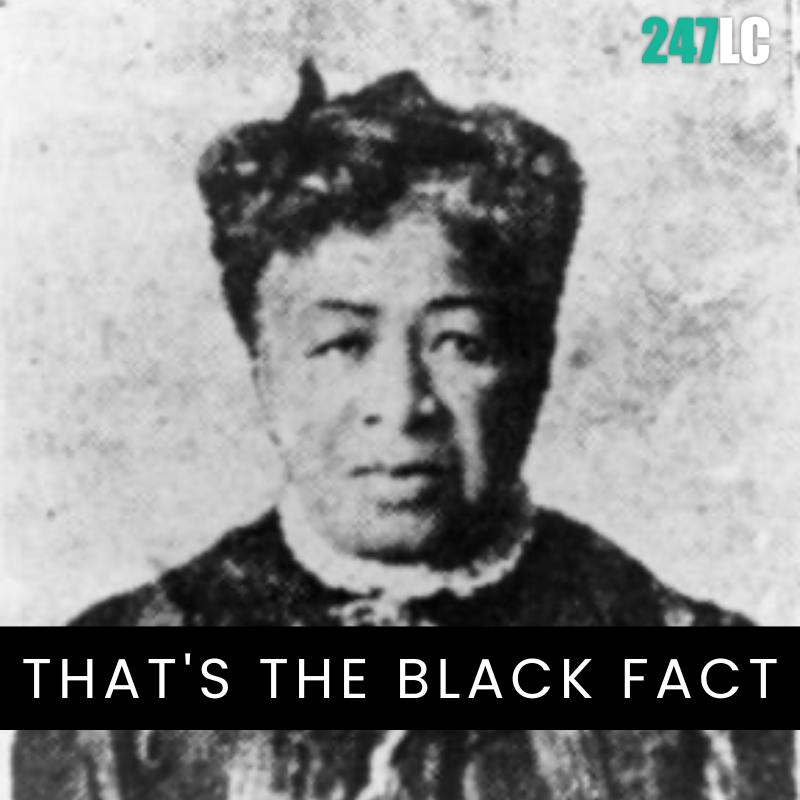
That's the Black Fact: Introducing Lucy Stanton Day Sessions
That's the Black Fact: Introducing Lucy Stanton Day Sessions, the first African American woman to graduate from college!
Lucy Staton Day Sessions
“Welcome to ‘That’s the Black Fact’. In this space you’ll find profiles on the culture and the people who built it!”
By: Ervin Green
Welcome to “That’s the Black Fact.” In this space you’ll find profiles on the culture and the people who built it!
Lucy Stanton Day Sessions (1831-1910)
Born free in Cleveland, Ohio, her father was a barber who passed before she was born, and her mother remarried later to a wealthy black businessman who was also an abolitionist and a participator in the Underground Railroad. Her stepfather created a school for African Americans because they couldn’t attend public schools.
As you can imagine, her household was all about the academics and she loved it. In 1846, she enrolled in Oberlin Collegiate Institute (now Oberlin College) where she continued to excel academically and in 1849, she was elected president of the school’s Ladies Literary Society. Sessions is believed to be the first African American woman to graduate from college in 1850. Her commencement speech was said to be a moving appeal for anti slavery.
In 1866 she was sponsored by the Cleveland Freedman's Association to teach in Georgia and later Mississippi, where she met and married her second husband in 1878. The couple moved to Tennessee where Lucy Sessions continued her philanthropic work, including serving as president of the local Women's Christian Temperance Union. She and her husband later moved to Los Angeles, California. Lucy Stanton Day Sessions died in Los Angeles in 1910.
YOU MAY ALSO BE INTERESTED IN:
SHARE TO SOCIAL MEDIA
Women's History Month: 11 Prominent Black Women Making An Impact
Women’s History Month is essential in honoring women who inspire us! Here are 11 prominent Black Women who are making a major impact!
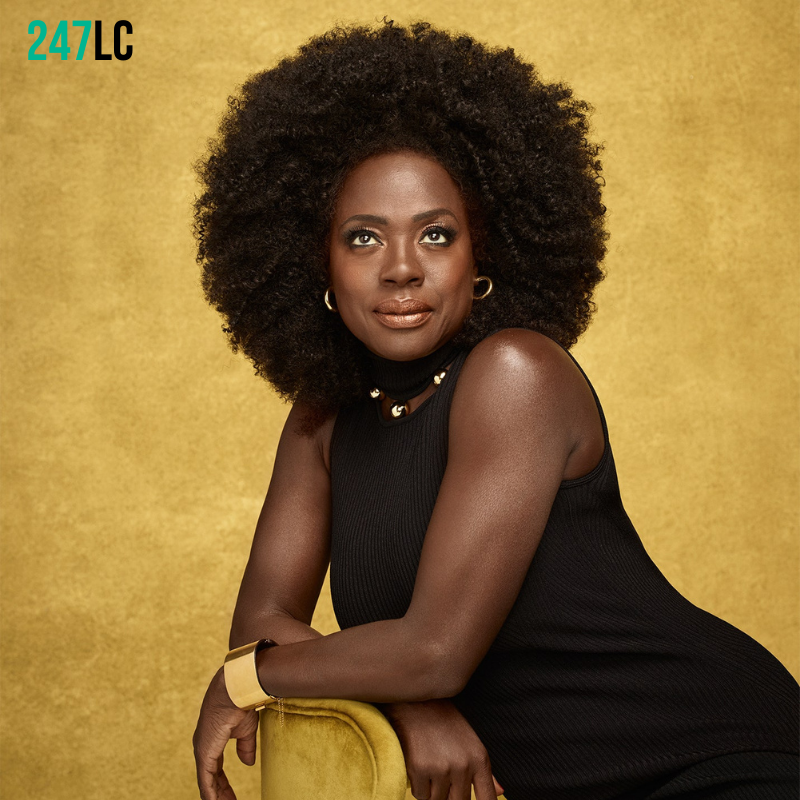
Viola Davis - PHOTOGRAPH BY DARIO CALMESE
By: Kwana Adams
It’s a little comforting to know that right after Black History Month is Women’s History Month. As a black woman, both months are essential to me because they represent two pieces of my identity. They are the first things people will notice about me when they see me.
Being black and a woman means that I have to work so much harder to prove myself in a white and male-centered world. Tv shows and movies where black women are powerful, strong, and ruthless are some of my favorites, but I also love when black women can be soft and vulnerable.
Many of my favorite black women are actresses and writers because that’s what I aspire to be, but there are artists that I love because their music just speaks to me on a deep level. Here is a list of some of my favorite black women and women who inspire me.
Viola Davis
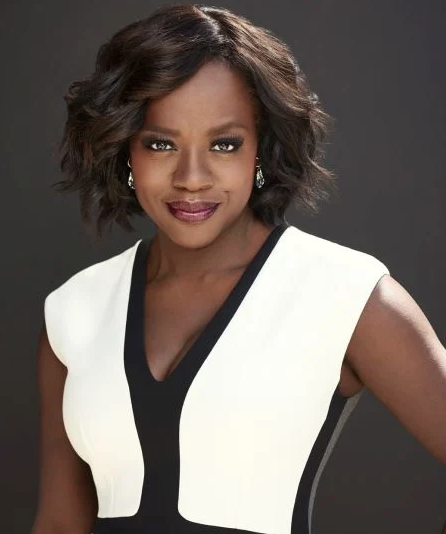
Viola Davis
As a fellow Rhode Island native, Viola is proof that I can also make it out of a state that some people mistake as part of New York. (Rhode Island is a state, guys!) As an aspiring actress, Viola is someone I look up to immensely. Before Covid, when I was able to walk the Rhode Island College campus, I would see her pictures on the walls and hope that it could be me someday.
Taraji P. Henson
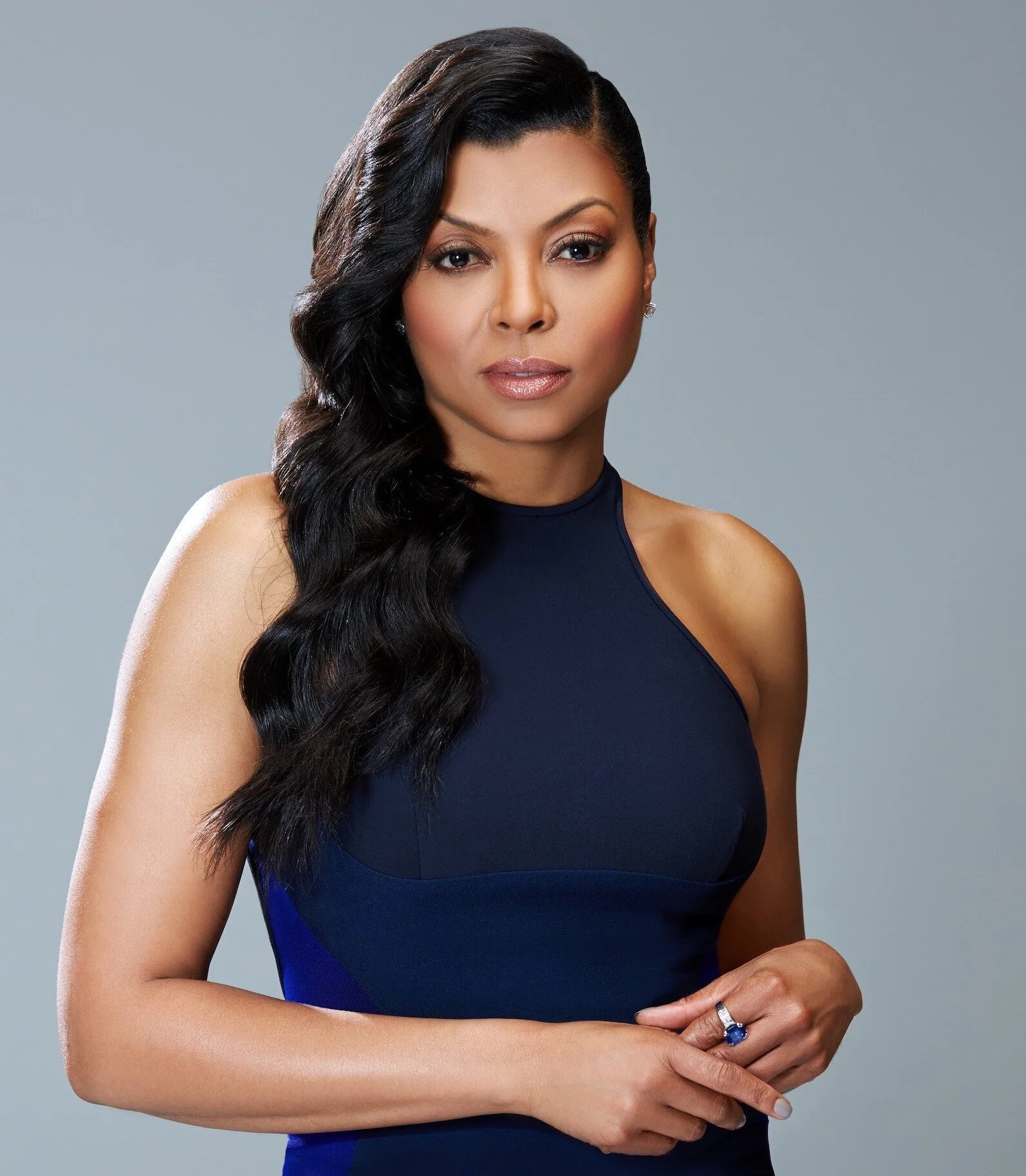
Taraji P. Henson (Photo credit: Erik Umphery)
The first movie that I saw Taraji P Henson in was Tyler Perry’s ‘I Can Do Bad All By Myself.’ Her performance in that film shook me to my very core. The most memorable scenes are when she is crying about her mother passing away on a bus. I felt like I could feel the pain she felt, knowing that no one was there for her mom in her final moments.
The other powerful moment in that movie for me was after finding out that her man had tried to take advantage of her niece; she runs him a bath and almost electrocutes him. This scene gets to me because, at first, it looks as though she doesn’t believe her niece, but having gone through something similar at a young age, she was able to recognize who this man really was. Every movie I’ve seen Taraji in, she delivers 100%, and I love that about her.
Kerry Washington
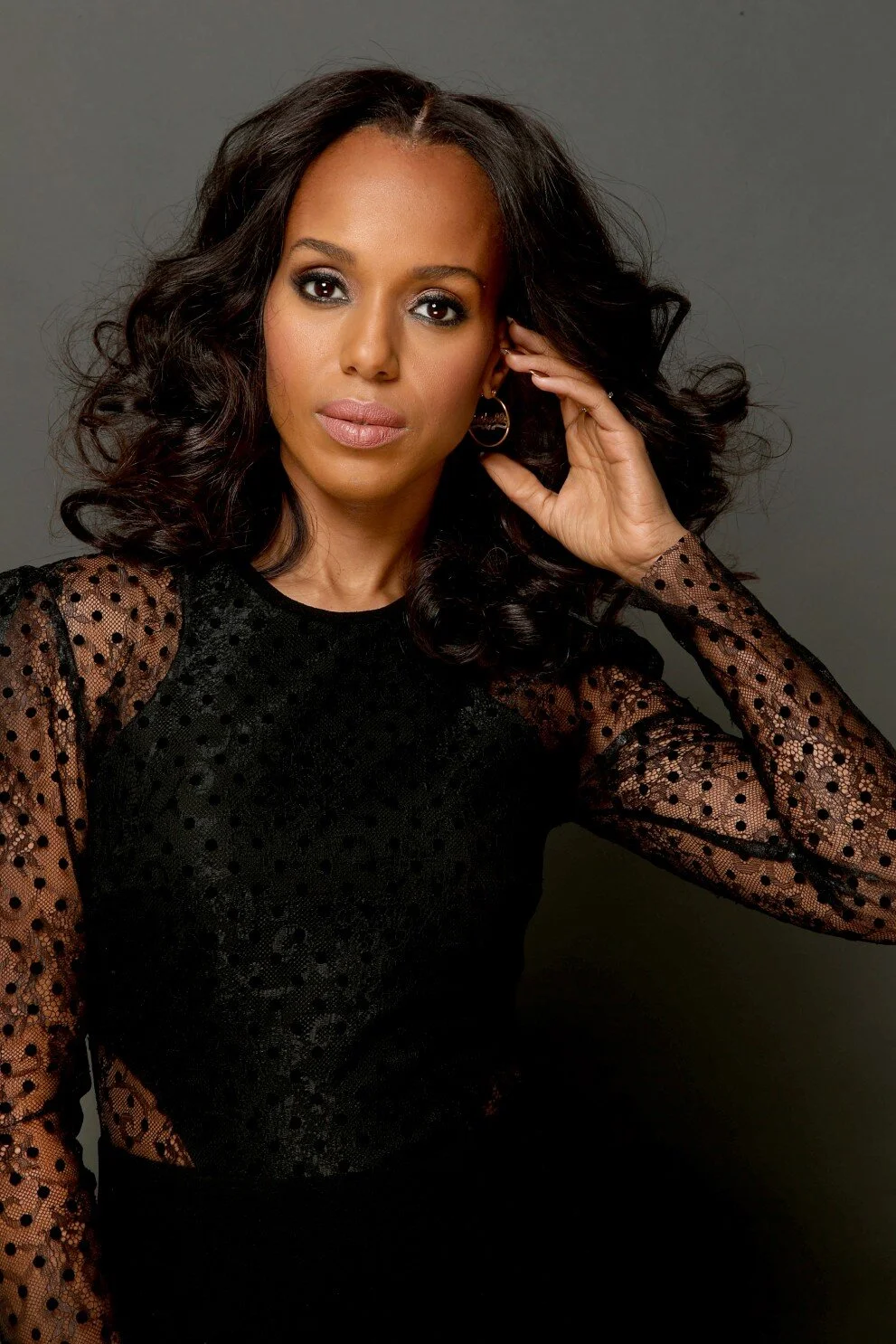
Kerry Washington - (Kirk McKoy/Los Angeles Times)
I’m just going to say it: No one, and I mean NO ONE could ever be Olivia Pope better than Kerry Washington. She played Olivia so well that she made me wish I was a lawyer and a gladiator in a suit. I was hooked on Scandal the second I began watching. Olivia was so powerful and had everything handled with nary a hair out of place. I even did an Olivia Pope monologue for an acting course, and I could swear I felt her power with every word I spoke.
Gabrielle Union
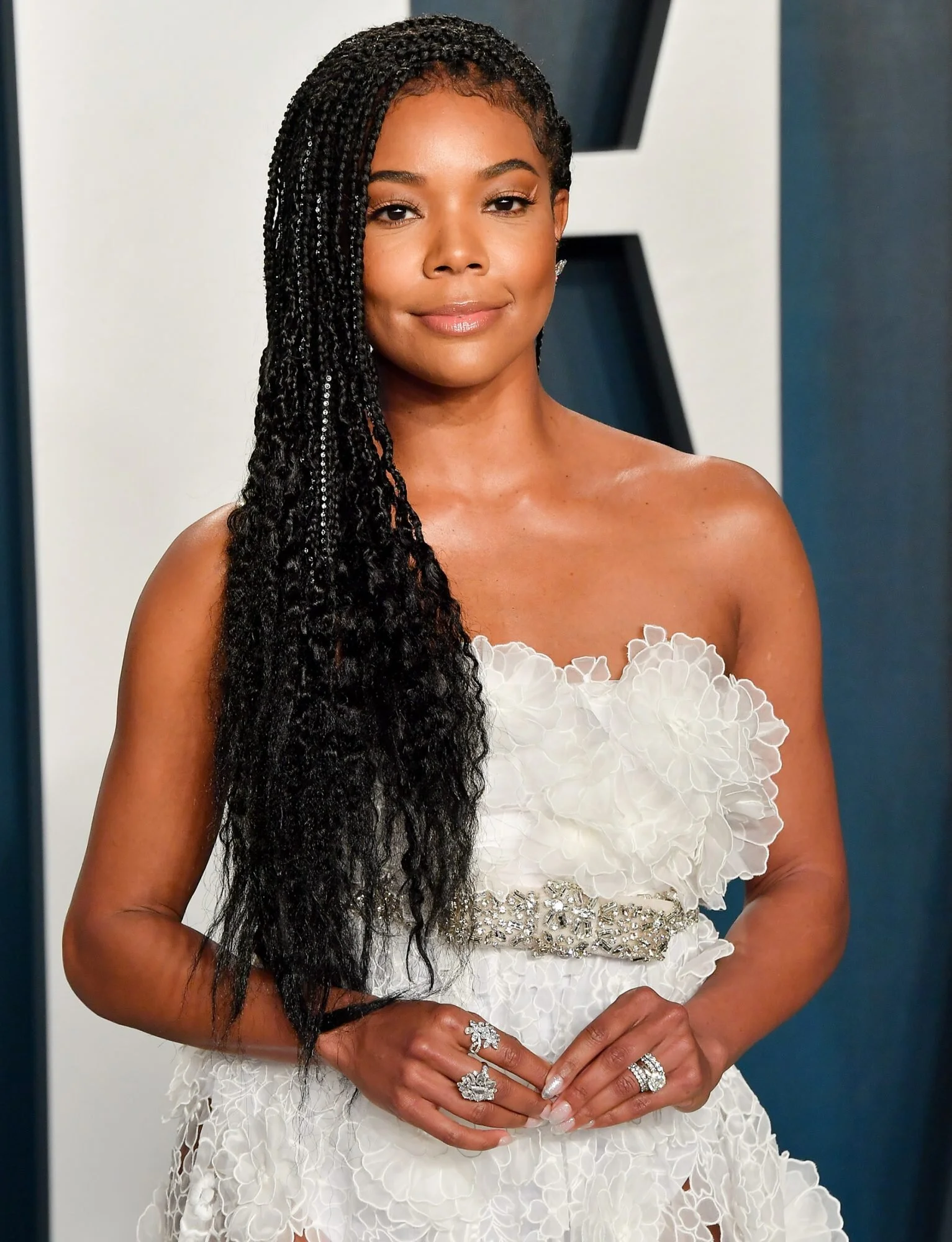
Gabrielle Union - CREDIT: ALLEN BEREZOVSKY/GETTY
Gabrielle has been one of my favorite actresses since I was a little girl. Being Mary Jane was the best thing BET has ever done, and it’s a shame they didn’t keep it on the air long before canceling it. Despite the tired trope that black women can’t have a successful career and a happy relationship simultaneously, Being Mary Jane was a fantastic show. No one could have played Mary Jane better than Gabrielle.
Regina Hall
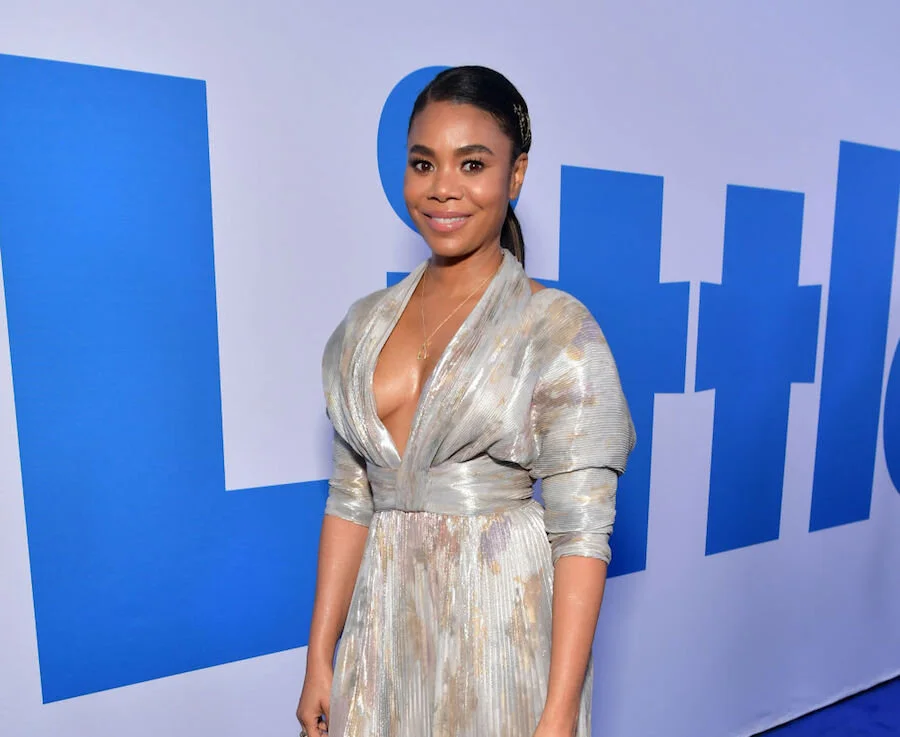
Regina Hall - CREDIT: EMMA MCINTYRE/GETTY IMAGES
Girls Trip and Little are two of my favorite Regina Hall films. I remember waiting months for Little to premiere in theaters and then excitedly watching it when it finally did. I enjoy Regina on and off the screen. She’s hilarious, and I just know she lights up any room she walks in.
Regina King

Regina King - FREDERIC J. BROWN - GETTY IMAGES
We all know and love her for the ‘pour baby oil on the bathroom floor and beat your man with a belt’ trick, but my favorite performances of hers are Poetic Justice and Miss Congeniality 2: Armed and Fabulous. Her rap sheet is extensive, not just as an actress but as a director and voice actress. She’s incredibly talented, and she deserves her flowers.
SZA

SZA
CTRL came out in 2017, but I still listen to it endlessly to this day. It is one of the only albums that I can listen to nonstop for hours and study to. This album got me through a lot when it first came out. I do love the recent music that she has been dropping, but nothing will top CTRL in my eyes.
Maya Angelou

Maya Angelou
I wrote a separate article about Maya, but this list wouldn’t be complete without mentioning her. She’s my favorite writer and poet, and I wish I could have met her before she passed away; what I wouldn’t give to have had just one conversation with her.
Angela Davis
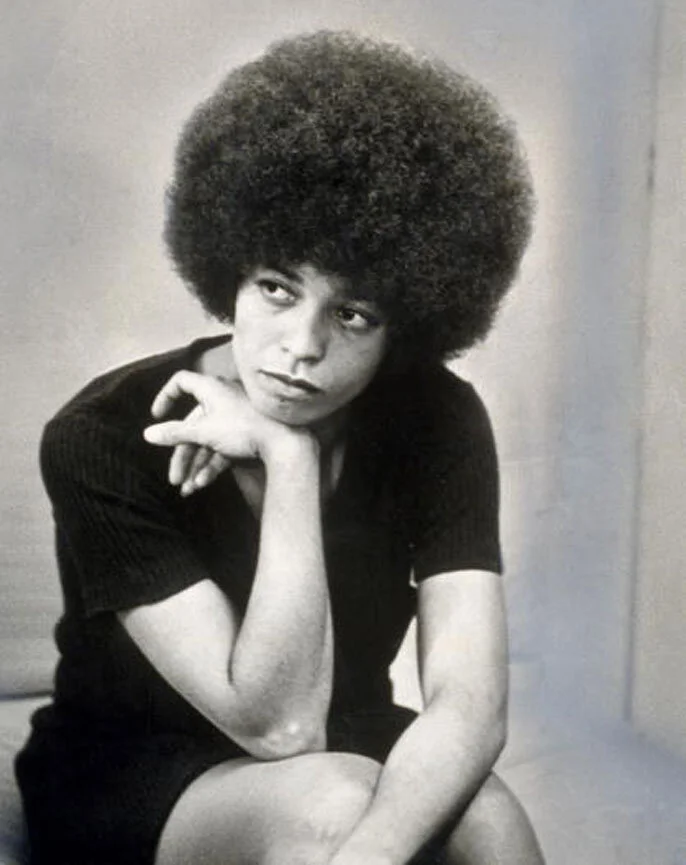
Angela Davis
Angela Davis also got her own article, but it wouldn’t be right not to mention her here either. She is the most important black rights activist I’ve ever learned about. She has and still, to this day, makes it her mission to uplift and fight for black people. Black women tend to be overlooked in history, so I make sure to mention her as much as possible.
Rico Nasty
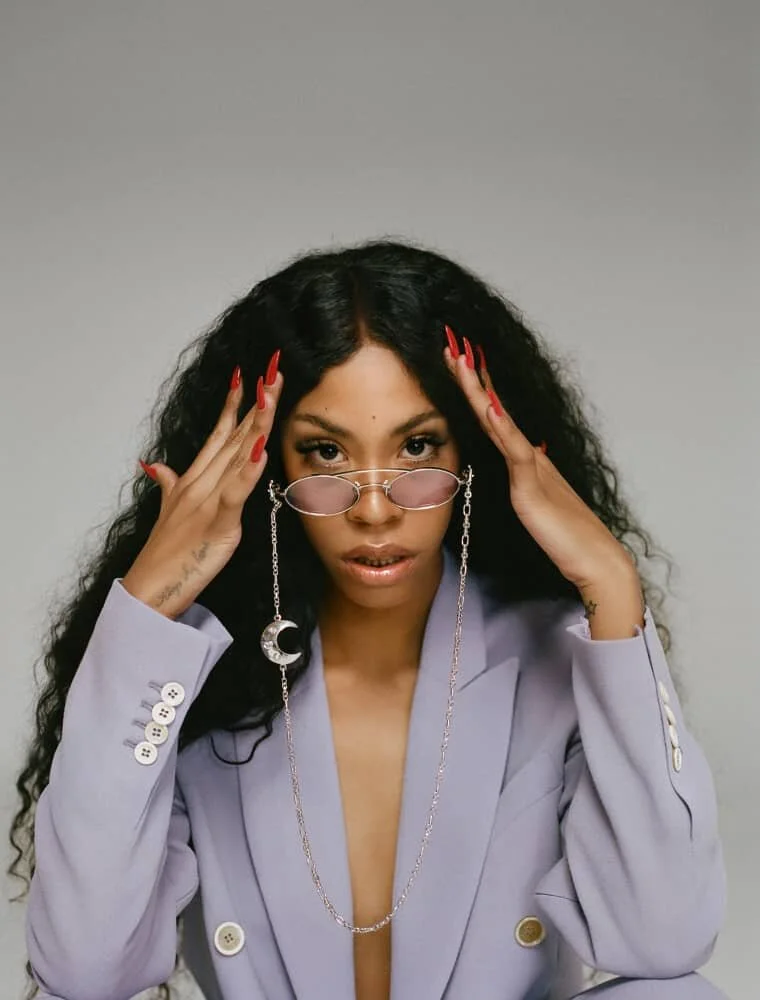
Rico Nasty
I discovered Rico Nasty while watching my favorite show, Insecure. After that, I checked out more of her music, and the rest is history. I love the diversity and aggression in her music. I love her style of dress and the way she moves through the world so carefree.
Issa Rae
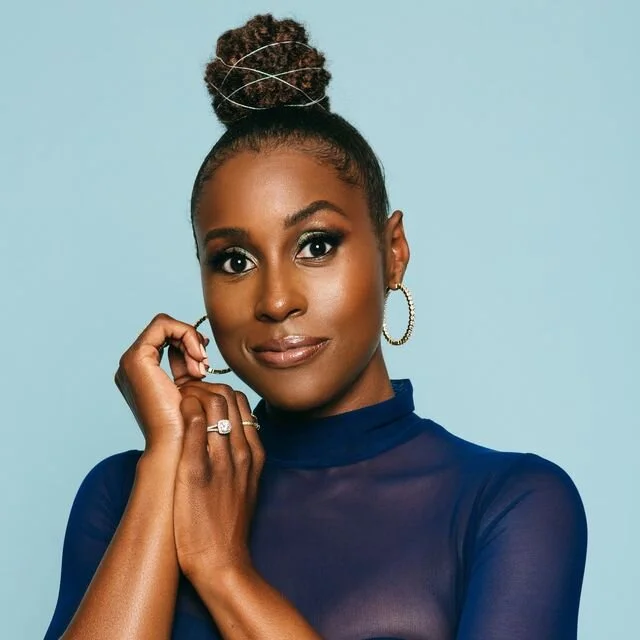
Issa Rae - Credit: JABARI JACOBS
Insecure was my first introduction to Issa Rae, and I was hooked immediately. After A Different World was removed from Netflix and many other majority-black shows were canceled or removed, it was hard for me to find something to watch that I could somewhat relate to. Insecure is funny but also touches on important issues. Issa Rae is a comedic genius, and I aspire to develop something that gets people talking as much as Insecure does.
YOU MAY ALSO BE INTERESTED IN:
Meet Adonis Armstrong, Co-Founder & President of 247 Live Culture!
Email: Adonis@247LiveCulture.com