Loving Blackness While Feeling Disconnected From the Community

Loving Blackness While Feeling Disconnected From the Community
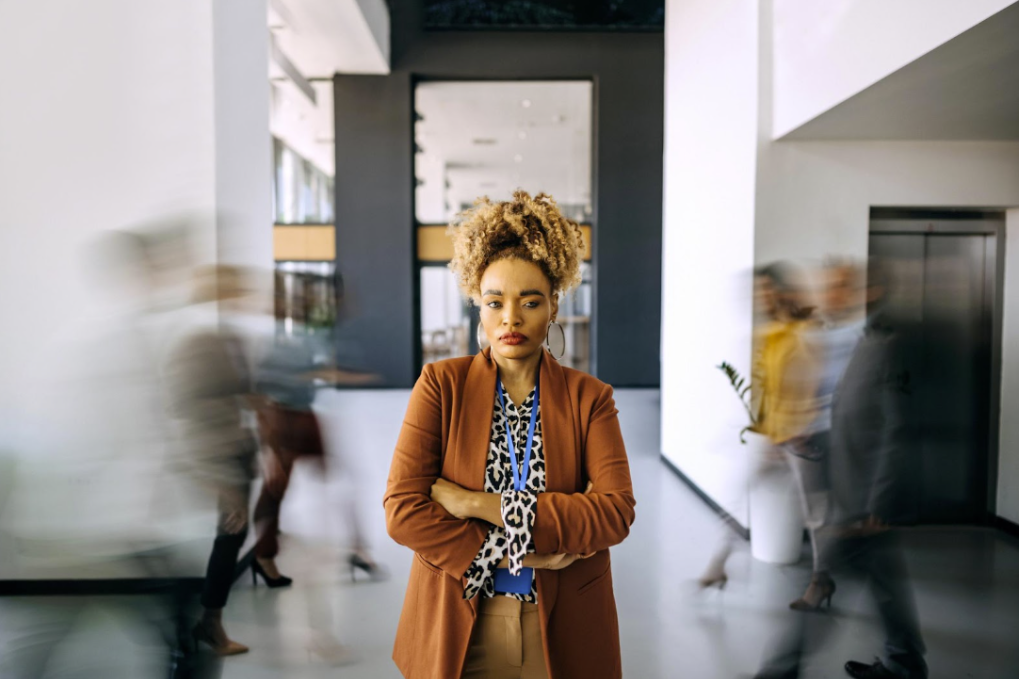
Photo Credit: Pekic via iStockPhoto.com
By: Jamila Gomez
There’s an assumption we don’t talk about enough: that being Black automatically means belonging. That the community is a built-in refuge. That shared history guarantees shared safety.
For a lot of us in our 30s and beyond, that assumption starts to crack.
Not because we don’t love Black people. Not because we’re trying to distance ourselves from our culture. But because loving something doesn’t mean it always holds you well.
Some of us move through Black spaces and feel like guests instead of family. We know the language, the humor, the codes. We show up. We contribute. And still, something feels misaligned. Not dramatically. Just enough to notice.
That quiet dissonance is rarely named. When it is, it’s often misread as arrogance, internalized racism, or “thinking you’re better.” Those labels shut the conversation down before it even starts.
The truth is more uncomfortable.
Blackness is not a monolith, and yet many of our communal spaces still operate as if it is. There are unspoken rules about how you’re supposed to think, worship, grieve, love, vote, parent, speak, and heal. Deviate too far, and you feel it. The pause in the room. The side-eye disguised as concern. The distancing that never gets explained.
For some, the disconnect comes from class differences. For others, it’s neurodivergence, mental health awareness, or simply emotional depth that doesn’t translate well in spaces built on survival and humor as armor. For many in midlife, it’s the slow evolution of values. What mattered at 22 doesn’t always hold at 42.
And that’s where the tension lives.
Because the Black community taught us loyalty early. Stay. Endure. Don’t air things out. Handle it internally. But what happens when “internally” still leaves you unseen?
There’s grief in realizing that the place you thought would understand you best sometimes requires you to flatten yourself to stay connected. There’s confusion in loving your people while feeling emotionally homeless among them. There’s guilt in admitting that you feel safer, calmer, or more honest in spaces that don’t demand a performance of Blackness that no longer fits.
Many people respond to that discomfort by forcing themselves to assimilate back into expectations. Others withdraw completely and carry the loneliness quietly. Both responses are attempts to survive a truth we haven’t given ourselves permission to hold.
Here’s the part we avoid saying: community that requires you to silence parts of yourself is not community. It’s proximity.
Belonging doesn’t mean agreement on everything. But it does mean room to breathe. Room to question. Room to be different without being treated as a threat or a disappointment.
For Black folks in their 30s and over, this conversation matters because many of us are no longer willing to contort ourselves for the sake of optics. We’ve outlived the need to be universally accepted. What we want now is congruence. Alignment. Relationships that don’t punish growth.
Acknowledging alienation doesn’t mean rejecting Blackness. It means telling the truth about how complex it actually is. It means allowing Black identity to be wide enough to hold contradiction, evolution, and difference without exile.
You are not broken because you feel this way. You are not disloyal for noticing it. And you are not alone, even if it feels that way.
The work now is discerning where you can show up fully and where you can stop trying to be understood. Not every space deserves access to who you’re becoming.
And that doesn’t make you less Black. It makes you honest.

YOU MAY ALSO BE INTERESTED IN: