
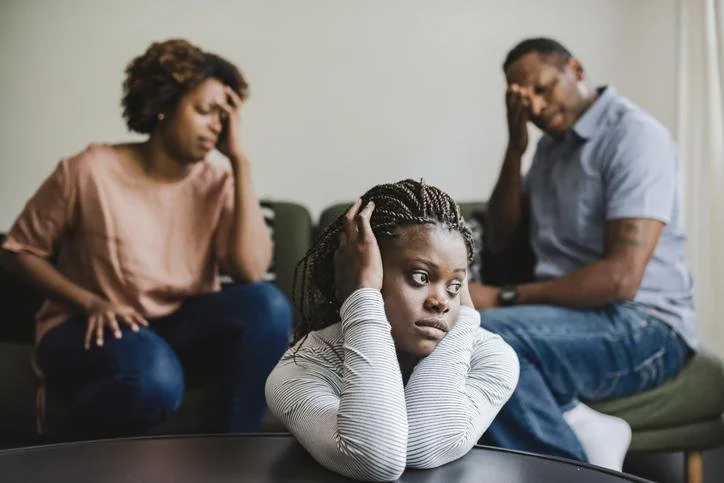
We Need to Talk About Emotional Manipulation in Black Families
Many Black families struggle to differentiate love from control, mistaking emotional manipulation for tradition and loyalty, but healing begins by naming the harm and breaking generational cycles. We discuss it here!

Photo Credit: Rawpixel via iStockPhoto.com
By: Jamila Gomez
There’s a difference between love and control—but in many Black families, that line has been blurred for so long, we’ve been taught to see them as the same thing.
Emotional manipulation isn’t always loud or aggressive. Most of the time, it shows up quiet and familiar, wrapped in phrases we’ve heard all our lives:
“After all I’ve done for you.”
“That’s just how I was raised.”
“You think you better than us now?”
It’s the guilt trip when you try to set boundaries. The silent treatment when you say no. The expectation that you’ll show up, pay up, and never speak up. And if you dare to name what’s happening, you’re suddenly the disrespectful one—the ungrateful child, the outsider, the problem.
In Black families, there’s often an unspoken belief that elders are above accountability, that “family business” should stay quiet, and that loyalty means silence—even in the face of harm. It’s a survival response rooted in real history. Our families have spent generations trying to hold it together under systemic pressure, economic struggle, and racial trauma. Control, shame, and fear became tools to protect and preserve. But those same tools are now damaging us from the inside.
When love is measured by obedience, and respect is weaponized to silence you, it’s not protection—it’s manipulation. And what gets dismissed as “just how they are” ends up becoming our emotional blueprint. It teaches us to ignore our own needs, overextend ourselves, and mistake guilt for connection. We carry that into our friendships, romantic relationships, and even into parenting, where the cycle threatens to continue.
This isn’t about blame—it’s about awareness. Because healing starts with naming what hurt us, not pretending it didn’t. And some of the things we normalized growing up were never okay. The problem is, if you try to break the pattern, you risk being labeled difficult, distant, or “not family-oriented.” But what they don’t understand is that choosing your peace isn’t abandonment—it’s protection, too.
Black families deserve better than cycles of emotional silence and manipulation dressed up as tradition. We deserve relationships built on mutual respect, real communication, and space to grow. But we won’t get there if we keep pretending that guilt is love and silence is strength.
We’re allowed to want more. We’re allowed to choose differently. And we don’t owe anyone our emotional freedom just to keep the peace.
The truth is that the only way to truly honor our families is to do the work they weren’t allowed—or willing—to do. That starts by being honest about what’s been passed down… and deciding which parts end with us.

YOU MAY ALSO BE INTERESTED IN:




SHARE TO SOCIAL MEDIA
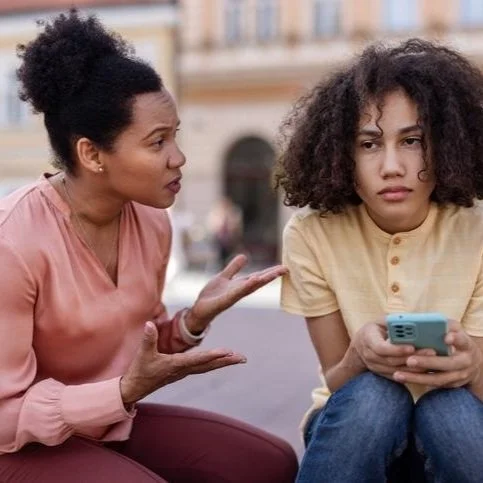
“But That’s Your Family”: Untangling Guilt, Loyalty, and Limits in Blood Ties
Setting boundaries with family is an act of self-preservation, not betrayal, empowering you to prioritize mental health, protect your peace, and challenge toxic generational patterns with love and courage. We discuss it here!

Photo Credit: PixelsEffect via iStockPhoto.com
By: Jamila Gomez
There’s a phrase many of us have heard when we try to assert ourselves with family: “But that’s your family.” As if the word alone should override disrespect, excuse harm, or obligate us to stay in proximity to pain. The truth is, family ties can complicate boundaries in ways that are deeply emotional, often tangled in guilt, loyalty, and the hope that things might change. But blood doesn’t give someone the right to bleed you dry.
Setting boundaries with family isn’t about being cruel. It’s about reclaiming agency. It’s the moment you stop shrinking yourself to keep the peace. It’s choosing your mental health over traditions that teach silence. It’s saying, “I love you, but I will not abandon myself to stay connected to you.” And sometimes, that love means loving from afar—or not at all.
The idea that family is sacred often becomes a weapon. You’re told to forgive quickly, to “just let it go,” to keep showing up even when you’re breaking inside. But boundary-setting is not about bitterness. It’s about self-preservation. It’s how you teach others how to treat you—and how you finally begin to believe that you deserve peace, too.
Still, it’s not easy. When you set a boundary with a parent, a sibling, or an elder, it can feel like betrayal. The grief is real. You might mourn the relationship you wish you had. You might battle shame for “disrespecting” someone who raised you. You might fear being labeled ungrateful or dramatic. But honoring your truth is not disrespect. Protecting your energy is not betrayal. And grief, while hard, is often the evidence that you’re doing something necessary.
Some will not understand. Some will push back harder. They’ll say you’ve changed—and they’ll be right. You are changing. You are breaking patterns. You are learning how to live from a place of self-trust instead of fear. And that transformation is often lonely—but it’s also where healing begins.
Letting go of unhealthy dynamics, even in the name of family, is an act of courage. It takes strength to say no more, to create distance, to demand reciprocity and mutual respect. And while some relationships may survive the shift, others won’t. That’s okay. Closure doesn’t always come with mutual understanding. Sometimes, it’s simply a quiet decision to choose yourself.
So the next time someone says, “But that’s your family,” remember: Yes. And I’m still allowed to have limits.
YOU MAY ALSO BE INTERESTED IN:
SHARE TO SOCIAL MEDIA

Cultural Gaslighting: “That’s Just How We Were Raised”
Unpacking cultural gaslighting, this article explores how the phrase "that’s just how we were raised" is used to excuse harmful behavior and why unlearning outdated norms is key to healing and growth. We discuss it here!
Photo Credit: skynesher via iStockPhoto.com
By: Jamila Gomez
We’ve all heard it. You question something harmful—maybe a rigid gender role, casual racism, or toxic parenting—and someone shrugs it off with, “That’s just how we were raised.” It’s meant to end the conversation. But really, it’s a form of cultural gaslighting.
Cultural gaslighting happens when people use tradition or upbringing to excuse behavior that’s clearly harmful or outdated. It’s a way of shifting blame from individuals to culture, as if culture is a fixed, unchangeable force that can’t be questioned. This defense not only dismisses real harm—it also pressures people to doubt their own experiences, especially if they’re trying to unlearn or challenge the values they were taught.
Let’s be clear: culture is not immune to criticism. The way we were raised might have shaped us, but it doesn’t define us forever. Saying “that’s just how we were raised” doesn’t explain behavior—it excuses it. It turns culture into a shield instead of a context. Worse, it implies that calling out harmful norms is somehow disrespectful or disloyal.
This mindset often shows up in family dynamics. A parent might defend verbal abuse as “tough love.” A grandparent might justify a racist comment by saying “that’s just how it was back then.” But normalizing harm doesn’t erase it. And clinging to outdated behavior because it’s familiar keeps cycles of dysfunction going.
It also plays out in institutions. Schools, religions, and workplaces often resist change by invoking tradition. They treat critique as betrayal rather than an opportunity for growth. When people raise legitimate concerns, they’re gaslit into thinking they’re being too sensitive, too radical, or too angry.
But growth starts when we separate understanding from endorsement. Yes, we can acknowledge where we come from. We can recognize why certain behaviors or beliefs took root in our families or communities. But that doesn’t mean we have to carry them forward. The excuse of “how we were raised” becomes meaningless when we realize we now have the power—and the responsibility—to choose differently.
Unlearning takes effort. It means sitting with discomfort, confronting hard truths, and rewriting inherited scripts. But it’s not betrayal—it’s liberation. Challenging cultural norms isn’t a sign of disrespect. It’s a sign that we’re paying attention, that we care enough to want better—for ourselves and the generations after us.
So the next time someone says, “That’s just how we were raised,” ask: “But is that still okay now?” Culture evolves. And so should we.
YOU MAY ALSO BE INTERESTED IN:
SHARE TO SOCIAL MEDIA

How Self-Love Shapes Romantic Love in the Black Community
Prioritizing self-love in the Black community fosters healthier relationships by addressing generational trauma, promoting self-worth, and strengthening the foundation for authentic and resilient Black love. We discuss it here!

Photo Credit: Delmaine Donson via iStockPhoto.com
By: Jamila Gomez
Self-love is a profound foundation for healthy relationships, especially within the Black community, where historical challenges and systemic oppression have created unique barriers to both individual and collective healing. When individuals prioritize self-love, they cultivate an internal sense of worth and resilience, which profoundly influences their ability to give and receive love in romantic relationships.
For centuries, Black love has served as a radical act of defiance and survival, preserving joy and connection despite external adversities. However, self-love—a deeply personal and transformative practice—strengthens this legacy by fostering emotional well-being and breaking cycles of generational trauma. When Black individuals embrace self-love, they affirm that they are deserving of compassion, respect, and care—cornerstones of any healthy romantic partnership.
One of the ways self-love manifests in romantic relationships is through boundary-setting. Often, societal stereotypes and systemic inequities have pressured Black individuals to overextend themselves emotionally and physically, sometimes leading to unhealthy dynamics in relationships. When self-love is prioritized, individuals are more likely to establish boundaries that protect their mental and emotional health. In turn, this creates space for equitable and respectful romantic connections, where both partners feel seen and valued.
Moreover, self-love helps dismantle harmful patterns shaped by internalized racism, colorism, and negative self-perception. Within the Black community, unlearning these societal impositions is an act of self-care that directly impacts how individuals choose partners and navigate intimacy. When people accept their full selves—embracing their unique beauty, culture, and experiences—they are more likely to attract relationships rooted in authenticity and mutual respect.
Black love thrives when it emerges from a place of wholeness, rather than seeking completion in another person. Couples who prioritize self-love individually often bring emotional stability and self-awareness into their partnerships. This not only deepens their connection but also sets an example for future generations, emphasizing that love starts within.
In the Black community, self-love is not just a personal journey—it’s a communal one. By prioritizing self-care, self-respect, and self-acceptance, individuals contribute to a collective healing process that uplifts relationships and challenges narratives of unworthiness. Ultimately, self-love nurtures romantic love, empowering Black couples to build lasting, fulfilling connections that reflect the strength and beauty of their shared heritage.
YOU MAY ALSO BE INTERESTED IN:
SHARE TO SOCIAL MEDIA

Therapy in Black Relationships: Breaking Stigmas Around Mental Health and Love
Therapy is helping Black couples break cultural stigmas, heal generational wounds, and build stronger, healthier relationships rooted in love and understanding. We discuss it here!

Photo Credit: Prostock-Studio via iStockPhoto.com
By: Jamila Gomez
In Black communities, mental health conversations have often been overshadowed by cultural stigmas, societal pressures, and generational trauma. When it comes to Black relationships, these barriers can create cycles of misunderstanding, unhealed wounds, and emotional disconnection. However, therapy is increasingly being embraced as a tool to strengthen love, foster communication, and heal both individually and collectively.
For decades, therapy has been stigmatized in Black communities, often perceived as a sign of weakness or something only “crazy” people pursue. This misconception has been compounded by systemic racism within the mental health field, a lack of culturally competent therapists, and the idea that faith or family should be enough to address emotional struggles. These attitudes often find their way into relationships, where vulnerability is seen as a liability rather than a strength. Many couples internalize pain, resort to silence, or repeat unhealthy patterns they’ve inherited, leading to fractured relationships.
However, as conversations about mental health become more mainstream, Black couples are beginning to see therapy as a powerful resource for cultivating healthy, lasting love. Therapy provides a safe space to unpack individual traumas and explore how these impact the dynamics of a relationship. For example, a partner who grew up in a household where emotions were suppressed might struggle to communicate their needs, while the other may feel neglected or misunderstood. A therapist can help couples identify these patterns, develop empathy, and practice new ways of relating to one another.
Importantly, therapy doesn’t mean a relationship is broken. Many Black couples are using therapy proactively, not as a last resort. Premarital counseling, for instance, allows partners to align on values, expectations, and conflict resolution strategies before problems arise. Others turn to therapy to heal from specific challenges, like infidelity, financial strain, or unresolved grief.
The rise of Black therapists and culturally sensitive approaches to mental health care has also played a key role in breaking these stigmas. Black couples now have greater access to professionals who understand the nuances of their experiences, including racism, cultural identity, and the intergenerational effects of systemic oppression.
Ultimately, therapy is an act of love—for self and for each other. By normalizing seeking help, Black couples can break cycles of pain and create a legacy of healthy, resilient love. Healing together is not only possible but revolutionary.
YOU MAY ALSO BE INTERESTED IN: