
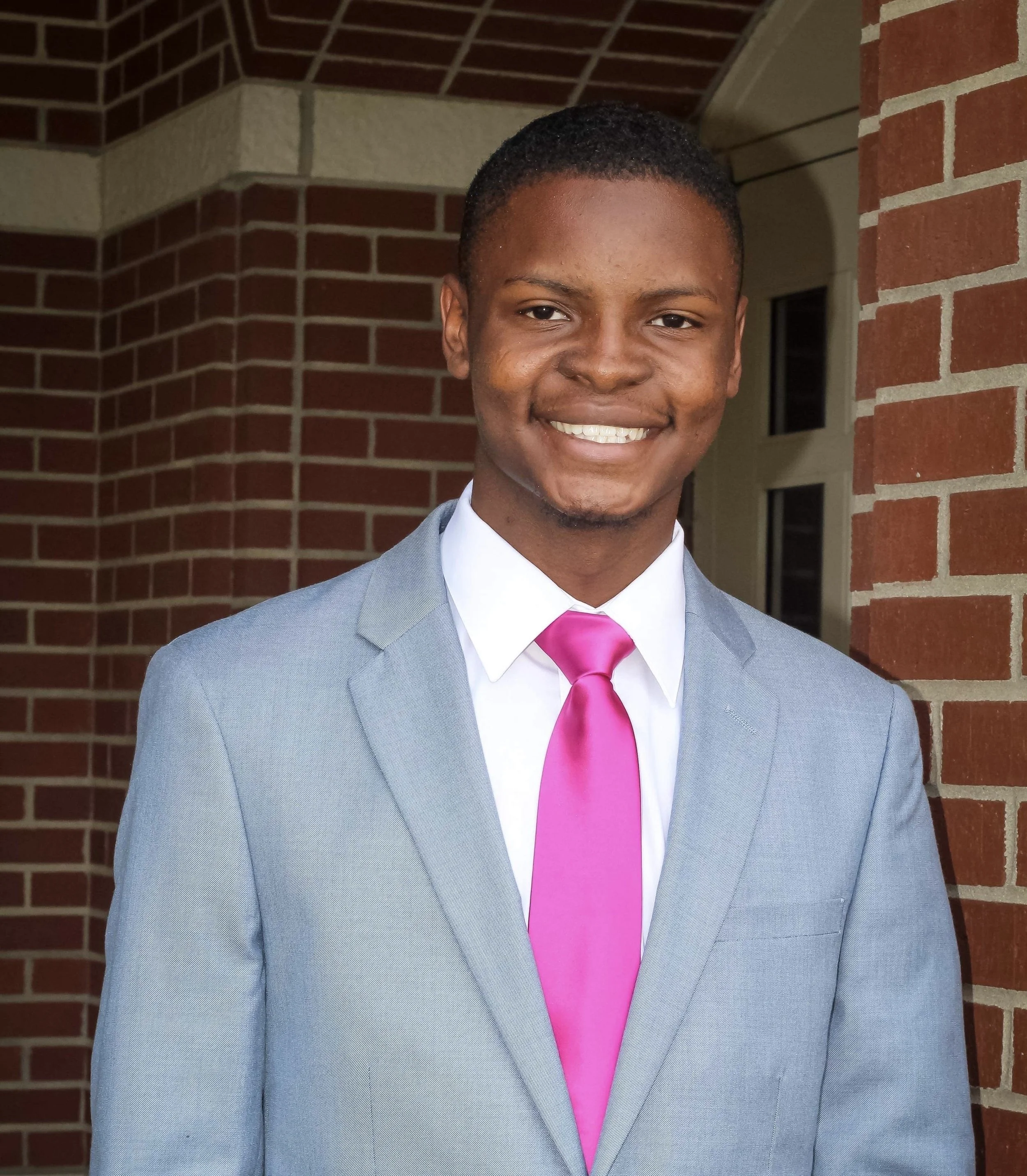
Meet Jaylen Smith: The Youngest Black Mayor in U.S. History
Meet Jaylen Smith, a recent high school graduate who is set to become the youngest Black mayor elected in U.S. history! We discuss it here!

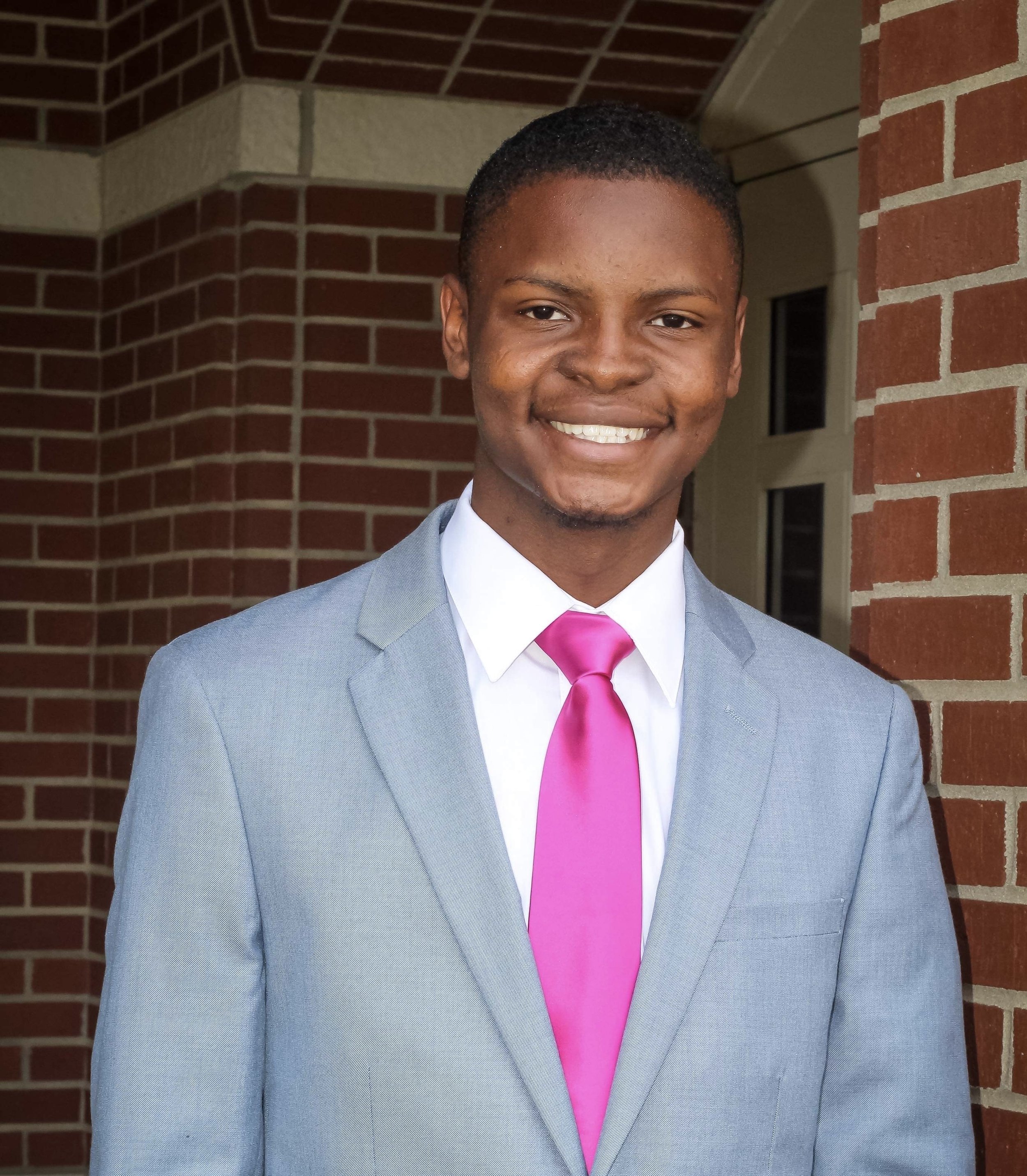
Jaylen Smith, Elected Mayor of Earle, Arkansas
By: Adonis Armstrong
Meet Jaylen Smith, the youngest Black mayor elect in U.S. history. This will too make him one of the most youthful mayors of any race within the U.S. Smith who is 18, and a fresh high school graduate, defeated his opponent, Nemi Matthews Sr., in a runoff race to rise as the mayor of Earle, Arkansas. Smith accumulated 235 votes, compared to Matthews’ 185, according to race results.
“Citizens of Earle, Arkansas, it’s official!! I am your newly elected Mayor of Earle, Arkansas… It’s Time to Build a Better Chapter of Earle, Arkansas. I would like to thank all my supporters for stepping up getting people to the polls. I am truly grateful for you all.” - Jaylen Smith
To get ready for the election, Smith counseled with a few former leaders in Arkansas to gain knowledge and a better understanding of the task at hand. He will be sworn in during this week of January, and he said his extreme objective is “to show the people of Earle results.
“I didn’t run to make a name for myself. I ran because i wanted to help my community and move my community in the direction that it needed to be moved in.” Smith told CNN.
Smith’s mayoral priorities include: making strides open security and transportation, crisis readiness, beautifying the city, and tending to the nourishment leave in Earle.
This is a major accomplishment by Smith, who could start a new trend of younger voices in leadership roles. I hope more continue to follow in his footsteps to run in more governor and mayor roles.
YOU MAY ALSO BE INTERESTED IN:
SHARE TO SOCIAL MEDIA

Miiriya, The App That Makes Shopping From Black Owned Businesses Easy
Black-owned businesses have exploded in popularity over the years, especially during the COVID-19 pandemic. Miiriya is an app that is making it easier to shop from Black owned businesses directly on one app! We discuss it here!

By: Kwana Adams
Black-owned businesses have exploded in popularity over the years, especially during the COVID-19 pandemic. There are now so many black-owned businesses that some popular e-commerce sites are even attempting to highlight or uplift black-owned businesses that they find. A lot of sites, however, take fees out of the profits that businesses make. It is amazing to see black people starting businesses and becoming successful, but it can get sometimes overwhelming to keep track of all of them. How can we possibly find what we’re looking for? If only there was a site that was not only for black-owned businesses but a site that is completely free to register for and 100% of proceeds go to the business…
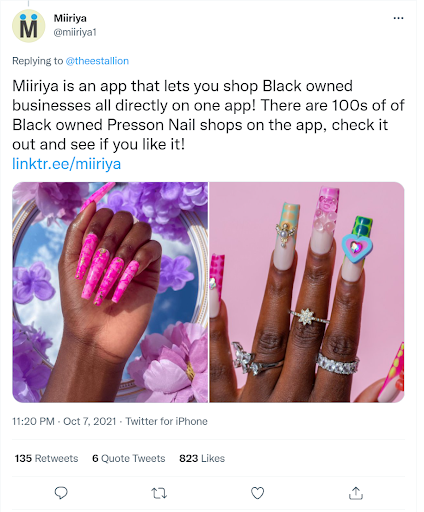
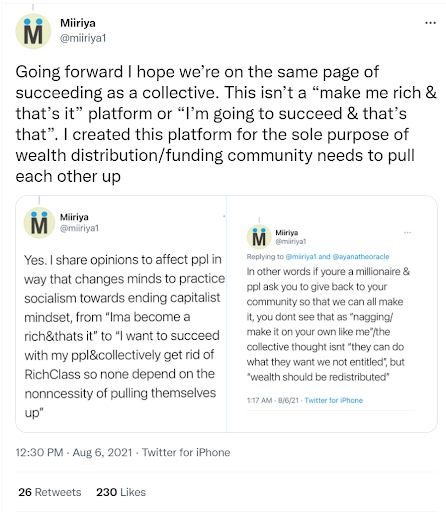
“I wish there was a site like Etsy, but for black businesses.” “Is there an app like Amazon but only for black businesses?” If you’ve tweeted this, then you’re probably aware of the hilarity of the owner, Lamine Loco’s tweets to promote the app and you’ve probably gotten a response like these:

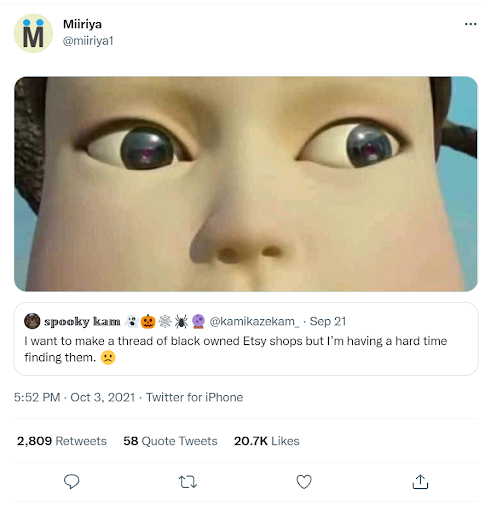
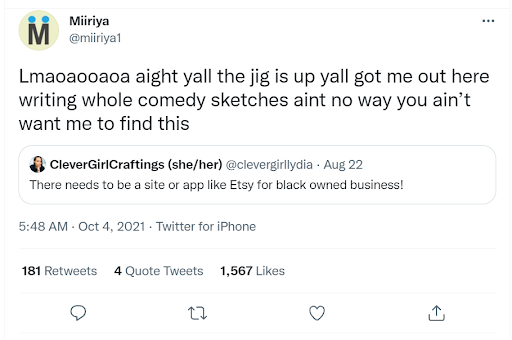
Don’t even think you’re going to tweet words like: Amazon, Etsy, Black Owned Business, and Miiriya’s not going to find out.
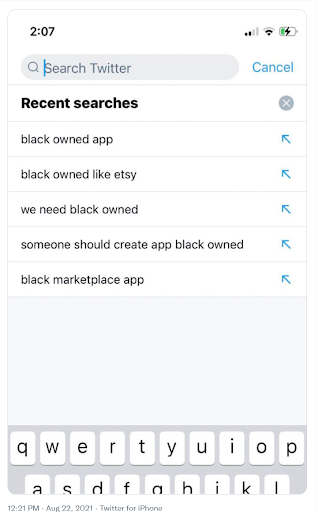
They gon’ find you..
Stop playing with this man. We’re all aware by now of the hard work, money, and time he has put into making Miiriya a place where we can thrive. This is a one man show, or one single N*gga running this whole show on his own and putting his whole foot into it. As a collective, we needed something like this where we can support and be supported. Amazon, Etsy, and other platforms can highlight black owned businesses and have separate tabs all they want, but they’re not here for us the way Miiriya is. Many of black owned businesses have praised the site for helping boost their sales. If you follow the Twitter account, you’re already aware of the daily tweets promoting products from the businesses on the site, and if you go to the website or the app, you’ll notice the many featured products and services that are constantly promoted.
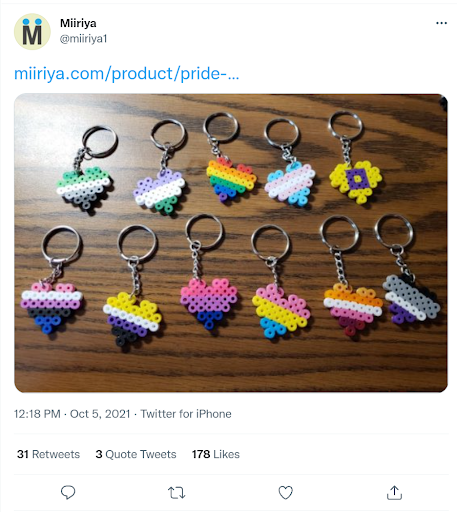
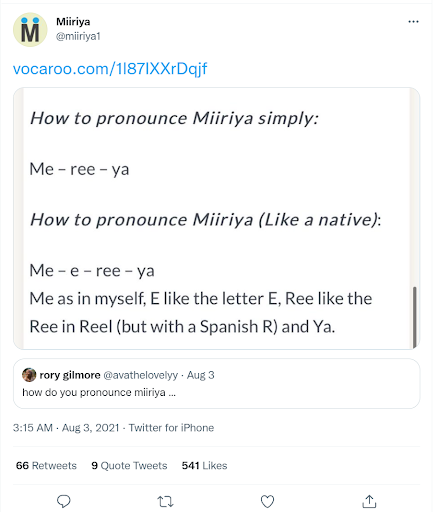
Say the word three times and Miiriya will appear in your comments. What does the word actually mean though, and where does it come from? The word comes from Mr. Loco’s native language of Bambara/Dioula and it means “thoughts” and “ideas.” According to Mr. Loco, it can also be used with other words to mean “philosophers” and “thinkers.” It’s such a fitting name as the sole purpose of the app is to be a marketplace for all black owned businesses including but not limited to, cosmetics, fashion, books, decor, and more. Miiriya also now has booking services for black business owners to sell their services like hairstylists, classes, and even tutoring and language learning, and it continues to grow every day.
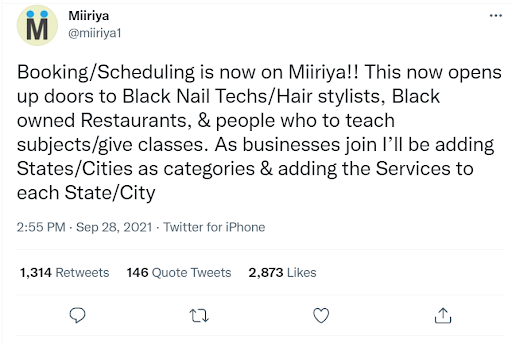
According to Glamour, Lamine Loco also plans to use the app to create solutions to the problems that our communities face by accepting donations from customers and vendors. The money donated will go to things such as community fridges in more areas, so that people who are hungry may go in and get food whenever they are in need.
How does one get their business onto Miiriya and prove that they’re a black business. It’s simple:
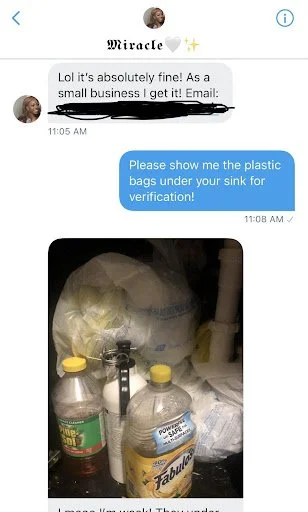
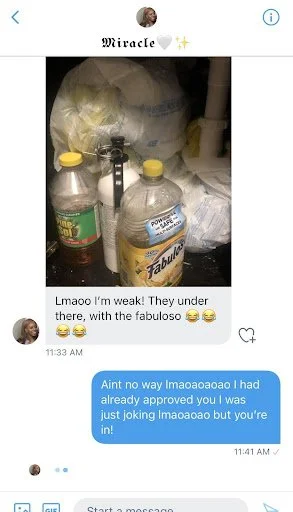
He just playin’. To register for Miiriya, simply go on to the website, click on the figure in the top right corner, or bottom corner on the app, and then click “Register Here”. After doing that, the form will pop up and click on the bubble that says, “I am a vendor” and fill out the form with your info. It will ask you to put in your email, a password, first and last name, shop name, shop URL, and phone number. After registering, wait to hear from Miiriya for any further instructions.
Since Miiriya is independently run and owned, a lot of the money that goes into running it, comes out of the owner’s pocket. It does not take a dime from any of the profits from black owned businesses. In order to thrive, aside from using his own money, there is also a Patreon where people can become patrons for as low as $1 a month to help with the costs of running the site. At the time of this article, there are currently 577 patrons with the goal being $3000 a month being donated. If you believe in what Miiriya is doing, consider becoming a monthly patron. $1 a month is not much at all to ask, and if you can spare it, the tiers are $1, $3, $5, $8, and $10. Open your purse if you can and register your black owned business on Miiriya.
During my search for information on Miiriya, I was surprised that there were not more articles written about the site. The social media game itself is enough to write articles about. Mr. One Single N*gga singlehandedly kills it on social media every time. Why are they not verified yet?! Where is Miiriya’s blue check? There are no other apps that focus solely on black owned businesses while also creating a space where we can also work on having our community on even footing. It really is a community centered marketplace where we spend our money with each other and circulate the black dollar to other black businesses. With 100% of profits going to the business owners, we know exactly where our money is going and who it’s benefitting. US. Please give Lamine Loco and Miiriya its flowers and let’s follow that example.
YOU MAY ALSO BE INTERESTED IN:
SHARE TO SOCIAL MEDIA

Groovetime Dance App Aims To Help Bridge The Gap For Creators Of Color
Dissatisfaction among Black creators on Tik Tok has been brewing for quite some time due to the lack of credit for original content. Kwasi Ohene-Adu has created a dance app called Groovetime, made specifically for creators of color to have the ability to get paid for their content.

By: Alexis Oatman
Founder and creator Kwasi Ohene-Adu said he’d had a love of dance since he could remember.
Groovetime is an app designed to help people learn how to dance and help bridge the gap for dance creators, specifically creators of color who get paid for their content. Ohene-Adu said it acts almost like a coach in your pocket.
Hello, World!
Feel the music with every step and unleash your dance power all over the world 🕺 💃 #SeeYouAtDaTop #OwnyourMoves pic.twitter.com/IQAvxWgvAf
— Groovetime - Smart Dance Coach (@itsgroovetime) August 20, 2021
The experience will be specific to each dancer, like a marketplace, where they can charge subscribers for dance lessons, per move, if they want.
“It’s not just videos of people dancing and you following along, but we actually built technology that is able to use the camera on your device and give you pointers on how to improve,” Ohene-Adu said. “That’s totally unheard of in the dance space.”
Hard work comes in many forms, including dance creation. Celebrating the achievements and contributions of employees everywhere and our amazing custom choreographers 🕺 🕺 🔨 👩🎨 👨✈️ 👩🚒 🕵️♀️ #happylaborday #laborday #thankyou #appreciationpost #mondaythoughts pic.twitter.com/jmeup6p3cu
— Groovetime - Smart Dance Coach (@itsgroovetime) September 6, 2021
Groovetime also serves as a way to help address the social commentary around the Black TikTok dance creator strike that happened in July. Creators felt that they were not getting their just due when it comes to credit, according to NPR. Dissatisfaction among Black creators had been brewing for quite some time. Many felt that white creators were getting preferential treatment.
In March, TikTok star Addison Rae was invited to perform for Tonight Show with Jimmy Fallon. Rae performed a series of eight viral TikTok dances, none of which she created, while the original creators of those dances (most of whom were Black) were not even featured for a segment.
Ohene-Adu said there had been a long-standing issue with appropriating with dance even before Tik Tok.
Born in the UK and raised in Ghana, Ohene-Adu has been a part of several dance groups over his life, even having a short stint touring dance halls in Europe. He moved to the US in 2001 to attend Dartmouth College, where he studied computer science.
It was there he started forming the idea for Groovetime, even presenting the concept for his honor’s thesis.
“It was a very crazy idea at the time, still kinda is, but not as crazy as 18 years ago,” Ohene-Adu said.
He said it’s a significant disconnect between those who create content and them actually being able to benefit from it. He hopes Groovetime becomes a destination where music comes to dance and a place where dancers can earn royalties for dances they create and help them become tastemakers for culture.
Along with giving dancers the ability to sustain a stable living, Ohene-Adu said Groovetime would allow creators to have the opportunity to have equity in the company.
“As an artist, you can record an album and just reproduce it, and you can sleep and make money. Can’t really do that as a dancer. Dancers need retirement, and they need safety. They need to have a way to plan for their future,” Ohene-Adu said.
YOU MAY ALSO BE INTERESTED IN:
SHARE TO SOCIAL MEDIA
Crutches & Spice: How Activist Imani Barbarin is Changing Narratives Through TikTok
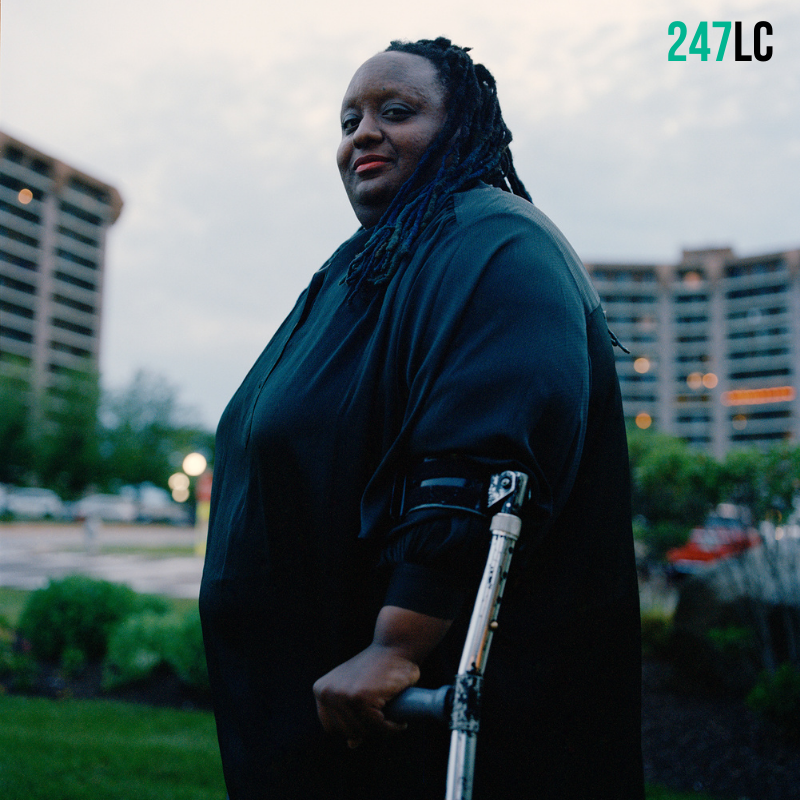
Imani Barbarin, known as @crutches_and_spice on TikTok is one of disability activism’s leading voices. Her popular videos begin with a single objective: having uncomfortable but productive conversations about the lack of intersectionality within social justice movements, and more particularly, the disability sphere. We discuss it here!
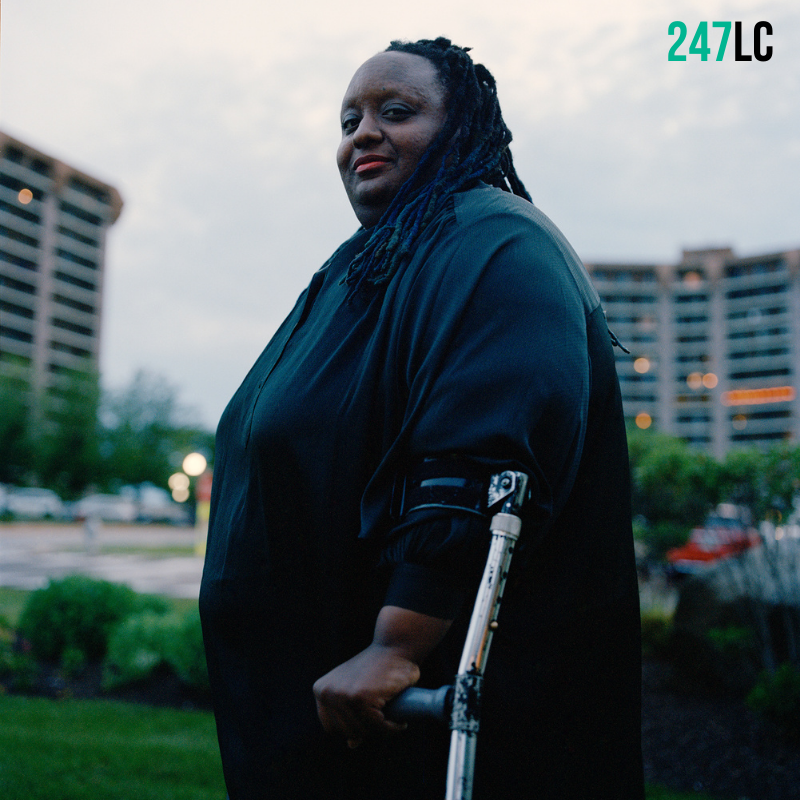
Imani Barbarin / Credit: Hannah Price
By: Alexis Oatman
Funny. Charismatic. Outspoken. That’s how some people may describe Imani Barbarin, one of disability activism’s leading voices. Barbarin, known as @crutches_and_spice on TikTok, always begins her popular videos with a single objective: having uncomfortable but productive conversations about the lack of intersectionality within social justice movements, and more particularly, the disability sphere. For instance, in one of her most recent videos, Barbarin explains how white people pick and choose when to be in solidarity with BIPOC, treating allyship as an option that can be revoked anytime. “If you’re not nice while asking for it, they have the option to tap out,” she says in the video. “Racism for them is a special interest; racism for you is your life.”
Barbarian has a keen knack for making challenging conversations digestible and accessible, whether she’s discussing ableism and white supremacy or pop culture. Though she may not be a formal educator, she’s still offering vital lessons. Her dry humor, which shines in every video, helps her message resonate, which is one of the reasons she’s garnered 150,000 followers and 6.4 million likes on TikTok and more than 100,000 followers on Twitter. During the past 16 months, TikTok broadened its reach through challenges and other entertaining bits, keeping more than 100 million users engaged throughout the pandemic and allowing some Black creators, including Barbarin and food influencer Tabitha Brown, to reach even new audiences.
As a fat, black, queer, disabled woman, her using her platform in this way is not only unheard of and long overdue. Barbarin has often pointed out how Black voices are silenced in this realm. However, this is nothing new for Black people: While we’re often the first people on the frontline to fight against inequality, our voices are often washed out by our white counterparts in what are supposedly “safe spaces.”
Navigating through multiple identities at once allows her authenticity to shine through and is why I think she connects so well with her fans.
Though Barbarin, who works as a communications manager, has been working within the disability movement for quite a long time, she knows all too well how Black people are intentionally silenced when they call out racism, homophobia, and ableism within the movement—and she now has the platform to push back.
Presently, the internet and social media have become an integral part of shifting cultural lexicons. Social media stars have been able to capitalize off their platforms and build an audience representative of whatever they choose. However, when we think of the phrase “influencer,” we need to think more profoundly about what these people are influencing the public to do. The content Barbarin is making opens up the space allowing allies and BIPOC to have those open and honest dialogues, but she does in as little as 15 seconds with her videos that are available for millions to share (and they do) with the touch of a finger.
Barbarin recently spoke out against Britney Spears and the controversy around her 13-year-long conservatorship in another TikTok video, noting the gaslighting that members from the disabled can feel from the non-disabled community. Spears conservatorship has opened up the gateway to conversations about how disabled people are treated and perceived in society.
“Nobody’s saying her situation is not horrific, but it’s not unique,” she says in the video. “This is something disabled people are scared of all the time.” she says in the video. Barbarin went on to explain how there can be many occurrences in which disabled people end up asking the wrong question "to the wrong person and wind up in a conservatorship or guardianship."
She made it clear that while the critics are dissecting the Spears situation and holding it up as some shocking example of celebrity injustice, "this could literally happen to anybody with a mental health diagnosis or not."
Barbarin’s now facing immense harassment, including being called racial slurs and being doxxed by trolls. Being a Black woman on the internet in the current social climate can be terrifying, especially if you’re strong-willed and have something to say. While Barbarin’s conversations prove necessary, it's not only sickening to the amount of abuse this opens her up to. These social media platforms often work as a breeding ground for racism, misogyny, and homophobia, allowing many of these troll accounts to go unchecked.
This shouldn't be surprising, though, unfortunately, Black women are among the most abused group on Twitter, according to data from Amnesty International, a global human rights organization based in the UK. Their data found that nearly 84 percent of Black women were more likely to be disproportionately targeted than their white counterparts. At least one in every ten tweets mentioning Black women was found to be abusive or problematic, compared to one in 15 for white women.
With her sheer will allowing her to push forward and continue making content despite harassment, Barbarin has made it abundantly clear that her identities are not optional and that the world needs to see and recognize her as a Black disabled woman.
By not identifying those things, people are not only marginalizing her experience but also putting her in harm’s way. “It’s important that people see and affirm me as a Black disabled woman because I have to move about in the world as such. By not recognizing those things, people are either isolating me or putting me in danger,” she said in a recent statement with VICE. “People who have never had to place qualifiers in their identity have never had to form a community to survive. People love to believe they aren’t defined by our identities or what we present to the world, but by the same breath with which they decry labels, we are able to find people who share ours.”
While many women on social media simply ignore trolls, this harassment can lead some to silence themselves or quit the platform altogether. A joint statement by the United Nations Special Rapporteurs on Violence against Women and Freedom of Expression revealed that the abuse women receive online can "chill and disrupt the online participation of women journalists, activists, human rights defenders, artists and other public figures and private persons."
Poet and author Maya Angelou describes courage as one of the most important of all virtues. Why? "Because without courage, you cannot practice any other virtue consistently," Angelou said. "You can practice any virtue erratically, but nothing consistently without courage." Barbarin has demonstrated courage not only in her existence but in her work. To grow as a society and get to the point of being post-racism, post-homophobia, and so on, we need to have those tough conversations. These types of discussions open minds and allow a realistic chance for growth. The best way to do this is by meeting people where they are.
Barbarin not only builds off her experience and expertise in communications to appeal to a broader audience, but she’s changing the narrative of how we view disability and open people’s eyes to the prevalent casual ableism in society today.
Barbarin’s capacity to stand so firmly in who she is, without fear or shame, is inspiring millions, and for a good reason. The social media star recently signed with a talent agency, so she’ll continue influencing people to think differently about how disabled people of color are excluded from the very movements intended to improve their lives. Barbarin is one of the most critical voices in the modern fight against injustice, and her millions of followers, myself included, we’ll be tuning in every step of the way.
YOU MAY ALSO BE INTERESTED IN:
SHARE TO SOCIAL MEDIA
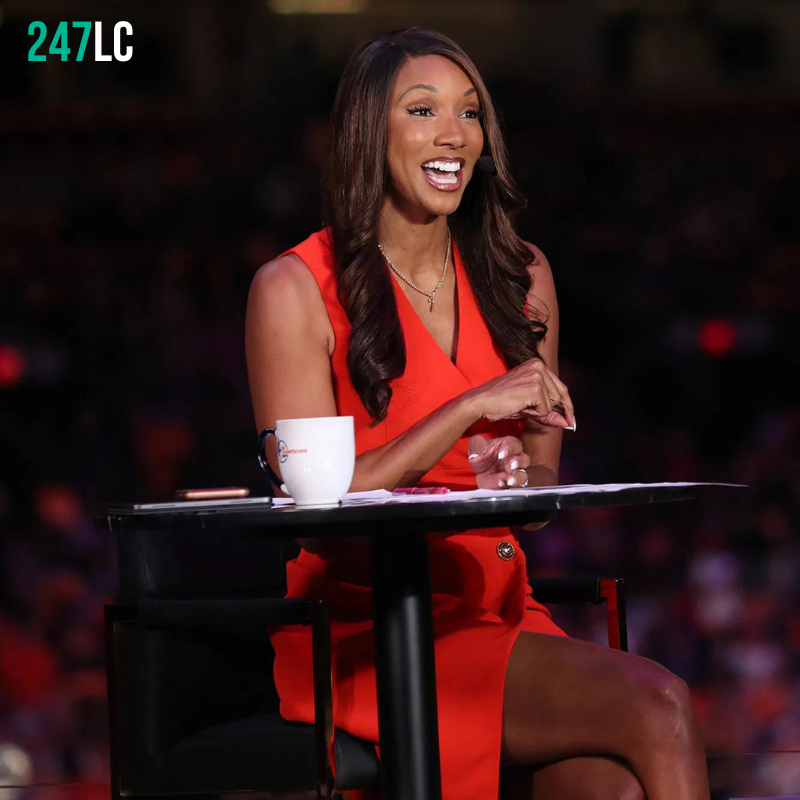
Maria Taylor Leaves ESPN Following Rachel Nichols Workplace Diversity Comments
For Black professionals across several industries, the Rachel Nichols-Maria Taylor story confirms suspicions of white people's secret resentment and cognitive dissonance. We discuss it here!
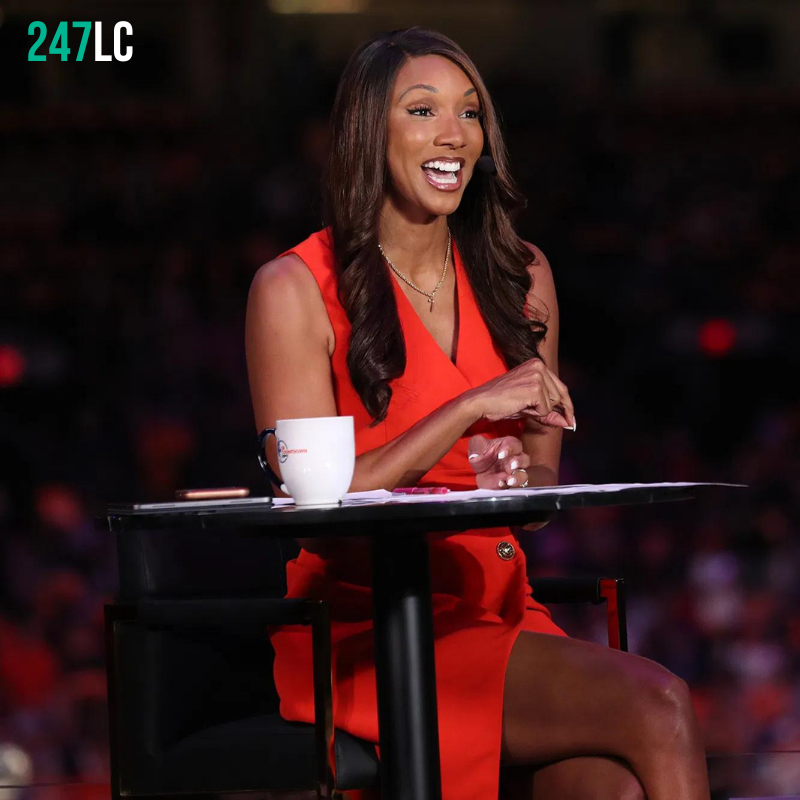
Maria Taylor/ NBAE via Getty Images
By: Prince Hakeem
Over the past week, sports news giant ESPN has been embroiled in controversy due to messy internal conflict within its talent ranks. Veteran NBA broadcaster and host Rachel Nichols has been at the center, thanks to an exposé article by the New York Times. The story details the fallout after audio of Nichols making disparaging comments concerning colleague and rising star Maria Taylor made its way around the company. The incident took place over a year ago during the 2020 NBA Finals.
Nichols, who is white, was speaking to a longtime adviser to LeBron James and his agent Rich Paul, Adam Mendelsohn. She voiced frustration over ESPN replacing her as the coverage host for the Finals. As Nichols understood it, the company felt pressure to highlight "diversity" amid the summer George Floyd protests and wanted to give the job to Maria Taylor. Nichols effectively threw Taylor under the bus by suggesting she only got the assignment because she is black.
"I wish Maria Taylor all the success in the world - she covers football, she covers basketball, Nichols said. If you need to give her more things to do because you are feeling pressure about your crappy longtime record on diversity — which, by the way, I know personally from the female side of it, like, go for it. Just find it somewhere else. You are not going to find it from me or taking my thing away."
Thinking her camera was off, Nichols' phone call with Mendelsohn was picked up. (She was in Orlando in the NBA Bubble.) The recording went to servers back at ESPN HQ in Bristol, Connecticut. It was essentially a pandemic version of a "hot mic" moment. One I'm sure Rachel desperately wishes she could take back.
The fallout from the incident and, subsequently, its handling have been a bad look for everyone involved. Nichol's reputation has taken a significant hit; a smear campaign aimed at Maria Taylor as she negotiates a new contract. (There has been speculation that Taylor, or "her people," leaked the audio as leverage.) And ESPN's incompetence and mismanagement of the situation is the crux of the story. Rachel Nichols will continue to bear the brunt of the backlash long after everyone moves. It makes sense in her case. Her broadcasting career has greatly benefitted from having proximity to black men in the NBA.
Rachel Nichols speaks on ESPN
Along with many white people in sports media, she's also has positioned herself as an "ally" of social justice and diversity. Thus making her comments about Taylor that more hypocritical and egregious. She supports diversity publicly, yet not at her expense. This kind of two-face pantomime is not just exclusive to sports entertainment. For black professionals across several industries, the Nichols-Taylor story confirms suspicions of white people's secret resentment and cognitive dissonance. It also says no matter the work ethic, ability, or experience, black talent is just a glorified work-study for companies to market themselves as woke and progressive.
Now it's time to fight back against this passive-aggressive practice within the workplace culture. There are some simple yet profound ways to do this. For one, merit still matters. As black professionals, creatives, and so on, we are often the source of innovation. The work speaks for itself. It will always have the last say. Secondly, as a community, we are stronger together than in isolation. We constantly see each other and the work put in. So reach out to and lean into the spaces where you are validated, not just tolerated.
Maria Taylor encapsulates these sentiments in her first response since the controversy broke. She tweeted,
“During the dark times I always remember that I am in this position to open doors and light the path that others walk down. I’ve taken some punches, but that just means I’m still in the fight. Remember to lift as you climb and always KEEP RISING.”
YOU MAY ALSO BE INTERESTED IN:
SHARE TO SOCIAL MEDIA
Opinion: Juneteenth Is A Federal Holiday, But This Is Not Enough
This day, known as Juneteenth, is now a federal holiday in the United States as of June 15. For many African-Americans, this day has always been one worth celebrating, often being referred to as the “real” Independence Day! Being recognized as a federal holiday has its benefits, but now what? We discuss it here!
By: Cory Utsey
On June 19, 1865, the enslaved people of Galveston, Texas finally received news of the Emancipation Proclamation and were made free from chattel slavery. This day, known as Juneteenth, is now a federal holiday in the United States as of June 15. For many African-Americans, this day has always been one worth celebrating, often being referred to as the “real” Independence Day.
But now what?
One can of course appreciate the grandiose nature of commemoration by way of a national holiday, especially during a time in which Black history is seen as something that is separate from American History. But this holiday comes over 150 years late, and the demands that Black people have in regards to justice cannot be satisfied by governmental recognition on a single day.
I will in no way try to speak for all Black people, but I know that for someone like me, change must be something that extends past Black Lives Matter murals and the closure of federal buildings on Juneteenth.
The problem with a lot of the so-called change and activism to take place over the last couple of years-- and especially since the summer of 2020- is that it is performative. When justice is performative, its ingenuine nature does absolutely nothing for advancing the lives of marginalized groups; in this particular case, it does nothing to declare holidays and say that Black Lives Matter when the actions behind these gestures are lacking.
I draw little inspiration from the prospect of Juneteenth being recognized as a federal holiday when Black people are still being lynched by the police and disproportionately thrown in jail. Watching lawmakers sing “Lift Every Voice and Sing” stirs little hope in my spirit when the voting rights of Black people are still suppressed.
The fact that this all comes at a time in which some states are trying to ban the teaching of critical race theory makes this whole spectacle even less amicable. Not only have most schools kept their coverage of race very vague, but I am curious of the answer to the following question: How will teachers explain what Juneteenth is to their students if they are not allowed to talk about race?
I will never try to minimize the successes that have been made since June 19, 1865, but I cannot act as though these accomplishments are anything more than the bare minimum.
Juneteenth might mark a good start, but it cannot be the extent to which the livelihood of Black people is valued. Black people, and all of their intersecting identities, deserve to exist without fear of racism or execution.
As stated previously, Black enslaved people were made free from chattel slavery on June 19, 1865, but we have yet to be released from the shackles of white supremacy.
Juneteenth being recognized as a federal holiday has its benefits with regard to visibility, but it is far from enough.
YOU MAY ALSO BE INTERESTED IN:
SHARE TO SOCIAL MEDIA
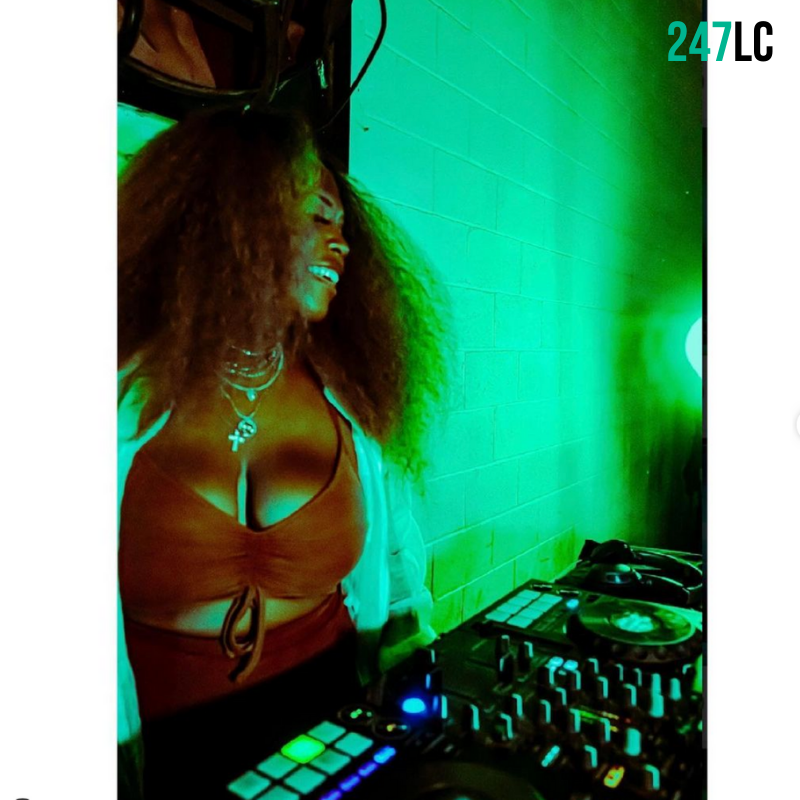
The Honey Trap Presents: 'Black Women Spin’ For Women, By Women
'Black Women Spin’ is a cultural experience in LA, highlighting the artistic, creative, and entrepreneurial contributions women bring to the culture! We discuss it here!
By: Prince Hakeem
Women within the hip-hop genre and culture have had both a strong and sad history. Since its inception back in the '70s, hip-hop has been an overwhelmingly male-dominated field, with little to, often, no regard for the women who've helped pioneer and elevate the art form. Historically, the culture and its gatekeepers haven't done a great job portraying women as complex well-rounded artists. It often reduces them to just over-sexualized objects for the commercial male gaze. These dismissive attitudes aren't exclusive to just the MC element in hip-hop. Women are often underestimated within the DJ space as well. Being continuously underpaid, underrepresented, and underrated, women across the hip-hop spectrum still manage to carve out their own space and affirm their identities on their terms.
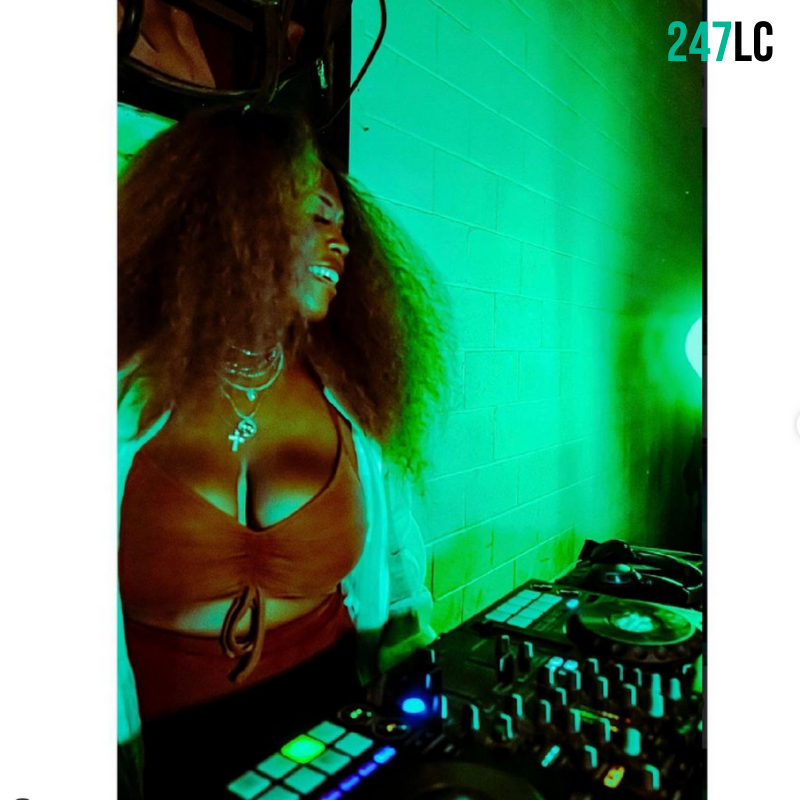
The sisterhood was on full display during a cannabis and entrepreneurial-friendly night festival back in April. With the covid pandemic having a significant impact on the entire entertainment industry, live events have been especially tough to navigate and pull off. However, that didn't stop New York-born Event Producer DJ J-Honey(@queenxjhoney) from manifesting a memorable cultural experience in LA. Presented through her live event agency, Honey Trap, 'Black Women Spin' highlighted the artistic, creative, and entrepreneurial contributions women bring to the culture. The atmosphere was hype and full of energy at that RAREHOUSE (@rar3house) venue near downtown LA. Comedian Angelica Mackey (@pkmackey) brought the laughs as the MC/host. With the help of fellow creative organizers Keirra Leone (@kierraleone_) and Jodii Watts (@jodiiwatts), the Honey Trap created a gathering which included an all-female DJ setlist, female and trans performers, live art, and female-owned cannabis, skincare, wellness, and clothing vendors. The women getting it done despite confusing covid regulations varying state-to-state was nothing short of amazing.
The concept behind 'Black Women Spin' was simultaneously remarkable and disappointing.
On the one hand, it highlighted the diversity of talent and collectivism amongst women while bringing to awareness the lack of attention, presence, and representation women within the culture deserve. The very reason behind the event is also cause for introspection on how male-focused and exclusive hip-hip, business, and the culture is. Nonetheless, the night and festivities ended up being a success. From the owner to food and drinks, 'Black Women Spin' personified the phrase, "For Women, By Women." Here are some of the vendors and sponsors the Honey Trap featured.
Scents By Angelle - (@scentsbyangelle)
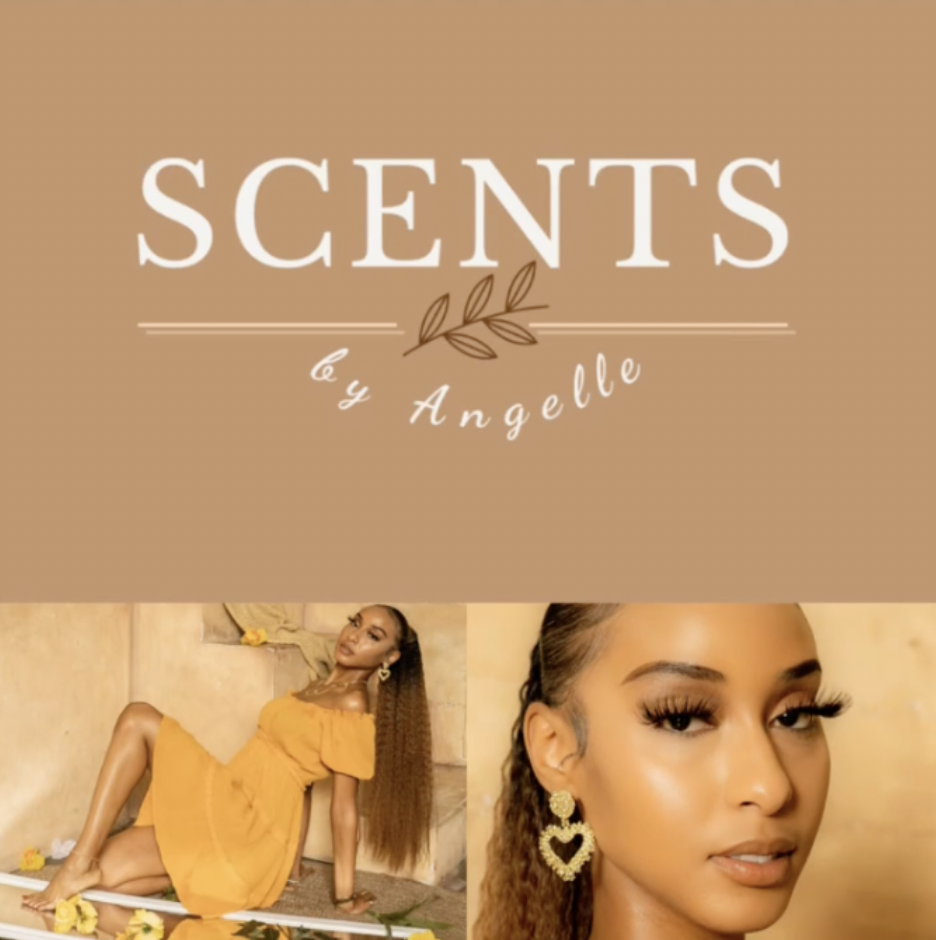
Scents by Angelle is a health and wellness line by local singer and entrepreneur Angelle Talerico. It consists of homemade natural bath salts, body butter, beard oil, and beard balm. There are products and bundles for men and women specifically. One of the selling points of Scents By Angelle is that all of the products are made by hand with natural ingredients. Angelle's motivation behind her skincare line comes from constantly wanting to "put good things for her body on her body." She described going into her mom's cabinet as a child trying different lotions and oils on her skin. This desire for cleanliness and skincare became a passion for her very early. Thanks to the pandemic, she's sharing these home remedies with the world and is already receiving great feedback.
Angel Ray Remedies - (@angelrayremedies)
There was a particular booth that immediately caught my attention entering the venue. Beautiful and different crystals were scattered all over the surrounding table. After taking notice, I soon began speaking with Angel Ray Remedies co-founder Daniella(@danitheaquariusmoon). This business focuses on holistic health and healing through the science of crystals. Dani details the overall benefits crystals to provide for a person's energy and spiritual health. She's getting her doctorate in herbal healing, taking inspiration from her grandmother, who is also a healer. Other products include vegan & organic skincare, pendulums, and candles.
Get Your Sip 2gether - (@getyoursip2gether)
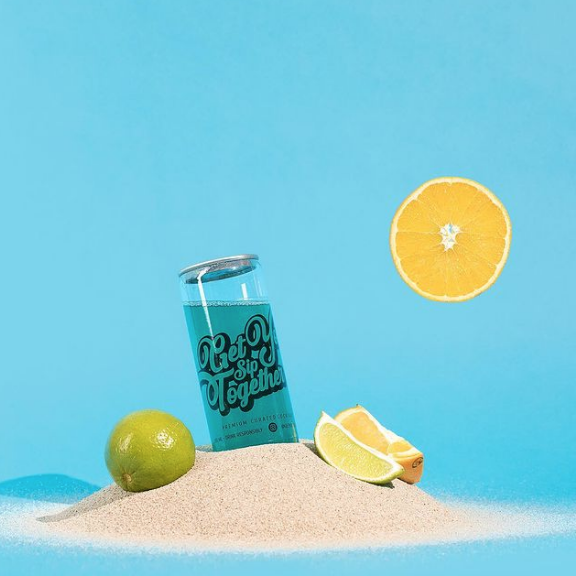
What's a night festival without good drinks? That's where entrepreneur Shermannique(@shermannique_) comes into play with her curated cocktails 'Get Your Sip 2gether'. These beverages were unique in these bright colors and sweet taste. There were various flavors, including cherry, watermelon, peach & mangoes, and lemon. While she wasn't the only alcohol vendor, her product stood out the most. From the catchy logo to the label and packaging, the creativity behind this alcoholic drink made it distinctive from others. It makes sense, given the Los Angeles native's marketing and branding background. To get your sip together, you can place an order at www.getyoursip2gether.com.
420 Honeys - (@420honeysss)
As the cannabis industry grows more in legitimacy, many vigorously point out the galling hypocrisy and lack of representation of women and other minorities. Many have been the targeted victims for the same cannabis use, which is now accepted for its profit margins. That is why the brand 420 Honeys is a great collective effort, celebrating women in the cannabis culture. Consisting of Kushly, Kay, Missy, this vendor express pride in being a female-owned brand. Kushly went into further detail about this fact.
"Something that makes us different is that we're an all-women company. When everyone sees that the weed industry is run by men, there comes the stigma that there should only be male owners. That's what makes us different. We're a women empowerment group that's here to support women."
They have an array of products, including weed, shrooms, pre-rolls, ice cream, cereal bars, and a lot more. Everything is homemade by the women themselves, so their influence will surely leave a lasting experience. Go to their Instagram @420honeysss to place your order for delivery.
Take a look at the DJs and musical acts that provided the vibes and sound for the night.
@djashe @ogsugarbabies @_chaunc @kalithebossss @sowell_official @11.11donron @_ljd4 @moonflowervibes @surfwaveaton
If you're interested in attending one of these live interactive events, you're in luck. The Honey Trap presents the Juneteenth Jam taking place on June 18th. There'll be live performances, a vendor market, a bounce house, and free 420 gifts. Come in your best 90s-2000s attire, and better to go up. Purchase tickets at the @honeyxtrap_ Instagram page.
YOU MAY ALSO BE INTERESTED IN:
SHARE TO SOCIAL MEDIA
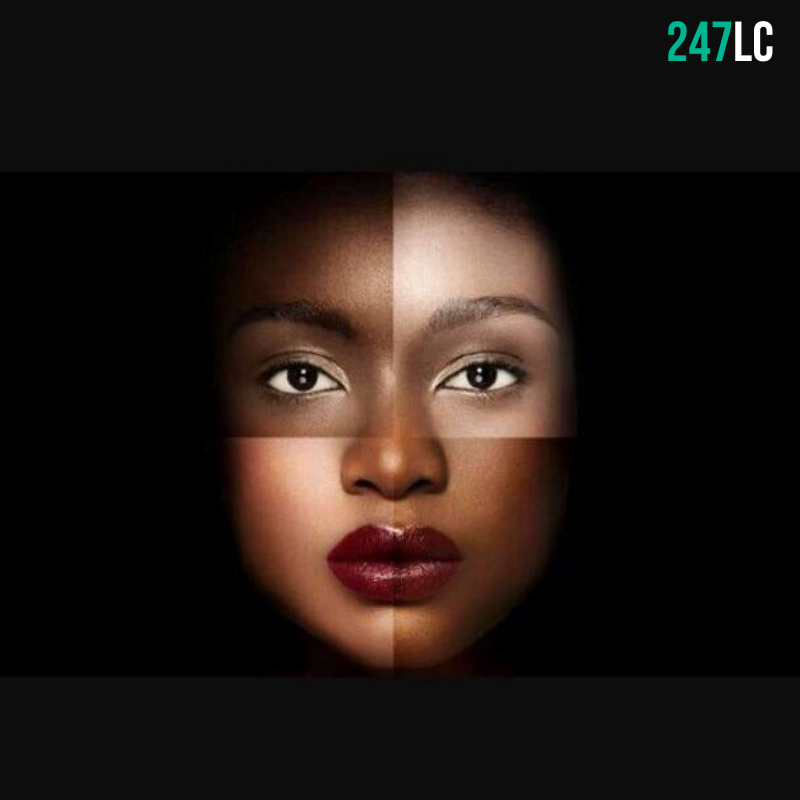
Protecting Black Women: Addressing Colorism Issues And Abuse
Colorism and abuse is alive and well in the Black community and it’s necessary for these issues to be addressed! We discuss it here!
By: Kwana Adams
Sometimes the only people black women have to take care of them are other black women. The hashtag #sayhername was born from black women because of black women being neglected, and put to the side when it comes to social issues such as police brutality, domestic violence and anti-black acts of violence.
The hashtag was a movement created to shed a light on the fact that black women’s issues are often sidelined. Some notable names from this hashtag are Sandra Bland, Rekia Boyd, and Breonna Taylor. However, there are countless stories that are not being told or are not given enough recognition and care as other stories.
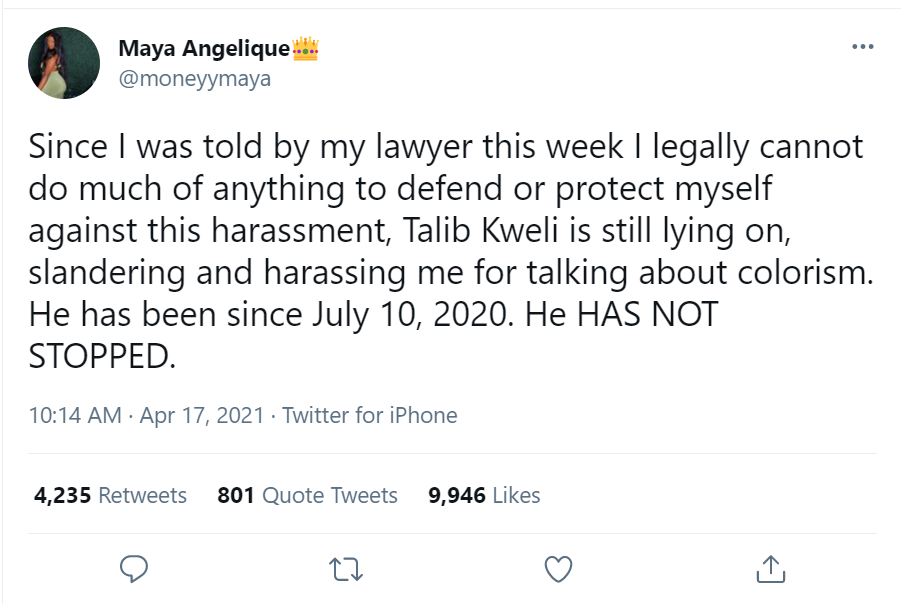
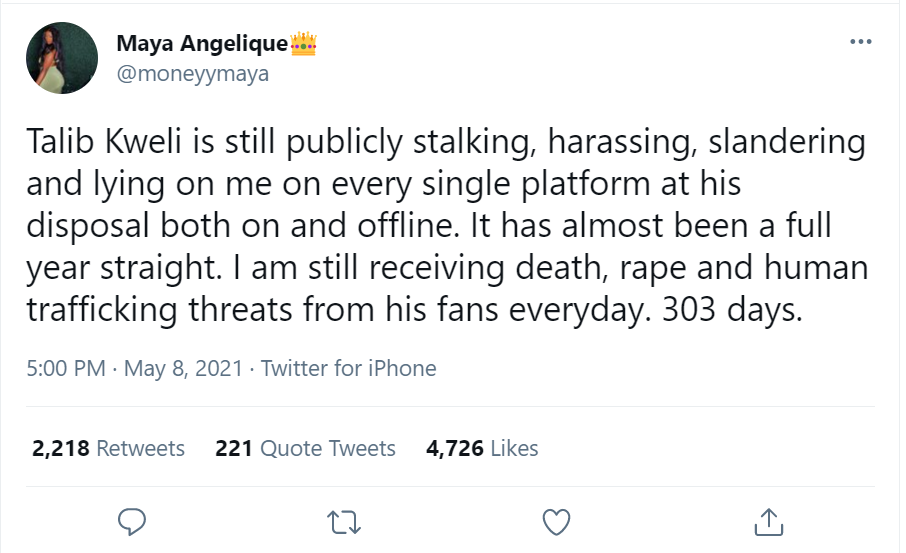
A rapper by the name of Talib Kweli has been harassing a black woman online and has not stopped for almost a year. Even being banned from Twitter did not stop that man from his continued harassment which he simply continued on Instagram. He has also talked about her on shows and in interviews continuing to make himself the victim.
The woman he has been harassing goes by @Moneyymaya on Twitter and a harmless tweet caused almost a whole year of targeted harassment from a black man who took the tweet personally. Talib was only one of many other black rappers named but was the only one to take it to this extreme. The tweet was a brief mention of colorism and how black rappers perpetuate and uphold it in the black community. It was a very valid opinion and something that could have possibly been addressed in a more respectable matter had Talib not instead decided to target Maya relentlessly.
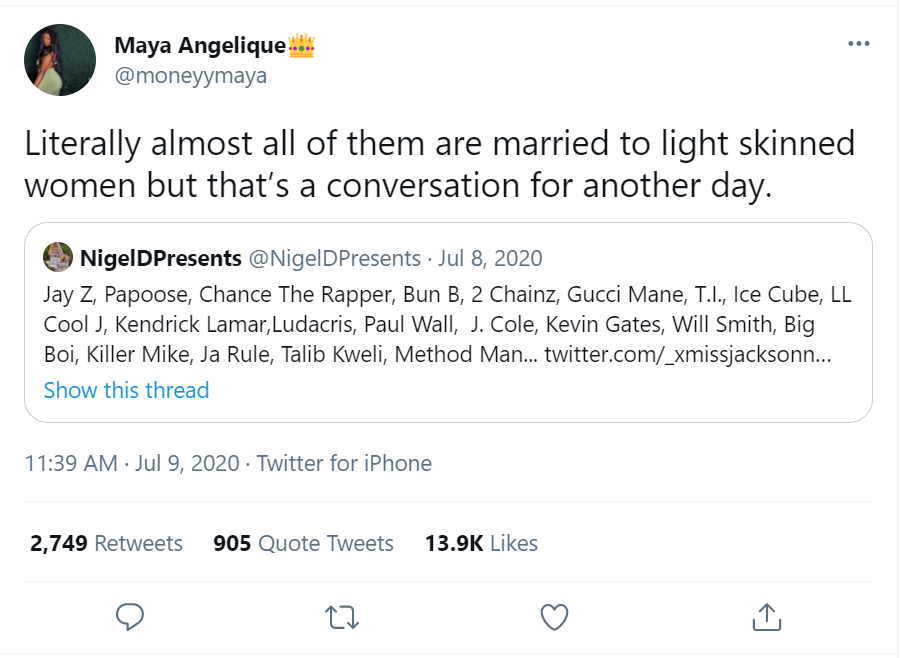
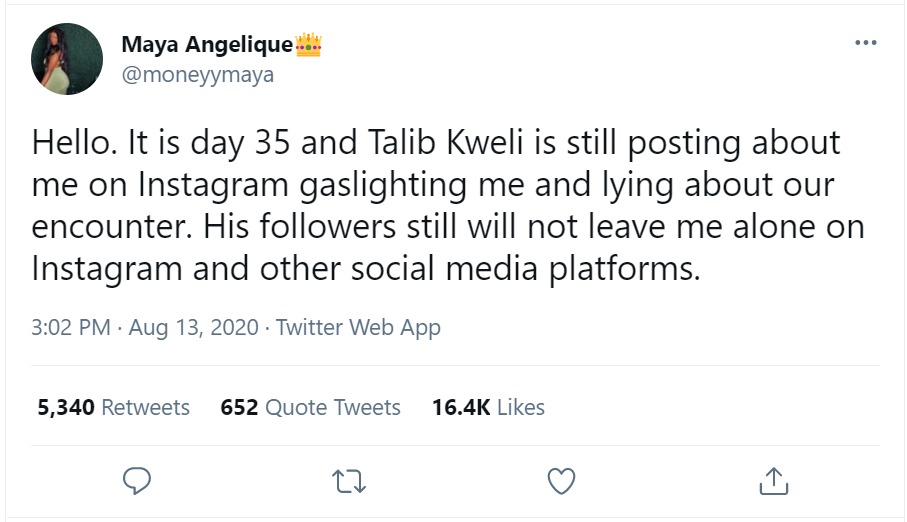
Colorism is alive and well in our community and it does deserve a spotlight. However, the potential conversation was overshadowed by a man who got his feelings hurt. As a community, we should be addressing this a lot more and holding black men accountable for the abuse they inflict onto black women.
Followers and supporters of Talib Kweli have also been harassing Maya, threatening her family, sending threats of rape and death, and even doxxing her family members. Kweli and his supporters have even gone as far as to harass people who have spoken up in support of Maya. He took to Instagram that rapper Noname compared him to Tory Lanez, a rapper who allegedly shot another black woman, Megan Thee Stallion in both feet.
Maya has endured threats to not only her livelihood but her family’s the same way Megan has become a topic of ridicule and speculation on social media. Noname has also been slandered in the process of trying to protect black women. None of these women deserve what they’re going through. They deserve to be protected and they deserve to be heard.
Since Maya was told by lawyers that there’s not much of anything that can be done of the harassment, she’s been documeting the whole ordeal in Twitter threads amd letting everyone know tha if something happens to her, it’s because of this incident and the poor way it’s been handled. Other black women have been targets as well for sticking up for her. My question is, why is it that the majority of people coming to her defense are black women? Will everyone hear us only when it’s too late, and even then, will anyone protect us? How has this man been able to get away with openly harassing women for almost a year nonstop?
Please follow this story for your own research because there are still so many things that I did not mention in this article. Black women don’t always have to be “strong” and it’s that that kind of responsibility put on us that makes it hard for us to get justice in situations such as this. Talib Kweli, Tory Lanez, and other harmful men need to be stopped. They need to be held accountable for the harm they cause black women and it shouldn’t only be up to black women to do it. Say our names and tell our stories.
YOU MAY ALSO BE INTERESTED IN:
SHARE TO SOCIAL MEDIA

Has America Seen A Shift Since The Death Of George Floyd?
The past year has seen a number of cultural, political and social shifts, as the death of George Floyd woke many people up to the way in which injustice is not some past notion, native to the Jim Crow era. We discuss some of the changes that have taken place in the U.S. since!
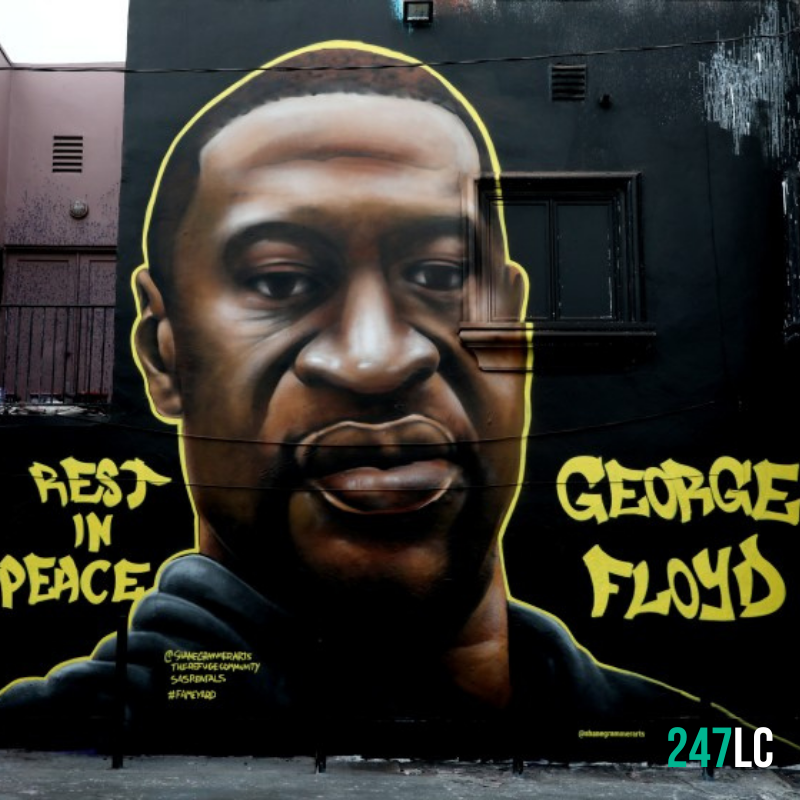
A mural of George Floyd in Los Angeles. (Gary Coronado / Los Angeles Times)
By: Cory Utsey
May 25 marked one year since George Floyd’s life was stolen by ex-officer Derek Chauvin.
Many people throughout the country honored his life by way of memorial events and marches, as members of Floyd’s family met up with the president, vice president and other lawmakers.
George Floyd family speaks after his death
The past year has seen a number of cultural, political and social shifts, as the death of George Floyd woke many people up to the way in which injustice is not some past notion, native to the Jim Crow era-- it has a strong, invasive presence in the modern world.
Much has changed, and much has remained the same, but below we will discuss some of the things that have taken place in the United States since May 25 of 2020.
1. Derek Chauvin was convicted of murder.
Chauvin’s case, which lasted almost one full month, resulted in him being found guilty of the following three charges: second-degree manslaughter, second-degree unintentional murder and third-degree murder. The charges collectively add up to approximately 75 years in prison, with the second-degree murder charge holding a maximum of 40 years alone. The other three former officers who were present at the scene (J. Alexander Kueng, Tou Thao and Thomas Lane) were brought up on federal charges and are still awaiting trial.
2. Congress passed the George Floyd Justice in Policing Act.
This bill was initially set to reach President Biden’s desk by the one-year mark of George Floyd’s death, and that date has now passed. Nevertheless, the bill was introduced by Representative Karen Bass last June and it was passed by Congress that same month. It ultimately addresses a number of policies that relate to police reform and accountability, such as the creation of the National Police Misconduct Registry, which would collect data on police misconduct and require updated reporting requirements. Skeptics of the bill believe that it is well-intended, yet are unsure if it would actually be implemented in a manner that brings about true, tangible change.
3. “Defund” and “abolish” are now a part of many people’s vocabulary.
Police brutality, along with the idea that the police need to be defunded or abolished are nothing new; Black activists have long covered these sorts of topics. However, the death of Geroge Floyd, along with many other police-involved deaths that have taken place, have caused many to question the function, competency and “reformability” of a police system that has long abused Black and brown people. The phrases “Defund The Police” and “Abolish The Police” were often chanted and written across poster boards during the protests that took place last summer. Although the idea of defunding or abolishing the police is quite controversial, many have proposed that much of the money used to fund police departments would be better used if it were reallocated to address other issues, such as mental health.
4. Everyone wants to appear “woke”.
Companies and people alike are now doing more to appear “woke”, meaning that they want to appear as though they are concerned with social justice and racism. “Black Lives Matter” now sits in the bios of various influencers. Companies continuously release commercials that address racism. Even in animated television, non-Black voice actors have stepped down from their roles of voicing Black characters. Many people cite these changes as performative, but they have become quite common nevertheless.
For many people, a lot of the social, political and cultural shifts seen in the United States have been ingenuine; many feel as though different sectors of society have adapted the belief that “Black Lives Matter” as a way of avoiding cancellation, as a way of pandering to the Black community, or as a mixture of both.
Even so, it is undeniable that the death of George Floyd has changed the way that many people view race and race relations in the United States, as these tensions and injustices have long existed. But it is also undeniable that it should not take the loss of someone’s life for people to be willing to listen.
YOU MAY ALSO BE INTERESTED IN:
SHARE TO SOCIAL MEDIA
The Return To Life Pre-Pandemic: Long-Overdue Or Done Too Soon?
Living in the midst of a pandemic has ultimately become the “new normal”, but as the number of new cases have begun to shrink, a call for the return to life before the pandemic-- the “old normal”-- has become increasingly present. We discuss it here!
By: Cory Utsey
It has been just over a year since the United States has dealt with COVID-19 and its associated adjustments. Among the changes made to lessen the spread of this illness have been mask mandates, lower capacities for businesses and in some cases, complete closures.
Living in the midst of a pandemic has ultimately become the “new normal”, but as the number of new cases have begun to shrink, and as more Americans have begun to receive vaccinations, a call for the return to life before the pandemic-- the “old normal”-- has become increasingly present. Although this call is completely understandable, there is still a chance that it has been made too soon.
According to the CDC, individuals who are fully vaccinated are permitted to engage in activities that were done before the pandemic-- such as small gatherings or eating in a restaurant-- without wearing a mask or maintaining a distance of 6-feet apart, unless these parameters are required by law or by a particular establishment. If fully-vaccinated individuals are exposed to someone who has tested positive for COVID-19, they are not advised to stay away from others or get tested unless they begin to exhibit symptoms.
In the states of New York, Connecticut and New Jersey, many of the capacity limits in places such as hair salons, museums and movie theaters have been lifted as of May 19. In other states, such as Texas and Louisiana, statewide mask mandates have been lifted for most public establishments. And in the state of California, Governor Gavin Newsom is pushing for all schools to reopen for the fall.
Many people, including lawmakers, are fed up with COVID-19, and this is understandably so. Students are tired of logging onto virtual classrooms, businesses who have operated at lower capacities do not want to risk foreclosure, and people who once frequented parties and concerts miss that thrill. Adjusting to life in a pandemic has been far from easy, and many people want nothing more than to return to life as it was prior to March of 2020.
At the same time, though, to say that life pre-pandemic would function well in the current state of affairs would ignore a few key issues.
COVID-19 is no longer rising in the way that it was months ago, but it has not magically gone away. People are still contracting and dying from the illness, and for some, the symptoms last for months by way of long-term health conditions.
Additionally, there are still many people who are fueled by skepticism, distrust of the medical system or complete disregard for the ramifications of the pandemic; not only do these people continuously live their lives under unsafe conditions by attending large gatherings and refusing to wear a mask, but many of them also refuse to get vaccinated.
USA Facts reports that 48% of the population has received at least one dose of a vaccination, while 38% of the population is fully vaccinated. Many scientists have argued that the idea of “herd immunity” is neither viable nor likely, as it does not necessarily guarantee that populations will be exempt from new infections or variants.
However, when you have lifted restrictions, careless individuals and numbers of vaccinated people that are likely less than desirable, it is hard to really gauge whether or not the United States will fully get over COVID-19 any time soon.
Nevertheless, there is really no substantive way of understanding how each of these factors will influence the rest of the year.
Restrictions and mandates or not, one can only hope that people will prioritize the health and safety of both themselves and their community. Neither the new normal nor the old normal are worth anything without it.
YOU MAY ALSO BE INTERESTED IN:
SHARE TO SOCIAL MEDIA
Rise And Grind: Hustle Culture Is Not The Flex You Think It Is
Rise and grind culture has people subscribed to the idea that complete and total dedication to a specific craft is vital for success, regardless of how unorthodox or unhealthy some of these methods might be. Hustle culture might be a temporary fix in finding fulfillment, but it is not the end-all-be-all solution. We discuss it here!
By: Cory Utsey
There is something about the hustle that many people find enticing.
Regardless of what exactly one’s hustle might be, many have subscribed to the idea that complete and total dedication to a specific craft is vital for success--regardless of how unorthodox or unhealthy some of these methods might be.
“Rise and grind” culture, which is also known as “hustle culture”, often stands at the forefront of this mindset. Defined as the belief that incessant work and work ethic are necessary to succeed, it ultimately implies that basic needs such as sleep, socializing and relaxation come second to one’s work.
The pressure to constantly be involved with some type of work or work-related project is understandable, as we are often conditioned to measure our self-worth and validity on how much we accomplish by tangible means; if an accomplishment cannot be touched or photographed, we are often led to believe that it might as well be nonexistent.
But right now more than ever, there is much to be proud of one’s self for.
Every time that you wake up, get out of bed and push through, you have accomplished something. And even on the days where the simplest of tasks seem impossible, the mere effort to complete them is an accomplishment.
The pandemic, along with many other injustices and inequalities that different communities face, has contributed to a world that is almost completely upside down right now. Therefore, any attempt at functioning in this world is something to be proud of.
Additionally, it is important to remember that you have absolutely nothing to prove to anyone.
People will have their unsolicited opinions, project their insecurities onto you and upkeep ridiculous standards as they please, but this does not mean that you are obligated to prove them right or wrong.
Although we navigate the world with different people at our side and in our vicinity, we do not exist to please these people, nor do the beliefs of these people have any agency over our success. Working to impress them serves virtually no purpose in the long-run.
But even with these factors aside, one must consider that it is nearly impossible to succeed at doing anything when the health of one’s body and mind are kicked to the curb.
Rest is necessary. Relaxation is necessary. Casual socialization is necessary. You cannot expect your brain and body to work for hours on end when you are continuously running on E.
The fact of the matter is that solace, peace and validation can be found outside of tasks that are done for profit. Hustle culture might be a temporary fix in finding fulfillment, but it is not the end-all-be-all solution. Work is necessary for many people to live, but this does not mean that one must live to work.
So revel in all accomplishments, whether big or small. Take a deep breath. Enjoy living.
YOU MAY ALSO BE INTERESTED IN:
SHARE TO SOCIAL MEDIA
It's Time For Better Portrayals of Black People on Television and in the Media
The world so often tries to fit Black people into one box, with Hollywood continuously putting out trauma porn and Black people being represented as gangsters, slaves, or in extreme poverty. It’s time to create better narratives for ourselves! We discuss it here!
By: Kwana Adams
The world so often tries to fit black people into one box, and quite frankly, some of us are guilty of stuffing each other into that box as well. Why do we do this? Why can’t black people be multifaceted and unique?
We don’t have to be embarrassed or ashamed of having interests that don’t fit into the black stereotype. We’re not ‘Oreos’ because we like a certain genre of music or watch anime. We’re allowed to enjoy these things as much as anyone else. We can dress the way we want to too.
Personally, I’d love to see more people walking around in ballgowns and Victorian-era clothing. I’d love for the disco era to come back well. Most of all, I just want to see black people being happy and being themselves without judgment. I also want to see black people building and creating together.
As an avid reader and writer, I’m tired of black people not being represented enough in books and film or only being represented as gangsters, slaves, or in extreme poverty. One day we need to have a conversation about how Hollywood portrays the ‘hood’ but for now, let’s discuss how we can represent ourselves differently.
I want to see us in chick flick-teenage drama movies and not just as the friend with one witty line. I want us to be fairies, superheroes, vampires, spies, etc. I want us to be the main characters. I know it’s a lot easier said than done, but we’re gonna get there. I know we’re well on our way with more tv shows with black casts are coming out. The effort is there, but we can still do better. Before we can do all of that, we need more black creatives. If we’re writing the scripts, directing, producing, etc., we can represent ourselves better than anyone. We can write ourselves in way more beautiful lights.
We need to start investing in each other, creating our own studios, publishing houses, etc. No longer do we need to worry about getting a seat at the table. We need to start building our own homes brick by brick and making our own tables. It’s time. Creating generational wealth isn’t just about piling money away for your children but also about making something that you can leave for them and others in your community.
Have you ever heard the phrase, “it takes a village?” I know it applies to raising children, but I’m applying it to black-owned communities and creative enterprises. It takes a village to build something that will enable us to leave something behind for the next generation. I want to make sure my future children are all set, but I also want to instill in them the value of working together. I am tired of the ‘every man for himself’ mindset. It doesn’t help us at all. It might feel good to get everything on your own but working with others is so rewarding. The point is, you don’t have to do it alone when you can do it together.
To wrap it up, I really want black people to feel comfortable enough in their own skin to be themselves. I’m talking about black women, black men, black LGBTQ+ people, black disabled people, etc. I’m talking about all of us. It’s okay for us to be ourselves, be silly, be imaginative. I also want for us to be represented this way in media. Trauma porn is played out, and to be honest; it’s really not even for us.
We already know slavery was gruesome and worse than what they taught us. We don’t need to keep being traumatized by black people being shot and brutalized by police or by black people being whipped or mistreated. We need comedy; we need romance; we need movies that make us laugh or just make us feel damn good! It’s about time we get that. This is the future that I’m striving for, so please don’t get in my way.
YOU MAY ALSO BE INTERESTED IN:
SHARE TO SOCIAL MEDIA
Gatekeeping Black Culture: An Extreme Or Necessary Measure?
Black culture has continuously been ripped off for non-Black majorities as our mannerisms, style and personality are often stolen for profit without receiving proper credit. Gatekeeping the entirety of Black culture seems extreme in conception but is a necessary conversation!
By: Cory Utsey
Black culture is a beautiful, layered delicacy.
For years upon years, Black people have used their pain, their strength and their resilience to create amazing things.
Through stories, music, lingo, aesthetic and demeanor, Black people have proven that nothing could stop the outpouring of love and creativity from being shared with one another and with the world.
Black culture is the blueprint.
Therefore, when the culture is stolen and re-packaged to be palatable for non-Black audiences, outrage is more than warranted-- especially when credit is not given where it is due.
Watching Black hairstyles be renamed and worn by non-Black models in fashion fare, or seeing dances made by Black creators be watered down and performed by non-Black influencers on television breeds a sense of rage that words could never express.
So where do we draw the line? To what extent do we keep the culture in the community? Is that even possible?
To even attempt to answer these questions, we must first acknowledge that mainstream culture is Black culture.
The so-called “stan twitter language” or Internet slang is misused and overexaggerated AAVE, trends in everyday fashion tend to be inspired heavily by the Black community, and even in meme culture are many of the images and soundbites from Black people.
Black culture has provided many non-Black people with means of profit as their mannerisms, style and personality are entirely inspired-- or stolen-- from the culture. More often than not in these instances are Black people either left without credit, or gaslighted in their attempts to call these attempts at cultural appropriation out.
The fact of the matter is that any culture, regardless of its originators, should never be co-opted by groups who have no history or reason for interaction with it, especially when co-opting leads to brand sponsorships, business start-ups or careers in music and film.
But with Black culture--a culture that has continuously been ripped off of and redefined for non-Black majorities-- it becomes difficult for many to distinguish between something which is trendy and something which is appropriated.
The main difference between the two is that trends die down. Culture does not.
Baby hairs, bamboo earrings and long acrylics, durags, Air Force 1s and baggy pants-- these things are not new to the game. Black people were rocking these types of clothing, accessories and shoes long before your favorite influencer was around.
Black culture is not something that you can look at it in 20 years and be embarrassed for engaging with-- unless we are talking about the God forsaken jheri curls.
Black culture is long-lasting, ever-influential and never lacking in flavor. It transcends decades and state lines.
Therefore, the line is drawn when Black people are not credited for their contributions while their work is actively profited off of. The culture will always be in the community because as hard as people might try to imitate, they can never duplicate with that same level of genuinity. And while it is difficult to truly keep Black culture a Black thing, putting pressure on those who try to appropriate will always be a useful tool.
Gatekeeping the entirety of Black culture seems extreme in conception, but Black culture is a bloodline of its own; it is one of few connections that many have to their roots.
Something with such delicacy can neither be taken for granted nor left unprotected; Black culture belongs to Black people, and it is within our right to defend and maintain its presence.
YOU MAY ALSO BE INTERESTED IN:
SHARE TO SOCIAL MEDIA
Entrepreneurship vs 9-5s: Choosing A Lifestyle That Fits You
With a generation that values their free time more than ever, choosing the right work lifestyle is crucial! Whether it’s a 9-5 or entrepreneurship, there are pros and cons to both! We discuss it here!
By: Kwana Adams
When it comes to making money, there really isn’t a wrong way to do it. Well, there is, but that’s another story. As long as you’re making your money honestly, who cares how you do it? Don’t ever feel ashamed about doing what you have to do to take care of yourself.
We keep having this same conversation when we should all be minding our business. I’m talking about the neverending argument between entrepreneurship and ‘9-5s.’ There are pros and cons to both, and one method is no better than the other. As someone who has been doing both for a while, I can tell you that they both have their advantages and disadvantages. Neither is easy, but both can be rewarding.
Before we get into that, I just want to say: entrepreneurs, stop shaming people for working 9-5s. Not everyone is cut out for entrepreneurship, nor do they want to take that path, and that’s okay. There are plenty of jobs where you can punch a clock and make good money. There are also jobs where you can set your own hours and take plenty of vacations. 9-5s aren’t just retail, fast food, and call centers. However, they do make up most of the 9-5s, and there’s nothing wrong with having these types of jobs.
Not all people who work 9-5s are miserable. Some people actually get up every day and enjoy what they do. Some people also like the security that a 9-5 job offers them. They don’t have to worry about hiring employees or figuring out health insurance because their job takes care of all of that for them. They also don’t have to worry about the costs of running a business from the ground up.
Entrepreneurship is expensive, and it can sometimes take years to start seeing a decent profit. You could spend a lot of your time just spending your own money before you begin to make some of it back. This is where having a 9-5 on the side comes in handy.
You have to make money to spend money when it comes to creating a business or a brand. It takes a lot of patience, dedication, and a lot of free time. Before you get to set your own hours, you have to put in a lot to get to where you want to be. It doesn’t happen overnight, especially if your heart isn’t in it.
If you’re just trying to get rich quick, it will show in your work, and you won’t get too far. With the trend of people getting social media famous, it seems like it’s so easy that anyone can do it, but it’s not. This honest truth is that some people simply got lucky. I know it’s a hard pill to swallow, but this is why following your own path and not someone else’s is so important. What worked for someone else might not work for you.
Entrepreneurship is risky as well. You might put a lot of time and money into something and realize that it doesn’t work, or even worse, that you actually hate it. Another thing that goes into entrepreneurship is research, and I cannot say this enough. You absolutely must do your research before you jump headfirst into the deep waves of entrepreneurship.
You have to have some business knowledge, and you need to know how to market yourself and your business. Word of mouth is still a great way to gain interest in your business, but it comes second to marketing and social media presence. If you’re going to go down this path, these absolutely need to be included in your budget.
Whatever path you decide to choose, if it’s a 9-5 or entrepreneurship, or both, just make sure it’s the right path for you. Both are equally as important and couldn’t exist without the other. Not everyone wants to start a business, and there’s nothing wrong with that. Just don’t be afraid to look for newer and better opportunities when you can. Never settle for less and do what makes YOU happy.
YOU MAY ALSO BE INTERESTED IN:
SHARE TO SOCIAL MEDIA
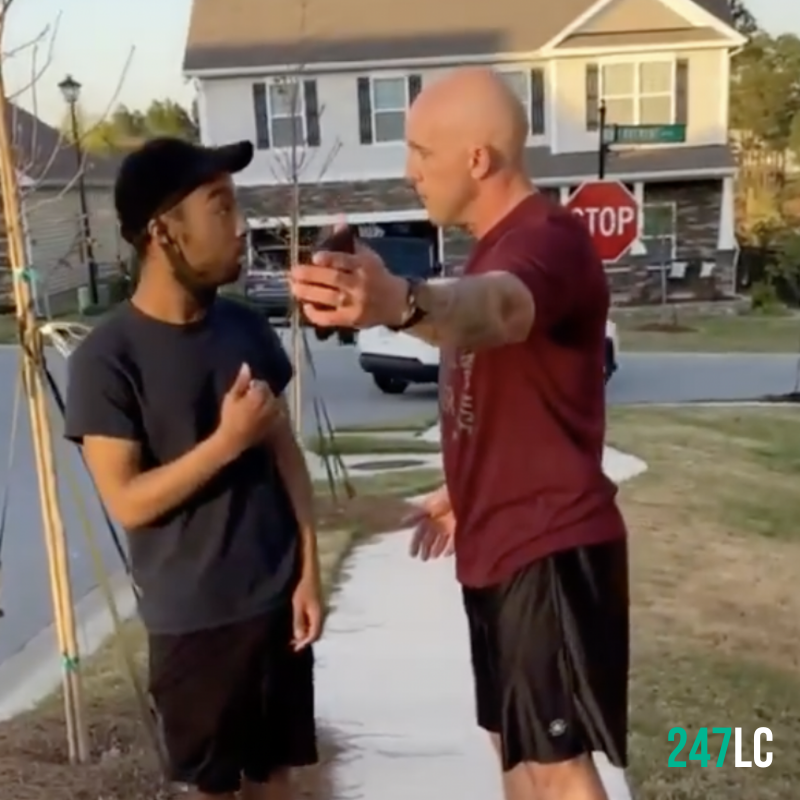
Make Racists Afraid Again: Army Sergeant Jonathan Pentland Charged With Assault
Jonathan Pentland, a US Army sergeant, was charged with assault for shoving a man whose only crime was minding his business. We discuss it here!
By: Kwana Adams
Our last two presidents have caused such a divide when it comes to race, but each in their own ways. People were so upset when Barack Obama was elected president, and those same people maintained a cult-like admiration for the next president Donald Trump. I call it cult-like because he did not even have to say things outright, yet his supporters would completely “understood” what he said and took it to extremes.
They liked him so much because he’s a great businessman (been bankrupt four times), and he “tells it like it is” (extremely offensive, downright rude, and disrespectful). I know that the general public likes to think the race line was drawn when Trump became president, but it was years before. Many horrid and racist things about Barack Obama were said, written, and drawn on poster boards because a black man dared to create history. Donald Trump led a whole campaign about the status of Obama’s birth certificate. He made his supporters feel bold enough to say what they want to say too.
We started going out into the streets demanding our lives to matter, and they spoke over us with ‘All lives matter.’ Barack Obama brought them out of hiding, but Donald Trump made them bold; so bold that they would proudly spew hatred on social media with their full names and places of employment on display. They would proudly be caught on video spewing hatred, too… until it goes viral. Suddenly, they’re sorry, it’s not who they are, and they didn’t mean it.
Their lives shouldn’t be ruined because of a simple mistake. Aw, are we supposed to feel bad for them? I don’t. If you’re going to say racist, awful things, then say it with your whole chest. Stand ten toes on it. Don’t change it up now because you got caught in 4K. You meant what you said. Now you have to deal with the consequences.
My favorite thing is seeing racists lose their jobs, scholarships, and enrollment in colleges and high schools. Some people really believe that free speech means “freedom to say what you want and nothing happens.” Not anymore. You’re being held accountable. You’re losing your privileges, and sometimes you’re getting punched in the face. Freedom of speech does not mean you can say whatever you want and get away with it.
I am so tired of seeing videos of white people verbally and physically assaulting black people. They’re triggering and, quite frankly, traumatizing. It physically hurts to see black people being shoved around, spit at, or called names just for simply existing. I do admit that video evidence is essential, but it rarely helps us, and when it does, it’s really refreshing.
A white man recently decided to intimidate and push around a much smaller black man because he was walking through the neighborhood. That man thought he was so tough until that video went viral. He got arrested, and black people showed up in droves outside of his house.
Jonathan Pentland, a US Army sergeant, was charged with assault for shoving that man whose only crime was minding his own damn business, and I feel great about it. The way he pushed around that man was despicable. It’s heartbreaking that we have to record interactions with white people so often because we could end up in a horrible situation.
We need racists to go back to being afraid. We need to keep holding them accountable, like Jonathan Pentland and Miya Ponsetto, so they don’t keep believing they can harm us and endanger our lives without repercussions. Make examples out of them and make racists afraid again.
YOU MAY ALSO BE INTERESTED IN:
SHARE TO SOCIAL MEDIA
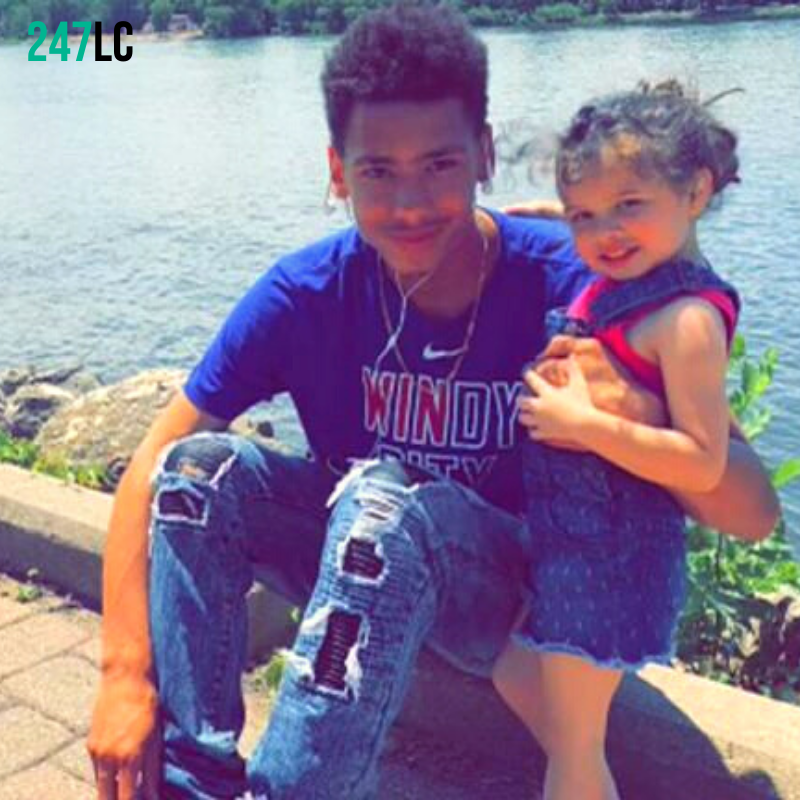
Daunte Wright And George Floyd Were Connected and Both Deserved Better
Two men, two fathers, two human beings whose lives were stolen in a similar manner, shared a common connection. George Floyd and Daunte Wright deserved better! We discuss it here!
By: Cory Utsey
Sunday, April 11 marked the end of another Black man’s life.
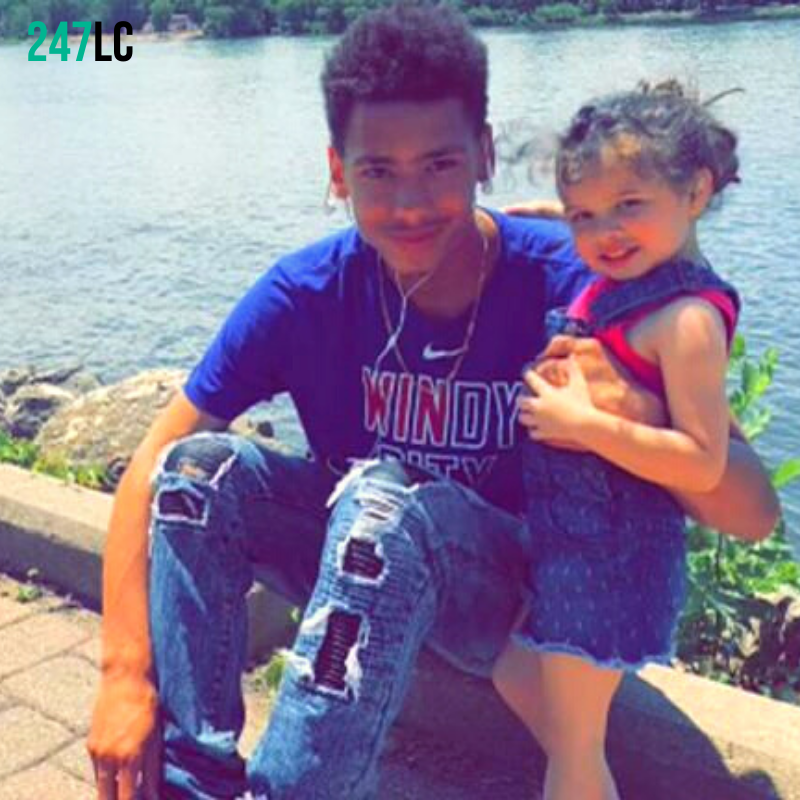
Daunte Wright was murdered by ex-officer Kim Potter, who is now being charged with second-degree manslaughter, during a traffic stop after she allegedly mistook her taser for her gun. He was only 20 years old.
This senseless act, which took place in Brooklyn Center, Minnesota, is less than 15 miles from where George Floyd was murdered in May of 2020, but the interconnected nature of these two men extends past location and even past police brutality.
George Floyd’s girlfriend Courteney Ross was a former teacher of Daunte Wright.
Two men, two fathers, two human beings whose lives were stolen in a similar manner, one of which took place amidst the trial against the murderer of the other.
The connection between Floyd and Wright is eerily reminiscent of the ties between US Army 2nd Lt. Caron Nazario-- who was pepper sprayed and thrown to the ground by two Virginia police officers in December-- and his uncle Eric Garner, who was killed by police in 2014.
Even further back in time lies the connection of Emmett Till, a 14-year-old Black boy who was lynched in 1955 Mississippi, and Fred Hampton, a prominent figure of the Black Panther party who was killed by the FBI in 1969 at the age of 21. Hampton’s mother babysat Till in his adolescence.
Nevertheless, the lives of Black people remain intertwined in violence and trauma that is inflicted by racist police, and reinforced by a system that values property more than Black lives. In the wake of Wright’s death, protestors have been met with curfews and the presence of the Minnesota National Guard; this response is much different than that of the storming of the Capitol, for instance, where actual agitators were given much more leeway.
The fact of the matter is, Daunte Wright deserved better.
He was ultimately stopped because of expired license plates and for hanging an air freshener in his mirror. However, even if he was doing something “wrong”, guilt should not breed a death sentence.
George Floyd deserved better. It should not matter whether or not he potentially ingested carbon monoxide, or even if he had drugs in his system-- no one should have their neck knelt on for over eight minutes.
Emmett Till deserved better. Breonna Taylor deserved better.
Adam Toledo, the 13-year-old boy who was shot and killed by Chicago police in late March, deserved better, and so do the many others whose lives have been stolen.
Police brutality, gun violence, and the overall abuse of power should not be normalized, neither should negligent justice be expected.
The value of Black lives should not have to be reiterated time and time again--the state of “matter” should be the minimum. And this cycle of trauma and death should not have to continue.
Change is not an option, it is a necessity.
YOU MAY ALSO BE INTERESTED IN:
SHARE TO SOCIAL MEDIA
Working Jobs You Don't Like: Choosing Between Morals and Money
Sometimes you have to work jobs that are not ideal to be financially stable until you can find a better one, but how do you handle a situation where it seems like you have to choose between your morals or your money? We discuss it here!
By: Kwana Adams
Does it sometimes feel like we have to choose between standing up for ourselves or keeping it to ourselves to take care of ourselves? How do you handle a situation where it seems like you have to choose between your morals or your money?
I’ll be honest, I’ve quit jobs due to piss poor management or feeling like I’m being mistreated, disrespected, or put down. I have absolutely refused to stay in a situation where my superiors are accusing me of not working hard, slacking off, or being lazy. The easiest and fastest way to make me angry is to tell me I’m not a hard worker or that I’m not good enough when I know that I am.
I’ve had multiple positions where I’ve walked away and never looked back. But those situations have always left me struggling until I could find something else. I have also left feeling unsatisfied because I never spoke my mind or advocated for myself harder. Sometimes capitalism makes it hard to stick to your values and morals. Sometimes we just have to put our head down and take it until we can find something better. It’s not ideal, and it’s so damn hard, but our only other alternative is to starve.
Now that I’m older, I can’t afford to leave myself in that situation, especially with covid and the uncertainty it causes. On the flip side of that, whatever is bothering me continues to eat away at me until I can’t take it anymore. I’m suddenly miserable, snapping at everyone, I never smile or laugh at a joke, and I feel like I’m losing my true self. This is the literal definition of ‘stuck between a rock and a hard place.’ I’ve always thought of myself as a person who would never compromise who I am and what I believe for money, but I know what it’s like to struggle. I know what it’s like to be in a hole that takes too long to dig back out of, and I never want to go back there again.
I’m 27 years old, and I still haven’t figured out how to handle these situations. I feel disrespected and belittled by a superior, but I can’t afford to quit. I’ve always known from a young age that I don’t respect authority. I was also always told to use my voice and stick up for myself. “You ain’t anybody’s punk or follower.” However, I’ve also known from a young age that I need to have money to support myself. “Don’t let ever let a man take care of you or tell you everything you have is because of him.” I can’t go through life floating from job to job. I also can’t go through life stifling my voice or being stuck under someone’s metaphorical boot.
If you’ve ever been in a similar situation or felt these same feelings, I’m sorry that I don’t have a solution for you, but just know that you’re not alone. I’m here too if you need advice or just an ear to vent to. I’m optimistic that we will see a world where we don’t have to make these decisions one day. I don’t agree with having to compromise your true self for money, but I’m also not unrealistic, and I realize we need money to survive. Until then, I’ll keep envisioning my perfect world where our whole lives are not just about surviving but about loving and enjoying life while we’re living it.
YOU MAY ALSO BE INTERESTED IN:
SHARE TO SOCIAL MEDIA
The Performative Nature of “Cancel Culture” And It's Inconsistency
The growth of social media has led to the phenomenon of "cancel culture”, but the inconsistency lies with certain artists being excused from bad behavior because they make good music or create nice products. We discuss it here!
By: Cory Utsey
The public spectacle of withdrawing support from a famous person or brand is nothing new, as those who do questionable things in the limelight have always existed and received public scrutiny, or ostracization, for it. The main difference between this concept being applied in the past and in the present is the existence and the power of social media.
Referred to as “cancel culture”, what often happens is the following: a public figure or company will commit an act that has been deemed problematic, and social media users will either expose said act or shame it. Then, in the process of explaining why this action was wrong, people will call for the deplatforming of the brand or individual.
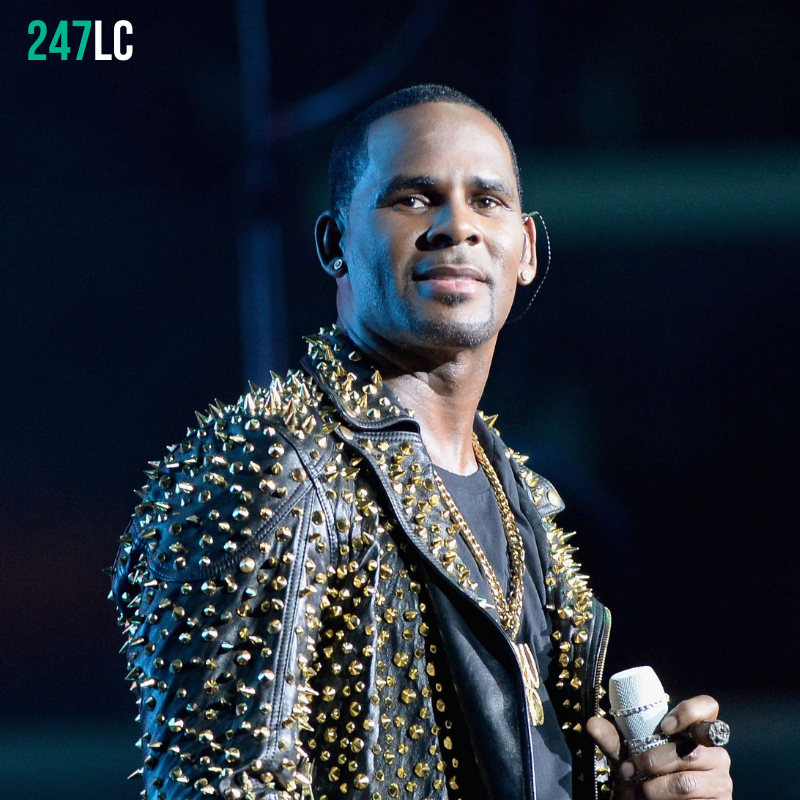
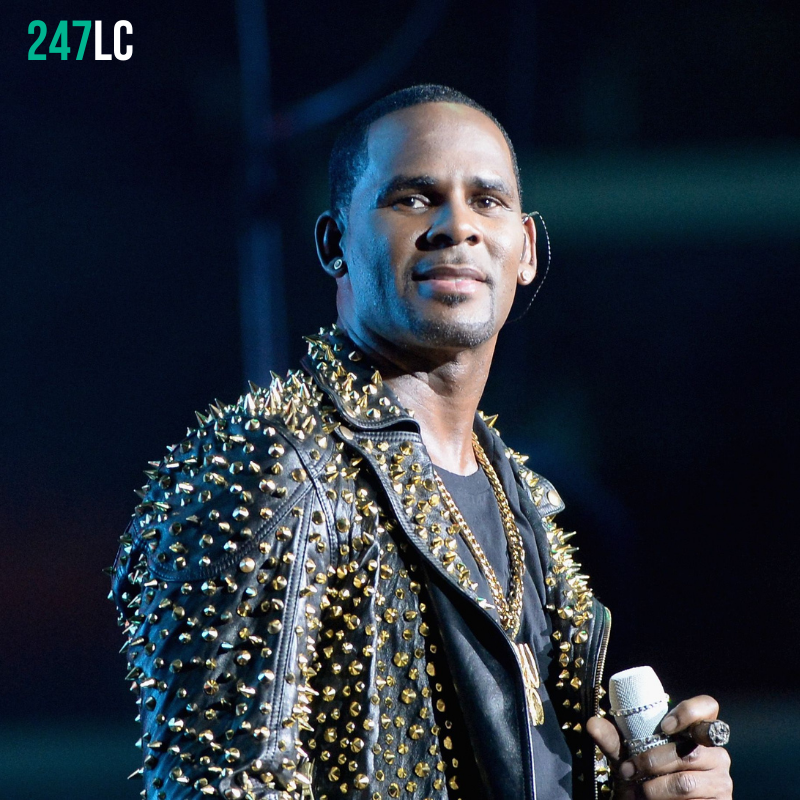
This phenomenon, which has worked hand in hand with movements such as #MeToo, has proven to be quite effective with the cancellation of some individuals, such as R. Kelly, Bill Cosby, and Harvey Weinstein. But with other individuals--such as the former president-- and even with certain companies, problematic behavior seems to be ignored and at times forgotten, with very little change in their level of power.
The idea of being cancelled is often thrown into any conversation surrounding the troublesome behavior of someone or something in the limelight, but the performative act of engaging with cancel culture is just that-- it is performative.
The implications of controversial behavior are relative because controversy itself is relative; although there are many societal commonalities in what might be considered vile versus what might be considered virtuous, individual biases still play a key role in the way that people determine what is good and what is bad.
In many cases, biases will present themselves through forms of discrimination such as racism or misogyny, and they are so prominent that certain actions will only be considered “cancellable” if they are committed by certain people. Additionally, those on the receiving end of different types of discrimination are often taught to be complacent in the face of prejudiced activity; they are told that because these activities are “normal”, there is no reason to be upset over them.
Even if biases are not inherently discriminatory, every individual experiences life differently, meaning that every individual’s perception on what is acceptable is also different.
But even if an action has been collectively deemed as wrong by society, this does not necessarily mean that they will be deplatformed.
Everytime the user of a social media app watches the video of an influencer or streams the song of an artist, they are putting money in someone’s pockets-- it does not matter if that click comes from a place of outrage or a place of praise. In turn, if content from these public figures goes viral, then the number of clicks will greatly increase, and so will their revenue.
When the inconsistent labeling of cancellable offenses is combined with the potential of profit, the vast majority of those who do “bad things” receive very little punishment. Their names are brought up in Twitter discourse, they might issue an ingenuine apology, and people move on.
Cancel culture, in theory, is quite effective in ensuring that power is taken away from those who do terrible things, but in application, it simply serves as a spectacle.
At the end of the day, people deserve to be held accountable for their wrongdoings--regardless of what is labeled as.
But biases should not take the place of morality.
If people truly want to engage with cancel culture, then they must be consistent with the parameters of cancellable offenses; one should not be excused from bad behavior because they make good music or create nice products.
This consistency must also be applied to the ideas of redemption and growth. Some actions are certainly unredeemable, but once again, redemption should not be offered only to those who create nice things.
And in regards to the use of social media, Twitter threads and “Exposed Videos” should not be the start and endpoint of accountability; if someone is truly undeserving of a platform, then the energy should be put towards minimizing that platform as opposed to amplifying the reach of their offenses, especially if these offenses are triggering.
Cancel culture itself is not the problem; it is inconsistency, along with the desire to receive mass social media interaction, that serve as the main culprits.
But with some slight redirection, deplatforming might become much more viable.
YOU MAY ALSO BE INTERESTED IN:
SHARE TO SOCIAL MEDIA
Abolishing the N-word: A Personal Experience
Have you ever dealt with non-Black friends trying to justify their right to use the n-word? We discuss it here!

By: Kwana Adams
When I was a child, I was taught that the N-word was a swear word like bitch or fuck, and I wasn’t allowed to say it. I once heard a non-black little girl say to another little child, “at least I ain’t a n*gga like you are.” I remember hearing an adult tell her that n*gga meant an ignorant black person, and she shouldn’t be calling people that. What does it actually mean, though? Does it even have a meaning?
I didn’t know what it meant at that point; I just knew from the way the little girl said it that it was an insult. As I got older and learned what the word meant, I never felt the need to use it myself, but I didn’t check people for using it around me. White friends of other friends would say it in front of me, then immediately begin apologizing- “I’m sorry, I didn’t mean to offend you!” I remember stating that I wasn’t offended, but on the inside, I was uncomfortable.
Beyond high school, I started asking my non-black friends and acquaintances why they keep saying it. I got annoyed when someone said, “and?” and then proceeded to explain what the word meant after I questioned their reasoning for using it. This was a non-black person trying to explain to me, a black person, what the n-word means. Now that I reminisce about those moments, I think to myself: “why were these people so comfortable saying that?”
When I got to high school, our faculty and staff tried to push the “Abolish the N-word” campaign. They even had posters in the classroom. No one took it seriously, despite the signs and constant reminders. After high school, I went to a predominantly white university. That feeling of discomfort started to come back when a majority of white people surrounded me. They tried hard to advocate for their right to use that word.
To me, it sounded like children only wanting to do it because they felt left out. I realized I didn’t like them saying it. It felt wrong coming from their lips, no matter the context. Even if they were just singing along to a song with the word in it, it disgusted me. My ears and my brain automatically take it as disrespect when I hear that word come out of a non-black mouth, and quite honestly, I don’t like it escaping from black lips either. I know it sounds corny as hell, but I do wish we would abolish the N-word. I wish we would all stop saying it.
I know that to some black people, it might feel powerful to reclaim a word and use it, so it doesn’t hurt anymore. I disagree with it, but I’m not one to tell black people how to feel. However, to me, it’s too close to the original word, and after learning that my grandparents were called that during their youth, I simply cannot allow anyone to call me that.
The term goes back so far, and it was created by white people to refer to our enslaved ancestors, so out of respect for them, I’ve opted out of adding it to my vocabulary. I now politely check people who use it around me, black and non-black. I let them know I’m not comfortable with them saying it around me.
Despite my discomfort with the word, I’m not trying to force any black person to stop using it. These are just my personal feelings on the word, and I am in no way judging any black person for continuing to use it. As for myself being referred to as a n*gga, I only have one thing to say: I am not a n*gga, and I am damn sure not YOUR n*gga. Thank you.
YOU MAY ALSO BE INTERESTED IN:
SHARE TO SOCIAL MEDIA
Why Afrofuturism Is A Fierce Instrument Of Black Empowerment And Liberation
At the intersection of fantasy, technology, and Black liberation lies the thrilling idea of Afrofuturism, one of the most innovative tools used by Black innovators today to empower Black people. We discuss it here!
By: Cory Utsey
At the intersection of fantasy, technology, and Black liberation lies the thrilling idea of Afrofuturism.
Afrofuturism functions as a reimagining of what it means to be Black, as well as how this blackness might exist in the future, and it is one of the most innovative tools used by Black innovators to empower Black people.
The concept of Afrofuturism did not have a succinct name until 1994, when Mark Dery released an essay entitled “Black to the Future”. In this essay, he defined Afrofuturism as a form of speculative fiction, which is a broad genre of fiction that incorporates elements of fantasy and the supernatural. When these elements are combined with African-American centered themes and a technologically advanced future, Afrofuturism is born.
Even though this loose ideology did not always have a name, it has been contributed to by a number of Black artists, scholars, and activists over the years. Whether it was exemplified by means of science-fiction novels from author Octavia Butler, or the unique, mythical sounds from composer Sun Ra, Afrofuturism has allowed Black people to construct worlds in which oppression and white supremacy have no agency over Black bodies-- where the potential and possibilities of Black existence has no bounds.
One of the most well-known imaginings of Afrofuturism is found in the 2018 Marvel movie Black Panther, specifically in the country of Wakanda. The mere existence of Wakanda, an African nation untouched by colonization, already serves as an immaculate conceptualization of how any culture within the African diaspora might exist had it been left to thrive on its own. But when this is combined with advanced technology and the fusion of traditional African dress with cyber-gothic clothing, the pure essence of Afrofuturism is employed.
HBO’s Lovecraft Country, especially in the seventh episode “I Am”, also utilizes elements of Afrofuturism to drive the plot. Although the show does not eradicate racism and white supremacy, its emphasis on ancestral connection and self-realization are still important features for Black people to draw inspiration from.
Afrofuturism is also quite prominent in the music of many modern artists, with Janelle Monae being one of its best known proponents. Throughout her whole discography and its accompanying images, Monae cultivates a complex dystopia in which themes of female empowerment, sexual reclamation, and the re-possession of one’s power are framed as the gateways to liberation.
Solange’s visual album for “When I Get Home”, along with many of Chloe X Halle’s most recent videos and performances for “Ungodly Hour” are also known for their incorporation of futuristic dress and electronic sound.
Chloe x Halle - ‘Ungodly Hour’
Though some elements of Afrofuturism might seem intangible, the ideology empowers Black people to work towards a future full of tangible change. It breeds the conception of a society advanced by equity, lined with inclusivity, and void of oppression.
Afrofuturism inspires us to continue fighting. It breeds a sense of hope. And most of all, it enables us to shape our reality rather than let reality shape us.
YOU MAY ALSO BE INTERESTED IN:
Meet Adonis Armstrong, Co-Founder & President of 247 Live Culture!
Email: Adonis@247LiveCulture.com