

The Inflation of “Trauma”: When Trauma Gets Overused and the Truth Gets Lost
Trauma is real, but calling every hardship “trauma” can keep us stuck instead of helping us heal, grow, and take accountability! We discuss it here!

When Trauma Gets Overused and the Truth Gets Lost
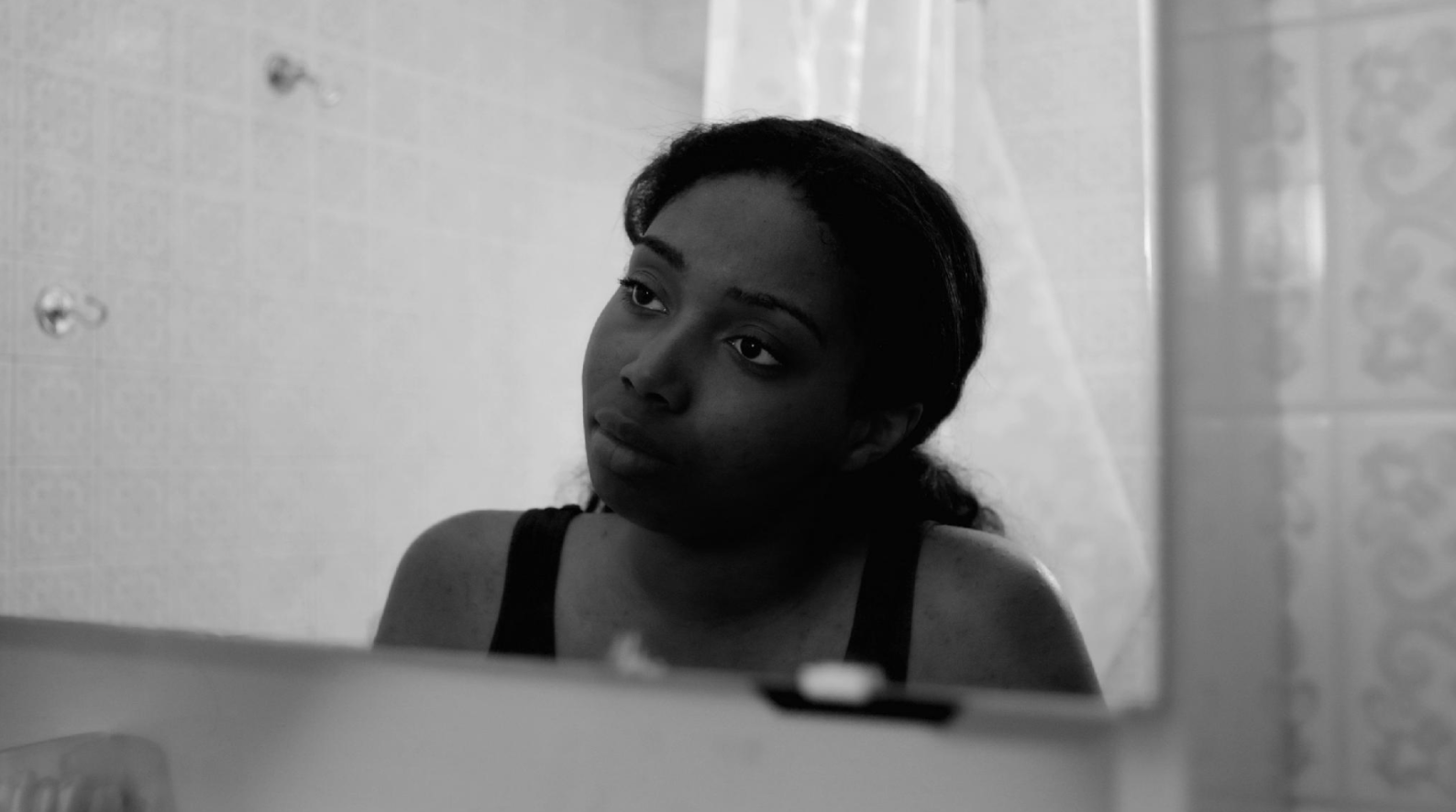
Photo Credit: Jacob Wackerhausen via iStockPhoto.com
By: Jamila Gomez
There was a time when trauma meant something that split your world open. People used the word carefully because it named a kind of pain that didn’t just hurt; it changed who you were. Somewhere along the way, the word got stretched until it started showing up everywhere. Now it covers everything from a bad date to a rough week.
When everything becomes trauma, nothing really is.
That isn’t to say people shouldn’t talk about what hurts. Feelings need language. But trauma is a very specific kind of wound. It shakes your sense of safety. It lives in your body. It lingers long after the moment is over. When we blur the line between pain and trauma, we take away the gravity of what the word is meant to hold.
Social media made that blur even worse. Therapy language turned into a trend. Everyone knows the buzzwords now: triggers, gaslighting, boundaries, trauma responses. There’s power in naming things, but words lose meaning when we start using them like captions. “My trauma made me do that” often replaces “I hurt someone.” “That triggered me” becomes “That bothered me.” We start speaking in shortcuts instead of saying what’s true.
That’s where accountability gets lost.
There’s also an unevenness in who gets to talk about trauma without being questioned. When a white influencer opens up about it, people call it vulnerability. When a Black woman does the same, she’s labeled angry or dramatic. When a poor person names it, they’re accused of making excuses. The word hasn’t just been overused; it’s been unevenly respected.
And because it’s everywhere, people are starting to tune it out. Real trauma stories get buried under a sea of minor grievances described with the same language. People who’ve survived violence or long-term abuse start to sound no different from those who’ve simply had a rough day. That doesn’t build empathy. It erases it.
Still, it makes sense why people reach for the word. In a world that rewards resilience and punishes emotion, saying “I have trauma” can feel like a shield. It’s a way of asking to be taken seriously. But when every hurt is called trauma, care starts to lose meaning too. Sometimes we’re just hurt. Sometimes we’re disappointed. Sometimes we’re grieving. That doesn’t make it small; it makes it real.
We don’t need to shame people for getting it wrong. We just need to be honest again. Not every heartbreak is trauma. Not every disagreement is abuse. Not every uncomfortable moment means danger. Some things are simply painful. Learning to sit with that without exaggerating it is its own form of growth.
Language shapes how we hold each other. If we use big words for every small wound, the words lose their weight. People who are still carrying real trauma deserve for it to mean something when they say it.
Maybe the goal isn’t to prove who’s been hurt the most. Maybe it’s to tell the truth about what we’ve lived through, what still needs healing, and what we can face without hiding behind labels. That kind of honesty might not trend, but it’s where the real healing starts.

YOU MAY ALSO BE INTERESTED IN:



SHARE TO SOCIAL MEDIA
Is the Black Church Still a Safe Space? Depends Who You Ask
The Black church holds a powerful legacy of faith, resilience, and community, but it also carries a complicated history of silence, shame, and spiritual harm that continues to shape conversations about healing, inclusion, and transformation today. We discuss it here!
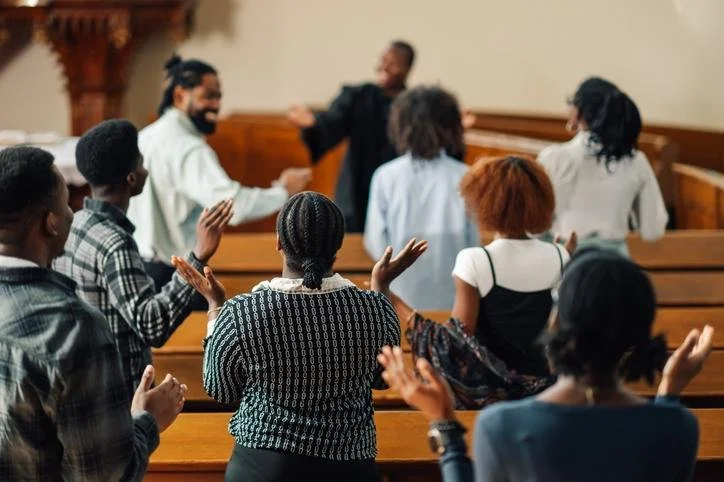
Photo Credit: zamrzutitonovi via iStockPhoto.com
By: Jamila Gomez
The Black church has always been more than just a building. It’s been a refuge, a gathering place, a sanctuary when the rest of the world felt unsafe. For many of us, it’s where we learned to pray, to praise, to hold on. But for others, it’s also where we first learned how to hide.
Because while the Black church gave us faith, community, and language for survival—it also gave us silence, shame, and suppression.
The Duality We Don’t Talk About Enough
To say the Black church saved lives isn’t an exaggeration. It has carried generations through slavery, segregation, systemic injustice, and communal grief. It built leaders, movements, and entire cultural traditions.
But alongside that power sits a less often acknowledged truth: the church has also been a space where many of us first encountered spiritual manipulation, misogyny, homophobia, and emotional abuse—all wrapped in scripture.
And that’s the part folks don’t always want to admit: you can love a space and still name how it hurt you.
The Pain That Got Dressed Up as Doctrine
For many Black women, the church taught us to be small and silent. To serve before we spoke. To stay in marriages that were breaking us. To “pray it away” instead of going to therapy. To mistake suffering for virtue.
For many queer folks, it meant sitting in pews that preached damnation over dignity—learning to perform identity in order to survive the judgment.
For survivors of abuse, the message was often clear: protect the reputation of the church, even if it costs you your voice.
What do you do when the place that taught you about God also taught you how to disappear?
Why Some of Us Left
Some of us didn’t leave the church because we lost faith—we left because we found ourselves.
We started asking questions no one wanted to answer. We got tired of being told that our trauma was a test, or that our boundaries were rebellion. We craved a God who didn’t require erasure as an offering.
And so we left. Not always in anger. Sometimes just in silence.
And Yet, for Some, It’s Still Home
There are Black churches doing real, radical work—centering mental health, embracing LGBTQ+ members, challenging generational harm. For some, it remains a lifeline, a chosen family, a vital anchor in the chaos of the world.
So when someone asks, “Is the Black church still a safe space?”—the most honest answer might be: For some, yes. For others, it never was.
The Black church has a legacy of resilience and contradiction. It has held us up and held us back. It has birthed liberation and enabled silence. It has given us hope, and for some of us, it has demanded our hiding in return.
But telling the truth about that complexity isn’t betrayal—it’s healing. Because safe spaces don’t just feel good. They make room for hard conversations. They grow. They evolve. They repent when needed.
And maybe the real question isn’t whether the Black church is a safe space—but whether it’s willing to become one.
YOU MAY ALSO BE INTERESTED IN:
SHARE TO SOCIAL MEDIA

Misdiagnosed and Misunderstood: What the System Gets Wrong About Black Emotion
This powerful article explores how the mental health system often mislabels Black pain, calling survival strategies symptoms and overlooking cultural context, while offering a path toward healing through culturally affirming care and self-reclamation. We discuss it here!

Photo Credit: nortonrsx via iStockPhoto.com
By: Jamila Gomez
You sit across from someone who’s supposed to help. You try to explain the weight you carry—the irritability, the sadness that won’t leave, the constant fear of being too much or not enough. But instead of asking what happened to you, they start jotting down what’s wrong with you.
And just like that, your rage is aggression. Your grief becomes a diagnosis. Your survival instincts are now symptoms.
This is what happens when Black people’s pain gets filtered through a lens that was never meant to see us clearly.
The System Was Never Neutral
Let’s be honest: the mental health system is not as neutral, objective, or inclusive as it wants to believe. Most of what we’ve come to accept as psychological “norms” were built around white, Western ideals of expression, behavior, and functionality. So when we show up with a completely different cultural blueprint—one rooted in resilience, resistance, and generational trauma—we’re often misunderstood.
Studies have shown that Black people are more likely to be diagnosed with psychotic disorders like schizophrenia, while white patients presenting the same symptoms often get milder mood disorder labels like depression or anxiety. Black children are more likely to be labeled “oppositional” than “traumatized.” Black women are told they’re too guarded, too angry, too loud, too resistant.
Too everything.
What You Call a Disorder, I Call a Defense Mechanism
What happens when you grow up in environments where being too emotional wasn’t safe? When silence and strength were expected just to survive? When no one ever said “I see you,” so you stopped expecting to be seen?
You develop defenses. You shut down. You get sharp-tongued. You armor up.
And then, when you finally sit down in front of someone with a clipboard and an acronym behind their name, they name the behavior—but not the why. Suddenly you’re “avoidant.” “Hypervigilant.” “Disregulated.”
No one ever stops to ask: What would it look like to treat the context, not just the symptoms?
Labels Without Language
When you’ve spent your whole life navigating racism, family trauma, economic stress, and cultural silence, your emotions don’t always show up politely. Some of us dissociate in church pews. Some of us stay booked and busy because the stillness is triggering. Some of us laugh too loud, too long, because we’ve never been allowed to cry in peace.
But these are not disorders. These are strategies. They were our ancestors’ armor—and now they’re our inheritance.
And yet, if you walk into the wrong office with the right pain, you might leave with a label that cages more than it frees.
The Cost of Misdiagnosis
It’s not just about hurt feelings—it’s about missed healing.
When our anger gets labeled as aggression, no one investigates what we lost.
When our numbness gets labeled as detachment, no one asks what we’re still trying to survive.
When our silence is labeled as non-compliance, no one considers that maybe we’re just exhausted from not being believed.
Mislabeled pain doesn’t get healed. It gets managed, medicated, monitored. But it doesn’t get met with compassion or curiosity.
And that’s the real danger—when the system treats our trauma like a character flaw, our healing becomes harder to reach.
So What Do We Do?
We name it. We question it. We stop blindly accepting frameworks that were never built with us in mind.
We seek therapists who see us fully—not just as a bundle of symptoms, but as whole human beings with rich cultural lives and layered histories. We explore alternative healing modalities that speak to the soul, not just the psyche—ancestral healing, somatic work, storytelling, ritual, reclamation.
And most importantly, we remember this:
Not every emotion needs to be fixed.
Not every reaction is dysfunctional.
Not everything needs to be diagnosed.
Sometimes it’s just being Black… and tired.
To anyone who has ever felt misread, mislabeled, or mishandled in a space that was supposed to help you—you are not imagining it. The system isn’t broken. It was built this way.
But so were we. Built to endure, built to adapt, built to remember ourselves whole.
And now? We get to heal on our terms.
YOU MAY ALSO BE INTERESTED IN:
SHARE TO SOCIAL MEDIA

3 Trauma Responses We Normalize
Unpack the hidden trauma behind over-achieving, people-pleasing, and emotional detachment, and learn why healing—not just coping—is the path to true freedom. We discuss it here!
Photo Credit: izusek via iStockPhoto.com
By: Jamila Gomez
We all carry emotional baggage. But what if some of the behaviors we see as “just how I am” are actually trauma responses we’ve normalized? Coping mechanisms formed under stress don’t disappear just because the danger is gone—they often evolve into habits we mistake for personality traits. Here are three common trauma responses we tend to normalize without realizing what’s underneath.
1. Over-Achieving as a Way to Feel Safe
You always say yes. You chase the next goal, the next milestone, the next pat on the back. People call you ambitious, driven, a high-performer. But behind the accolades might be a nervous system stuck in overdrive, conditioned to believe that worth comes from doing.
This response often stems from childhood environments where love or safety felt conditional—where you had to earn approval or stay useful to avoid being overlooked or punished. The result? You measure your value by your productivity. Rest feels lazy. Slowing down feels unsafe. But constant achievement isn’t freedom; it’s survival dressed as success.
2. People-Pleasing to Avoid Conflict
You pride yourself on being easygoing. You’re always available, always agreeable, and always putting others first. You avoid conflict like it’s fire. What looks like kindness might actually be fear.
People-pleasing often develops in chaotic or emotionally unpredictable environments. If disagreeing led to punishment, rejection, or emotional withdrawal, you learned to keep the peace at all costs. The problem is, you lose yourself in the process. Your boundaries dissolve. Your needs shrink. And even though you’re surrounded by people, you feel invisible. That’s not harmony—it’s self-erasure.
3. Detachment That Feels Like Independence
You don’t “do feelings.” You’re self-sufficient. You push people away when they get too close. You take pride in being low-maintenance. To the outside world, it looks like strength. But it’s often just a deeply embedded defense mechanism.
This kind of detachment is common in people who grew up in environments where vulnerability wasn’t safe—where emotional needs were ignored, ridiculed, or weaponized. So you learned to turn them off. You convinced yourself you didn’t need anyone. But independence born from trauma isn’t freedom—it’s isolation.
Recognizing trauma responses isn’t about blaming yourself or your past. It’s about understanding your wiring so you can rewrite it. These patterns helped you survive. But if they’re now keeping you from connecting, healing, or simply feeling at home in your own skin, it’s worth looking deeper.
Normalize healing, not just coping.
YOU MAY ALSO BE INTERESTED IN:
SHARE TO SOCIAL MEDIA
How to Hold Grief and Gratitude at the Same Time
Explore how grief and gratitude can coexist in the Black experience, revealing the healing power of embracing both pain and thankfulness in everyday life. We discuss it here!
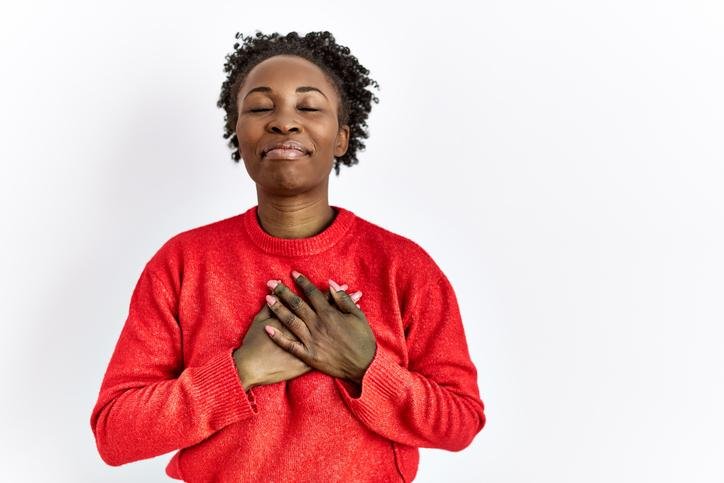
Photo Credit: AaronAmat via iStockPhoto.com
By: Jamila Gomez
Grief and gratitude seem like emotional opposites. One cracks you open. The other grounds you. One is heavy, hard, and hollow. The other feels light, warm, and full. But the truth is, they often show up together — especially in the Black community, where we’ve had to become experts in holding contradictions.
We laugh at funerals. We sing through sorrow. We keep going, even when our hearts are breaking.
Grief and gratitude don’t cancel each other out — they exist side by side in the same breath.
Maybe you’re mourning a loved one but grateful you got to know them at all.
Maybe you’re grieving a version of yourself you had to let go of, while still being thankful for how far you’ve come.
Maybe life feels unfair right now, and yet you still find yourself smiling at the sky, or saying “thank you” in the quiet.
This is what it means to be human — to be Black — to be alive in a world that doesn’t always make sense but still holds moments of softness.
The trick isn’t choosing between grief and gratitude. The real healing starts when you give yourself permission to feel both — without guilt.
You’re allowed to cry and still appreciate the love that was real.
You’re allowed to miss someone deeply and still move forward with joy.
You’re allowed to say, “This hurts” and also say, “I’m thankful for what it gave me.”
In our culture, we’re often taught to be either broken or blessed. But we’re both. We’re layered. We carry sorrow in one hand and survival in the other.
So how do you hold them both?
Start small.
Say thank you for the little things, even on the hard days.
Make space to honor your grief — not fix it, not rush it, just witness it.
And when joy shows up — in laughter, in food, in sunlight on your skin — let it in. Don’t push it away just because you’re still hurting.
There is no right way to grieve. There is no perfect time to feel grateful. There is only the truth of what you’re holding right now — and the courage to hold it with care.
You don’t have to be all healed to be thankful.
You don’t have to be joyful every day to honor your blessings.
You are allowed to be both hurting and healing — grieving and grateful.
Both can be true. And both can lead you home.
YOU MAY ALSO BE INTERESTED IN:
SHARE TO SOCIAL MEDIA

Do We Really Want Healing or Just the Aesthetic of It?
Real healing goes beyond self-care aesthetics, asking us to confront pain, set boundaries, and do the inner work needed for true growth and emotional freedom, especially in the Black community. We discuss it here!
Photo Credit: Jacob Wackerhausen via iStockPhoto.com
By: Jamila Gomez
Healing is trending. You see it in soft pastel quote graphics, in perfectly curated self-care routines, in caption-ready declarations of “choosing peace.” We post about protecting our energy, cutting off toxic people, and living in our soft girl era — but sometimes, behind the scenes, we’re still raw, reactive, and unsure how to actually feel better. It’s fair to ask: do we really want healing, or just the look of it?
This isn’t shade — it’s a real reflection on how the world around us has commercialized a deeply personal journey. The aesthetic of healing is easier to digest. It’s polished. It’s Instagrammable. It gives us the illusion of growth, even if nothing’s actually changing beneath the surface. But real healing? It’s uncomfortable. It’s messy. It’s private. Sometimes it looks like crying in your car, losing friends, setting boundaries that make people mad, or admitting you’re not okay.
In the Black community especially, we’re carrying generations of pain. And when we finally get the language to name what we’ve been through — “trauma,” “attachment wounds,” “inner child work” — it can feel empowering. But language isn’t the same as liberation. Naming the pain is only the beginning. Doing the work? That’s the part that doesn’t always make it to the timeline.
Healing requires us to look at ourselves honestly — not just the ways we’ve been hurt, but the ways we hurt others. It asks us to slow down when we’ve been conditioned to grind. It asks us to forgive, sometimes without closure. It challenges us to feel our feelings instead of numbing them with distractions. And most of all, it asks us to commit — even when there’s no applause for our progress.
This doesn’t mean we can’t enjoy the aesthetics. Light a candle, run that bath, journal in your matching loungewear — if it brings you comfort, do it. But let’s not confuse rituals with repair. The goal isn’t to look like we’re healing. The goal is to live in a way that’s rooted in truth, self-awareness, and growth — even when it’s not pretty.
So the next time we talk about healing, let’s make space for the full picture. Not just the quotes and the crystals, but the inner work that takes courage. Because real healing isn’t always cute — but it is freeing. And we deserve that freedom more than we deserve the aesthetic.
YOU MAY ALSO BE INTERESTED IN: