Designing a Trip That Actually Feels Good to You
In a world full of noise, true spiritual clarity often comes through stillness, reminding us that God's voice is often found not in the loud, but in the quiet moments of intuition, presence, and peace. We discuss it here!

Photo Credit: andreswd via iStockPhoto.com
By: Jamila Gomez
There’s a difference between traveling and actually enjoying the trip. Too many women return from vacation exhausted, overstimulated, and needing another few days to recover. What was supposed to be a reset turns into another task—a tightly packed schedule designed for aesthetics more than actual enjoyment. Somewhere along the way, leisure started to feel like performance.
Designing a trip that feels good to you begins with clarity. Not every destination needs to be trendy. Not every restaurant needs to be Michelin-rated. And not every moment needs to be posted. The real question is: what kind of travel makes you feel most like yourself? Because if the trip isn’t aligned with who you are, it won’t serve you—no matter how far the flight.
Some women want movement—museums, excursions, and planned days from start to finish. Others want slow mornings, late breakfasts, and no alarms. Both are valid. But problems start when people plan around pressure instead of preference. If you’re not a morning person at home, forcing a sunrise hike on vacation isn’t self-care—it’s performance. Trust your rhythm.
Start by identifying the purpose of the trip before you book anything. Is it a break, a celebration, a recovery, or just an escape? That answer will tell you what kind of space you need, how much energy you have to give, and who (if anyone) should come with you. Don’t say yes to trips that don’t reflect your needs. Grown woman travel should feel good before, during, and after the flight.
Build space into your itinerary. If every hour is accounted for, it’s not leisure—it’s obligation. You need room to wander, to nap, to cancel plans without guilt. The best memories often happen during the unscheduled time. A good trip leaves space for spontaneity without leaving you drained.
There’s also power in traveling for yourself—not for photos, not for content, not for a recap. You don’t owe anyone a slideshow or proof of fun. If the experience felt meaningful to you, that’s enough. The views can stay in your head. The peace can stay off the grid.
And when the trip ends, ask yourself: did it give something back to me? Whether it’s calm, clarity, connection, or just a reason to smile when you think back on it—that’s what matters. Because a trip done right doesn’t just take you somewhere new. It brings you back to yourself.

YOU MAY ALSO BE INTERESTED IN:




SHARE TO SOCIAL MEDIA
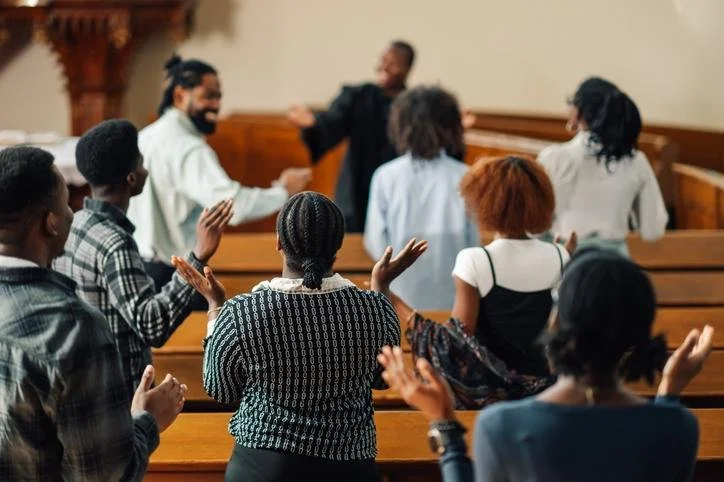
Is the Black Church Still a Safe Space? Depends Who You Ask
The Black church holds a powerful legacy of faith, resilience, and community, but it also carries a complicated history of silence, shame, and spiritual harm that continues to shape conversations about healing, inclusion, and transformation today. We discuss it here!
Photo Credit: zamrzutitonovi via iStockPhoto.com
By: Jamila Gomez
The Black church has always been more than just a building. It’s been a refuge, a gathering place, a sanctuary when the rest of the world felt unsafe. For many of us, it’s where we learned to pray, to praise, to hold on. But for others, it’s also where we first learned how to hide.
Because while the Black church gave us faith, community, and language for survival—it also gave us silence, shame, and suppression.
The Duality We Don’t Talk About Enough
To say the Black church saved lives isn’t an exaggeration. It has carried generations through slavery, segregation, systemic injustice, and communal grief. It built leaders, movements, and entire cultural traditions.
But alongside that power sits a less often acknowledged truth: the church has also been a space where many of us first encountered spiritual manipulation, misogyny, homophobia, and emotional abuse—all wrapped in scripture.
And that’s the part folks don’t always want to admit: you can love a space and still name how it hurt you.
The Pain That Got Dressed Up as Doctrine
For many Black women, the church taught us to be small and silent. To serve before we spoke. To stay in marriages that were breaking us. To “pray it away” instead of going to therapy. To mistake suffering for virtue.
For many queer folks, it meant sitting in pews that preached damnation over dignity—learning to perform identity in order to survive the judgment.
For survivors of abuse, the message was often clear: protect the reputation of the church, even if it costs you your voice.
What do you do when the place that taught you about God also taught you how to disappear?
Why Some of Us Left
Some of us didn’t leave the church because we lost faith—we left because we found ourselves.
We started asking questions no one wanted to answer. We got tired of being told that our trauma was a test, or that our boundaries were rebellion. We craved a God who didn’t require erasure as an offering.
And so we left. Not always in anger. Sometimes just in silence.
And Yet, for Some, It’s Still Home
There are Black churches doing real, radical work—centering mental health, embracing LGBTQ+ members, challenging generational harm. For some, it remains a lifeline, a chosen family, a vital anchor in the chaos of the world.
So when someone asks, “Is the Black church still a safe space?”—the most honest answer might be: For some, yes. For others, it never was.
The Black church has a legacy of resilience and contradiction. It has held us up and held us back. It has birthed liberation and enabled silence. It has given us hope, and for some of us, it has demanded our hiding in return.
But telling the truth about that complexity isn’t betrayal—it’s healing. Because safe spaces don’t just feel good. They make room for hard conversations. They grow. They evolve. They repent when needed.
And maybe the real question isn’t whether the Black church is a safe space—but whether it’s willing to become one.
YOU MAY ALSO BE INTERESTED IN:
SHARE TO SOCIAL MEDIA
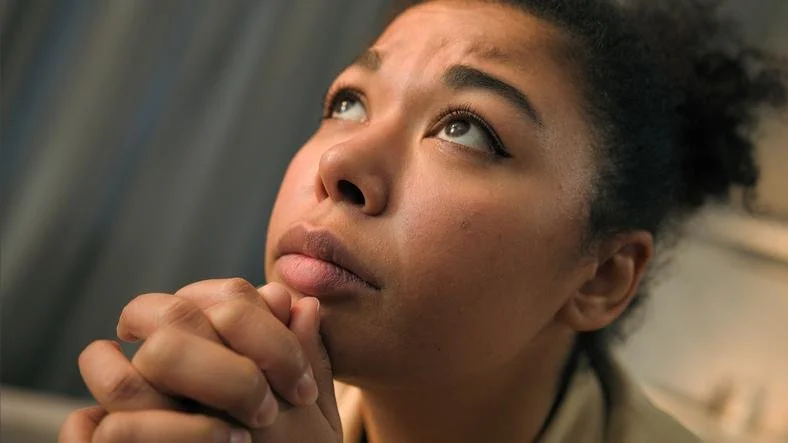
When God Feels Silent While You’re Breaking
In times of deep suffering when God feels silent, it's not always absence but often sacred presence—an invitation to trust what’s already within. We discuss it here!
Photo Credit: Yuliia Kaveshnikova via iStockPhoto.com
By: Jamila Gomez
There are moments in life when everything inside you is collapsing, and heaven feels closed for business. You pray, but the words echo back. You beg for answers, but silence fills the space. In those moments, it’s easy to believe you’ve been abandoned. That God’s off somewhere else. That maybe you were wrong to trust Him in the first place.
Silence in suffering can feel like cruelty. You’re bleeding emotionally, spiritually, maybe even physically—and all you get is quiet. No signs. No reassurance. Just stillness while your world is on fire.
But what if the silence isn’t absence? What if it’s presence in a different form?
Think about it. When a teacher is silent during a test, it’s not because they’ve left the room. It’s because the test is designed to reveal what’s already been taught. Maybe this isn’t God ghosting you. Maybe it’s Him trusting what He’s built in you.
That doesn’t mean the pain isn’t real. It doesn’t mean you should pretend it’s fine. You’re allowed to scream, to cry, to not know what to say. Even Jesus, in His final moments, cried out, “My God, why have you forsaken me?” If the Son of God could say that and still be in the center of God’s will, so can you.
We often want comfort to come in noise—answers, feelings, a miracle. But God doesn’t always speak the way we want. Sometimes He speaks through the waiting, the wrestling, the long nights of not knowing. And the silence? It can strip away everything we thought was holding us up until all that’s left is raw faith.
Not the polished kind. The gritty, trembling kind. The kind that says, “I don’t understand, but I’m not letting go.”
And that’s the point. Silence doesn’t have to mean distance. In fact, sometimes the quiet is the closest we’ll ever feel to the edge of something holy. Because when all the lights go out and the noise dies down, there’s a chance to hear something deeper—not outside of you, but within.
The silence may not give you answers, but it can give you presence. It can hold space for you to be broken, and still be beloved. God’s silence isn’t the same as His absence. It might just be His way of saying: I’m here. I see you. Keep breathing.
So if you’re breaking right now and God feels silent, know this: the silence doesn’t mean you’re forgotten. It might mean you’re being held in ways words can’t express.
YOU MAY ALSO BE INTERESTED IN:
SHARE TO SOCIAL MEDIA

Kendrick Lamar’s Mirror to the Times
Kendrick Lamar offers a profound reflection on race, mental health, morality, and the complexities of Black success in America. His music has cemented him as a vital voice for social change and justice. We discuss it here!

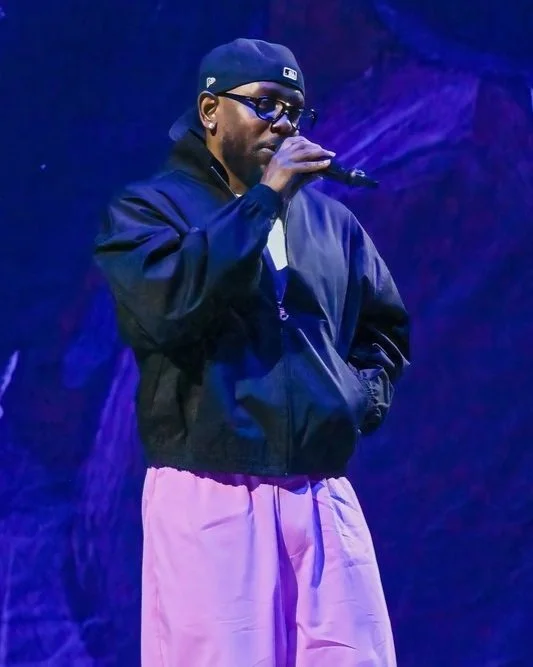
Kendrick Lamar performs at Bonnaroo music festival in Manchester, Tennessee in October 17, 2023.
Photo Credit: L Paul Mann
By: Jamila Gomez
Kendrick Lamar, one of the most acclaimed artists of his generation, isn’t just a rapper or a storyteller—he's a chronicler of the human condition. Through his complex lyricism and powerful storytelling, Lamar has become a voice for the marginalized, giving listeners not only a window into his personal struggles but also a vivid commentary on the broader state of the world. His work, from good kid, m.A.A.d city to DAMN. to Mr. Morale & The Big Steppers, offers deep insights into themes of race, identity, mental health, morality, and social justice, and reveals much about the world we live in today.
The Duality of Success and Struggle
One of Kendrick Lamar’s central themes is the paradox of success for Black Americans. He grapples with the tension between personal achievement and the structural inequities that continue to define the experience of many Black people in the United States. On good kid, m.A.A.d city, Lamar's autobiographical narrative reflects on growing up in Compton, California, detailing the traps of gang violence, systemic poverty, and police brutality that surround him. Even as he achieves success, Lamar continues to feel the pull of these forces—a reminder of how deeply these challenges are ingrained in society.
Lamar's success doesn’t shield him from the weight of this history. In To Pimp a Butterfly, he weaves a complex narrative about how achieving fame can feel like an act of betrayal to those left behind. "Institutionalized" reflects on how the mindset of oppression can follow even those who escape their circumstances. His personal rise from the streets to global stardom parallels the struggle of many Black individuals who navigate their own success while facing societal oppression. The album speaks to a wider issue: the way systems of inequality remain, even for those who seem to "make it."
Racism and the American Dream
Racism and racial inequality are recurring subjects in Kendrick Lamar's work, and his music reflects a deep understanding of how embedded these issues are in American society. On To Pimp a Butterfly, Lamar delves into themes of Black empowerment, the history of oppression, and the cultural pride that resists it. The opening track, "Wesley's Theory," paints a picture of the exploitative nature of fame and capitalism for Black artists. It speaks to a broader critique of the American Dream, showing how the system co-opts and commodifies Black talent, while simultaneously sustaining systems of racial oppression.
Songs like "Alright" have become anthems for the Black Lives Matter movement. With its hook, “We gon’ be alright,” Lamar captures the resilience and hope of marginalized communities in the face of violence and systemic racism. The song's powerful message is not just about survival but about defiance—a refusal to give in to the despair that often accompanies the daily experiences of oppression. In many ways, it is a reminder that, despite the progress made in civil rights, the fight for true equality and justice is far from over.
Mental Health and Vulnerability
Another profound way Lamar’s music reflects the state of the world is in its candid exploration of mental health, trauma, and vulnerability—topics that have often been stigmatized, especially within the Black community. On DAMN., he directly addresses the psychological impact of living in a society that devalues Black lives. Tracks like "FEAR." and "FEEL." dive into his personal anxieties, struggles with faith, and the overwhelming pressures of fame, success, and being a Black man in America.
By opening up about his own struggles, Lamar is helping to break down the barriers that have traditionally kept mental health discussions out of the mainstream, particularly in the context of Black masculinity. His willingness to embrace vulnerability in his lyrics pushes back against the idea that showing emotion is a sign of weakness. In a world where mental health issues are becoming increasingly prevalent, Lamar’s openness serves as a vital reminder that healing begins with acknowledging pain, not hiding from it.
The Crisis of Morality and Spirituality
Throughout his discography, Kendrick Lamar also delves into the crisis of morality and spirituality in the modern world. He is a deeply introspective artist, often exploring his relationship with faith and the tension between good and evil in his own life. In DAMN., tracks like "PRIDE." and "HUMBLE." reflect on these internal struggles, raising existential questions about the nature of sin, humility, and self-worth.
Lamar's work suggests that the moral crises we face today—ranging from political corruption to environmental destruction to racial injustice—are rooted in a loss of spiritual grounding. In Mr. Morale & The Big Steppers, Lamar continues this theme, examining generational trauma, fatherhood, and the way our collective past shapes our present morality. He grapples with the role of God in a world that often seems broken and unjust, ultimately pointing toward personal accountability and redemption as pathways to healing.
The Power of Storytelling and Collective Memory
At the core of Kendrick Lamar’s music is the power of storytelling to shape collective memory and inspire change. He understands that personal narratives are also political, that the stories we tell about ourselves and our communities reflect the realities we face. Lamar’s lyrics don’t just speak to personal struggles but reflect a larger, systemic critique of America’s enduring racial and economic inequalities.
In doing so, Lamar teaches us that understanding the world requires grappling with its contradictions. He encourages us to hold multiple truths at once: the beauty of Black culture and the pain of its oppression, the thrill of success and the guilt of leaving others behind, the pursuit of personal salvation and the acknowledgement of collective responsibility. His ability to blend the personal with the political gives his work a sense of urgency and relevance, making him one of the most important cultural commentators of our time.
A World in Reflection
Kendrick Lamar’s music is a mirror to our times, reflecting the tensions, struggles, and hopes that define the contemporary world. He teaches us that the fight for justice, equality, and mental well-being is ongoing, and that personal success does not erase the systems of oppression that continue to shape our society. By confronting these uncomfortable truths, Lamar forces us to reckon with the world as it is while envisioning what it could be.
YOU MAY ALSO BE INTERESTED IN: