
Polished Ain’t Protection: Dismantling the Lie That Playing by the Rules Keeps Us Safe
Respectability politics continues to harm Black communities by promoting conformity over authenticity, reinforcing systemic racism, and dividing us based on outdated standards of acceptability. We discuss it here!

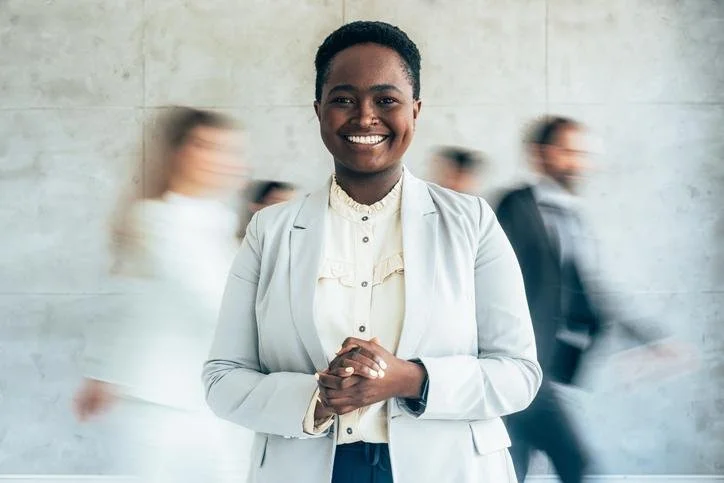
Photo Credit: filadendron via iStockPhoto.com
By: Jamila Gomez
Respectability politics has been lurking in our conversations for generations. You know the vibes: “Pull your pants up,” “Speak properly,” “Don’t act ghetto.” It’s that belief that if we just present ourselves the “right” way—dress a certain way, talk a certain way, follow all the rules—we’ll be treated with dignity and respect.
But let’s be real: has that ever truly worked?
Respectability politics was born out of survival. Back in the day, our grandparents and great-grandparents navigated a violently racist society by trying to fit into the mold that white America deemed “acceptable.” It was a strategy. If they could just prove they were “good” and “decent,” maybe they could avoid the worst of what white supremacy had to offer. It was a coping mechanism, and in a way, it made sense—when your very life is on the line, you do what you have to do.
But here’s the thing: no amount of code-switching, Sunday-best outfits, or Ivy League degrees has ever stopped racism. Look at how they treat us—whether we’re in hoodies or three-piece suits. The truth is, systemic racism doesn’t care how polished you are. Sandra Bland was college-educated and articulate. Barack Obama was President. They still faced disrespect and worse. So what are we really gaining by clinging to respectability?
More importantly, it creates division within our community. It tells us that some Black people are “better” than others based on how closely they align with whiteness or “mainstream” standards. That’s dangerous. It turns us against each other instead of standing together against the real enemy: the system that devalues Black lives across the board.
We’re not a monolith. We are diverse, vibrant, and full of contradictions—and that’s beautiful. We have the right to be ratchet and refined, hood and scholarly, spiritual and secular. All of it is valid. None of it makes us less worthy of dignity, safety, or justice.
So maybe it’s time we leave respectability behind. We don’t need to shrink ourselves or conform to be worthy of basic human rights. The revolution will not be polite—and it shouldn’t have to be.
Let’s love on each other in all our forms. Let’s uplift the aunties with the loud nails, the queer cousins, the kids with grills and dreams. Because we all deserve to be free—not just the ones who “fit in.”

YOU MAY ALSO BE INTERESTED IN:



SHARE TO SOCIAL MEDIA
Confronting the Enemy Within: Challenging Anti-Blackness Across the Diaspora
Confronting anti-Blackness within the global Black community is essential for healing, unity, and building solidarity through truth, empathy, and accountability. We discuss it here!
By: Jamila Gomez
Anti-Blackness within our communities is one of those conversations that makes family dinners uncomfortable and Twitter timelines explosive. But it’s necessary. Anti-Blackness isn’t just external—it can thrive quietly within our own circles, shaping interactions and opportunities among us.
At its root, anti-Blackness within the diaspora is tied to colonialism and slavery. From Brazil to Jamaica to the United States, centuries of conditioning taught us to internalize colorism and hierarchies based on proximity to whiteness. We often unconsciously reproduce these biases within our families, churches, schools, and workplaces.
Think about the aunties who praise lighter skin or looser curls, or families discouraging their kids from playing outside for fear of getting “too dark.” It shows up in derogatory jokes about Haitians or Africans made by Black Americans and Caribbeans. It’s in how Afro-Latinos often find themselves invisible or dismissed in conversations about Latin identity. This behavior doesn’t happen in isolation—it’s a painful manifestation of deeply ingrained beliefs about what it means to be acceptable, respectable, or successful.
The first step toward healing is acknowledging the harm done. As a community, we need honest dialogue about how anti-Blackness influences our interactions and perceptions. Yes, the legacy is painful, but denying its existence won’t liberate us from its grip.
It’s also important to understand that confronting anti-Blackness doesn’t mean we’re creating divisions. Quite the opposite: acknowledging these tensions can help us unify authentically. Solidarity is stronger when it’s rooted in truth, respect, and accountability. This starts with calling out problematic behavior, even when it comes from loved ones or respected community members.
We should also uplift voices and experiences from across the diaspora. This means intentionally creating spaces where darker-skinned, marginalized members of our community can lead and be heard without the filters of colorism or prejudice.
Cultural education and self-reflection are key. Learning about the diversity of our Black experiences globally helps dismantle stereotypes and confront internalized racism. It reminds us of our shared history, struggle, and potential strength in unity.
Finally, dismantling anti-Blackness within our diaspora is critical to fighting broader systemic racism. Our strength as a global Black community is amplified when we confront these issues head-on. We’re powerful individually, but unstoppable together.
Let’s continue the difficult conversations. Let’s keep challenging each other with love, empathy, and accountability. Because our liberation as a collective depends on rooting out anti-Blackness, not only in society but within ourselves first.
YOU MAY ALSO BE INTERESTED IN: