
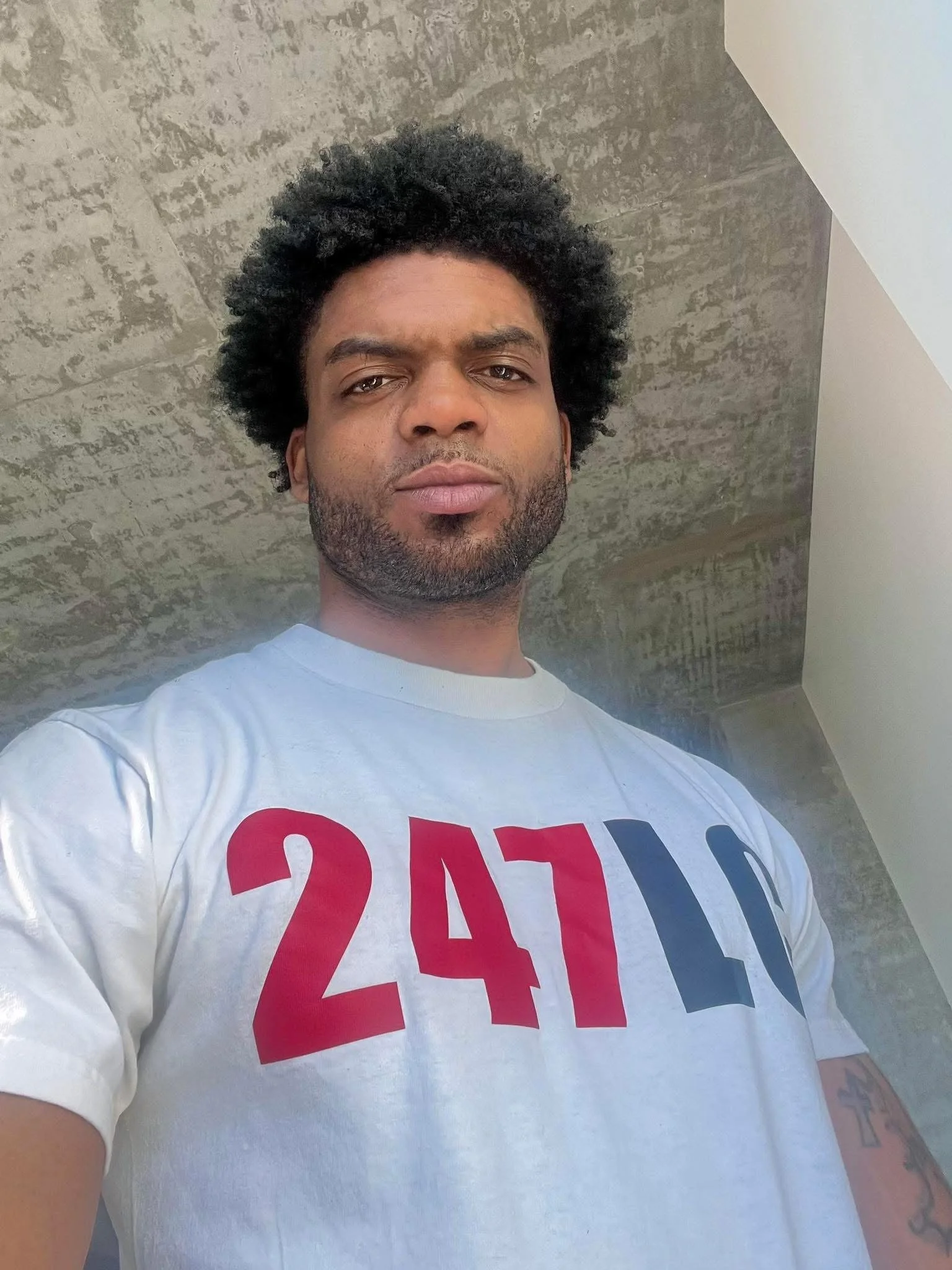
5 Tips to Becoming a Mental Giant and Building Top-Tier Mental Strength
Becoming a mental giant means mastering your inner voice, building resilience, and staying rooted in vision and faith no matter life’s challenges. We discuss it here!

Tips For Becoming A Mental Giant
Credit: Omar Cook
By: Omar Cook
Mental strength is the greatest strength that we can have. It’s more important than physical or emotional strength, as your mental leads the way for all things to be controlled. When you can control your mind, you can control your physical vessel and your emotional responses.
Life will test you, stretch you, and sometimes even break you down. But the ones who rise, who endure, who thrive? They’re the mental giants. And the good news is, mental strength isn’t something people are just born with. You can start from where you are right now and train, practice, and master your mind. Here are five powerful ways to step into your highest mental self and stay there, no matter what life throws your way.
1. Master Your Inner Voice
The conversation you have with yourself is constant and it’s either lifting you up or tearing you down. Becoming a mental giant starts with mastering that inner voice. Trade self-doubt for affirmations, fear for faith, and worry for words of power. Every time your mind whispers “I can’t,” speak back with “I will.” That simple shift rewires your entire perspective.
2. Build Discipline Through Daily Habits
Mental strength isn’t built overnight. It’s a strength that’s built brick by brick, habit by habit. Start with small, consistent actions that anchor your day. Journal your thoughts, move your body, pray, meditate, or practice gratitude each morning. Discipline is freedom, and daily rituals keep you steady even when life feels unstable.
3. Embrace Adversity as Training
Setbacks aren’t punishments. Change your perspective and look at them as training sessions. Every challenge you face is a chance to grow your resilience. When things get hard, don’t ask, “Why me?” Instead, ask, “What is this teaching me?” Mental giants don’t avoid struggle; they use it as fuel. Every storm strengthens your foundation if you let it.
4. Guard Your Energy and Environment
Your mind is only as strong as the energy you allow around you. Protect your peace like it’s priceless, because it is. Limit your time with negativity, whether it’s toxic relationships, chaotic spaces, or endless scrolling on social media. Feed your mind with books, music, and conversations that inspire. Mental giants know: you can’t control everything, but you can control what you allow into your space.
5. Stay Rooted in Vision and Faith
When the road gets hard, and it does for everyone, your vision and your faith will carry you further than willpower ever could. Write down your goals. Speak them daily. Connect to a higher source, whatever faith or spiritual practice grounds you. Mental giants don’t just stand strong; they stand anchored in purpose. That’s what keeps them unshakable.
Being a mental giant doesn’t mean you will never breakdown. Mental strength gives you the power to break and come back stronger every single time. It’s about showing up with courage, resilience, and focus, even when the world tries to pull you apart. Remember, your greatest power is already within you. Train your mind, guard your peace, and live rooted in vision, and you’ll step into a version of yourself you never thought possible.

YOU MAY ALSO BE INTERESTED IN:



SHARE TO SOCIAL MEDIA
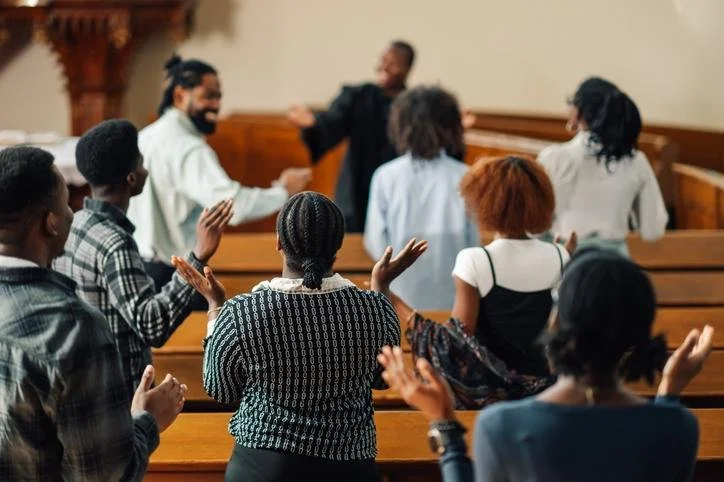
Is the Black Church Still a Safe Space? Depends Who You Ask
The Black church holds a powerful legacy of faith, resilience, and community, but it also carries a complicated history of silence, shame, and spiritual harm that continues to shape conversations about healing, inclusion, and transformation today. We discuss it here!
Photo Credit: zamrzutitonovi via iStockPhoto.com
By: Jamila Gomez
The Black church has always been more than just a building. It’s been a refuge, a gathering place, a sanctuary when the rest of the world felt unsafe. For many of us, it’s where we learned to pray, to praise, to hold on. But for others, it’s also where we first learned how to hide.
Because while the Black church gave us faith, community, and language for survival—it also gave us silence, shame, and suppression.
The Duality We Don’t Talk About Enough
To say the Black church saved lives isn’t an exaggeration. It has carried generations through slavery, segregation, systemic injustice, and communal grief. It built leaders, movements, and entire cultural traditions.
But alongside that power sits a less often acknowledged truth: the church has also been a space where many of us first encountered spiritual manipulation, misogyny, homophobia, and emotional abuse—all wrapped in scripture.
And that’s the part folks don’t always want to admit: you can love a space and still name how it hurt you.
The Pain That Got Dressed Up as Doctrine
For many Black women, the church taught us to be small and silent. To serve before we spoke. To stay in marriages that were breaking us. To “pray it away” instead of going to therapy. To mistake suffering for virtue.
For many queer folks, it meant sitting in pews that preached damnation over dignity—learning to perform identity in order to survive the judgment.
For survivors of abuse, the message was often clear: protect the reputation of the church, even if it costs you your voice.
What do you do when the place that taught you about God also taught you how to disappear?
Why Some of Us Left
Some of us didn’t leave the church because we lost faith—we left because we found ourselves.
We started asking questions no one wanted to answer. We got tired of being told that our trauma was a test, or that our boundaries were rebellion. We craved a God who didn’t require erasure as an offering.
And so we left. Not always in anger. Sometimes just in silence.
And Yet, for Some, It’s Still Home
There are Black churches doing real, radical work—centering mental health, embracing LGBTQ+ members, challenging generational harm. For some, it remains a lifeline, a chosen family, a vital anchor in the chaos of the world.
So when someone asks, “Is the Black church still a safe space?”—the most honest answer might be: For some, yes. For others, it never was.
The Black church has a legacy of resilience and contradiction. It has held us up and held us back. It has birthed liberation and enabled silence. It has given us hope, and for some of us, it has demanded our hiding in return.
But telling the truth about that complexity isn’t betrayal—it’s healing. Because safe spaces don’t just feel good. They make room for hard conversations. They grow. They evolve. They repent when needed.
And maybe the real question isn’t whether the Black church is a safe space—but whether it’s willing to become one.

YOU MAY ALSO BE INTERESTED IN:
SHARE TO SOCIAL MEDIA
When God Feels Silent While You’re Breaking
In times of deep suffering when God feels silent, it's not always absence but often sacred presence—an invitation to trust what’s already within. We discuss it here!
Photo Credit: Yuliia Kaveshnikova via iStockPhoto.com
By: Jamila Gomez
There are moments in life when everything inside you is collapsing, and heaven feels closed for business. You pray, but the words echo back. You beg for answers, but silence fills the space. In those moments, it’s easy to believe you’ve been abandoned. That God’s off somewhere else. That maybe you were wrong to trust Him in the first place.
Silence in suffering can feel like cruelty. You’re bleeding emotionally, spiritually, maybe even physically—and all you get is quiet. No signs. No reassurance. Just stillness while your world is on fire.
But what if the silence isn’t absence? What if it’s presence in a different form?
Think about it. When a teacher is silent during a test, it’s not because they’ve left the room. It’s because the test is designed to reveal what’s already been taught. Maybe this isn’t God ghosting you. Maybe it’s Him trusting what He’s built in you.
That doesn’t mean the pain isn’t real. It doesn’t mean you should pretend it’s fine. You’re allowed to scream, to cry, to not know what to say. Even Jesus, in His final moments, cried out, “My God, why have you forsaken me?” If the Son of God could say that and still be in the center of God’s will, so can you.
We often want comfort to come in noise—answers, feelings, a miracle. But God doesn’t always speak the way we want. Sometimes He speaks through the waiting, the wrestling, the long nights of not knowing. And the silence? It can strip away everything we thought was holding us up until all that’s left is raw faith.
Not the polished kind. The gritty, trembling kind. The kind that says, “I don’t understand, but I’m not letting go.”
And that’s the point. Silence doesn’t have to mean distance. In fact, sometimes the quiet is the closest we’ll ever feel to the edge of something holy. Because when all the lights go out and the noise dies down, there’s a chance to hear something deeper—not outside of you, but within.
The silence may not give you answers, but it can give you presence. It can hold space for you to be broken, and still be beloved. God’s silence isn’t the same as His absence. It might just be His way of saying: I’m here. I see you. Keep breathing.
So if you’re breaking right now and God feels silent, know this: the silence doesn’t mean you’re forgotten. It might mean you’re being held in ways words can’t express.
YOU MAY ALSO BE INTERESTED IN:
SHARE TO SOCIAL MEDIA
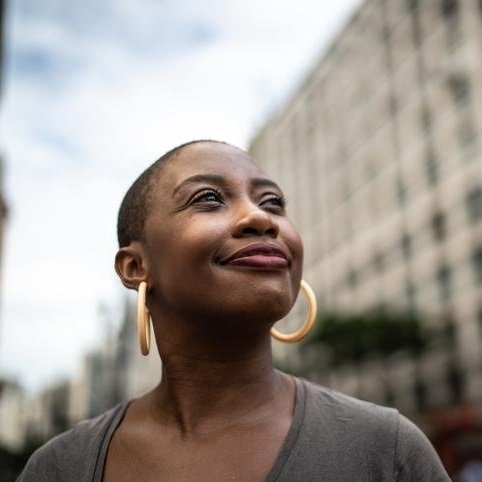
Hope Without Evidence: The Sacred Strength of Believing in the Silence
Holding onto hope without evidence is an act of emotional and spiritual strength, especially for those quietly believing, creating, and showing up without recognition or visible results. We discuss it here!
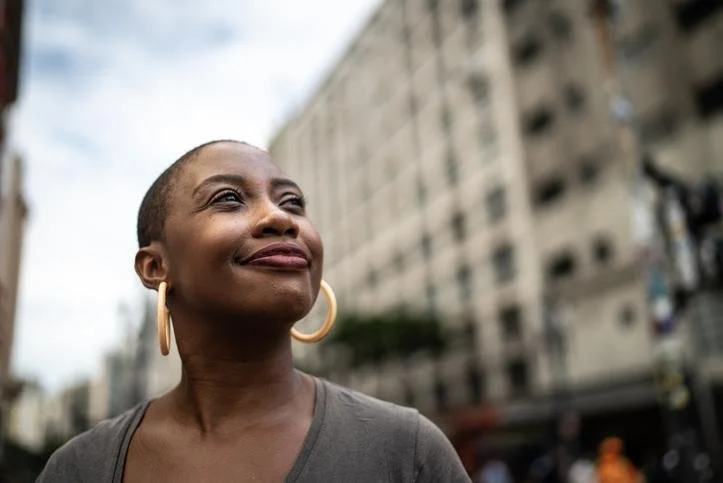
Photo Credit: FG Trade via iStockPhoto.com
By: Jamila Gomez
Hope without evidence is one of the heaviest things a person can carry. It’s not the kind of hope people write songs about or post inspirational quotes for. It’s not pretty. It’s not poetic when you’re actually living it. It’s the quiet, aching kind—the kind that wakes you up in the morning with a lump in your throat and still somehow pushes you to get up and try again. It’s the hope you hold when nothing around you is changing, when the silence is louder than the signs, when you’ve prayed, worked, and shown up, and the results still haven’t come.
There’s a sacred exhaustion that comes with holding onto vision when reality won’t cooperate. You believe in healing, but your wounds still ache. You believe you’re called to help others, but no one’s reaching out. You believe your words matter, but your posts get ignored. You believe your gifts have value, but nothing’s selling. And still… you keep going. You keep creating. You keep believing. And that kind of hope? That’s holy.
We don’t talk enough about the emotional labor of waiting. Waiting in faith. Waiting in silence. Waiting when you feel invisible. Some people confuse that with weakness or foolishness. But the truth is, it takes an unbelievable amount of strength to hope without proof. To say, “I still believe,” when you have every reason to walk away. That’s not naïve. That’s spiritual endurance.
What makes hope without evidence even harder is how isolating it can feel. You see others getting what you’ve been praying for. You watch people blow up overnight with half the depth or intention. You wonder if your voice is even real anymore, or if you’ve imagined the whole thing. You get tempted to shrink, to stop, to delete it all. And yet—something in you keeps whispering, “Not yet.” That’s the part you can’t explain. That’s the part that still believes in breakthrough, even with empty hands.
If you’re in that space right now—holding hope that no one sees, trusting God in the silence, showing up without applause—please hear this: You are not crazy. You are not weak. And you are not alone. Your voice still matters, even when it feels like no one’s listening. And the weight you’re carrying? It’s not a burden. It’s a seed.
Let it root. Let it stretch. Let it rest.
The evidence will come.
YOU MAY ALSO BE INTERESTED IN:
SHARE TO SOCIAL MEDIA

Patience: The Art of Waiting Well
Discover how patience and faith work together to help you endure life’s waiting periods, fostering personal growth, resilience, and trust in the right timing. We discuss it here!

Photo Credit: skyNext via iStockPhoto.com
By: Jamila Gomez
Life often feels like a series of waiting rooms—waiting for success, for love, for healing, for answers. In a fast-paced world where instant gratification is the norm, practicing patience and maintaining faith can feel like a tall order. Yet, patience and faith are critical virtues when it comes to enduring life’s inevitable periods of uncertainty and delay. They are not just about waiting passively but about trusting that the right things will unfold at the right time.
Patience: The Art of Waiting Well
Patience is more than the ability to wait; it is the ability to maintain peace and composure during that wait. It is a conscious decision to not let frustration or anxiety take over when life doesn’t move at the pace you want. While the world increasingly encourages us to rush, demanding immediate results and constant forward momentum, patience teaches us that good things often take time to come to fruition.
One of the reasons patience is essential is that it allows time for growth. Just like a seed needs time to grow into a plant, many of the best things in life—whether they be relationships, career success, or personal development—require time and nurturing to mature fully. Rushing through life often results in shortcuts that may offer short-term gratification but fail to provide long-lasting fulfillment. Patience, in contrast, enables us to fully experience the process and become more resilient, wise, and grateful as we wait.
Additionally, patience guards us against making hasty decisions out of fear or impatience. It can be tempting to settle for something less than we deserve when the waiting feels too hard, but those who exercise patience are less likely to compromise on their values, dreams, or standards. They understand that some things take longer to materialize because they are worth waiting for.
Faith: Trusting the Process
While patience helps us endure the wait, faith gives us the strength to believe that the wait is worthwhile. Faith is trusting that good things are on the horizon even when there is no visible evidence to support that belief. It’s the quiet assurance that there is a purpose to the waiting period, even when we cannot see what it is.
Faith helps to counteract the feelings of doubt and fear that can arise during long periods of waiting. It’s easy to feel anxious when things don’t seem to be progressing, or to lose hope when you don’t get the job, the relationship, or the breakthrough you’ve been hoping for. In those moments, faith reminds us that there is a bigger picture at work, one that we may not fully understand but can trust is for our benefit.
This trust doesn’t mean being passive or doing nothing while we wait. On the contrary, faith encourages us to continue putting in effort, believing that our hard work will eventually bear fruit. For instance, someone looking for a job needs both patience and faith. Patience helps them endure the application process without losing hope, while faith reminds them that the right opportunity is out there, even if it hasn’t materialized yet.
The Synergy of Patience and Faith
Patience and faith are complementary virtues that work hand-in-hand to guide us through life’s challenges. Without faith, patience can feel like mere endurance, a passive waiting that lacks hope. Without patience, faith can lead to frustration and despair, especially when things don’t happen as quickly as we expect. Together, they create a powerful mindset that keeps us grounded and optimistic, no matter the circumstances.
When you combine patience and faith, you cultivate an inner strength that allows you to face uncertainty with calm assurance. This combination also fosters gratitude because it shifts the focus from what is missing to what is present. Instead of constantly striving for more, you begin to appreciate the journey, finding peace in the process of becoming rather than just in the outcome.
The most rewarding things in life often take time, and patience and faith are the keys to waiting well. They help us trust in the timing of life and in the goodness that is yet to come, even when the future is uncertain. By embracing these virtues, we allow ourselves the grace to enjoy the journey, knowing that the destination—no matter how long it takes to arrive—will be worth the wait.
In the end, patience and faith are not just about waiting for good things to happen; they are about becoming the kind of person who can receive and appreciate those good things when they finally do arrive.
YOU MAY ALSO BE INTERESTED IN: