
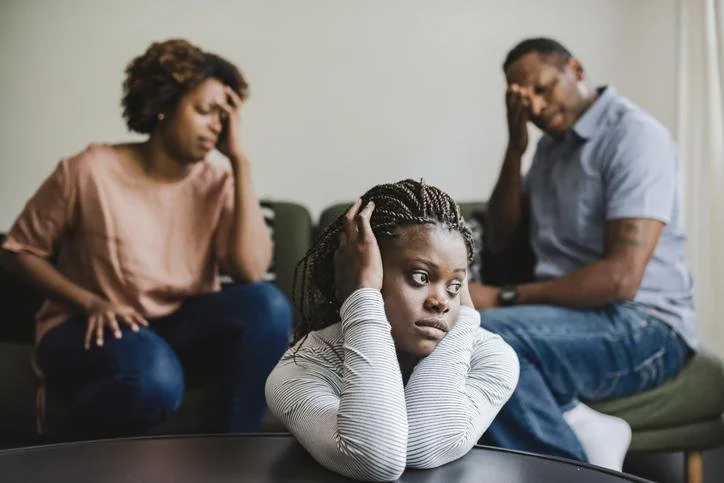
We Need to Talk About Emotional Manipulation in Black Families
Many Black families struggle to differentiate love from control, mistaking emotional manipulation for tradition and loyalty, but healing begins by naming the harm and breaking generational cycles. We discuss it here!

Photo Credit: Rawpixel via iStockPhoto.com
By: Jamila Gomez
There’s a difference between love and control—but in many Black families, that line has been blurred for so long, we’ve been taught to see them as the same thing.
Emotional manipulation isn’t always loud or aggressive. Most of the time, it shows up quiet and familiar, wrapped in phrases we’ve heard all our lives:
“After all I’ve done for you.”
“That’s just how I was raised.”
“You think you better than us now?”
It’s the guilt trip when you try to set boundaries. The silent treatment when you say no. The expectation that you’ll show up, pay up, and never speak up. And if you dare to name what’s happening, you’re suddenly the disrespectful one—the ungrateful child, the outsider, the problem.
In Black families, there’s often an unspoken belief that elders are above accountability, that “family business” should stay quiet, and that loyalty means silence—even in the face of harm. It’s a survival response rooted in real history. Our families have spent generations trying to hold it together under systemic pressure, economic struggle, and racial trauma. Control, shame, and fear became tools to protect and preserve. But those same tools are now damaging us from the inside.
When love is measured by obedience, and respect is weaponized to silence you, it’s not protection—it’s manipulation. And what gets dismissed as “just how they are” ends up becoming our emotional blueprint. It teaches us to ignore our own needs, overextend ourselves, and mistake guilt for connection. We carry that into our friendships, romantic relationships, and even into parenting, where the cycle threatens to continue.
This isn’t about blame—it’s about awareness. Because healing starts with naming what hurt us, not pretending it didn’t. And some of the things we normalized growing up were never okay. The problem is, if you try to break the pattern, you risk being labeled difficult, distant, or “not family-oriented.” But what they don’t understand is that choosing your peace isn’t abandonment—it’s protection, too.
Black families deserve better than cycles of emotional silence and manipulation dressed up as tradition. We deserve relationships built on mutual respect, real communication, and space to grow. But we won’t get there if we keep pretending that guilt is love and silence is strength.
We’re allowed to want more. We’re allowed to choose differently. And we don’t owe anyone our emotional freedom just to keep the peace.
The truth is that the only way to truly honor our families is to do the work they weren’t allowed—or willing—to do. That starts by being honest about what’s been passed down… and deciding which parts end with us.

YOU MAY ALSO BE INTERESTED IN:

SHARE TO SOCIAL MEDIA

Why Narcissists Prefer Long-Distance Relationships
Narcissists often prefer long-distance relationships because the emotional and physical separation allows them to manipulate, avoid accountability, and control their image without true intimacy. We discuss it here!
Photo Credit: Prostack-Studio via iStockPhoto.com
By: Jamila Gomez
At first glance, a long-distance relationship might seem like a challenge most people would avoid—especially if they crave connection, intimacy, or physical closeness. But for a narcissist, it’s often the perfect setup. The emotional distance and physical separation offer them unique advantages that in-person relationships just don’t.
One of the main reasons narcissists prefer long-distance relationships is control without accountability. When there’s physical distance, it’s easier for them to curate a persona and show only the parts of themselves they want you to see. Through texts, calls, and video chats, they can love-bomb you with exaggerated affection and charm—all while hiding manipulative behavior, lies, or even other relationships. You can’t observe their day-to-day actions, so it’s harder to call out inconsistencies or see red flags clearly.
Long-distance also allows the narcissist to stay emotionally detached. Vulnerability and emotional closeness threaten their need for superiority and control. In-person relationships often require empathy, compromise, and consistent emotional presence—things narcissists struggle with or avoid altogether. The physical absence gives them room to avoid deeper emotional responsibility while still receiving admiration, validation, and attention from afar.
Another draw? They can idealize and devalue more easily from a distance. Narcissists tend to swing between putting their partner on a pedestal and then tearing them down. When they don’t see you often, it’s easier to sustain the fantasy phase longer. But when the pedestal crumbles—and it always does—they can also withdraw or discard you without the uncomfortable confrontation of real-life proximity. The breakup can be as abrupt and cold as a text message.
Narcissists also thrive on having multiple sources of supply—people who feed their ego and meet their emotional needs. Long-distance relationships make it easier to juggle other partners without being caught. You’re less likely to know their friends, frequent places, or see who they’re interacting with. This secrecy feeds their need for control and power without much risk of exposure.
Lastly, a long-distance dynamic allows them to play the victim if things go south. If you become suspicious or frustrated with the lack of presence, they can flip the script and claim you’re the needy one. They might say you’re “too emotional,” “overreacting,” or “never satisfied,” when in reality, you’re just trying to get clarity and connection.
In the end, long-distance relationships give narcissists the perfect illusion of intimacy—with very little of the actual work required to sustain it. It’s not about love. It’s about access, ego, and escape.
And if you’re in one, it’s worth asking: Is this person really unavailable…or just emotionally inaccessible by design?
YOU MAY ALSO BE INTERESTED IN: